

Recent Blog Posts
Resisting or Obstructing a Police Officer
 As many across our nation continue to protest against abuses of power by police officers, unfortunately some people are winding up arrested. All too often these sorts of arrests are for things like obstructing or resisting arrest. This is why it is so important for politically active citizens to understand their rights and know exactly what does and does not count as obstruction, so they can do everything they can to avoid criminal charges.
What is Resisting or Obstructing a Peace Officer?
Crimes in Illinois are defined by statute. Under Illinois law a person "who knowingly resists or obstructs the performance by one known to the person to be a peace officer….of any authorized act within his or her official capacity commits a Class A misdemeanor." This definition is a little bit circular, though, so we have to look at how the courts have defined the crime in practice. The Illinois Supreme Court said in a case called People b. Raby that:
Juveniles Are More Likely to Be Bullied into False Confessions
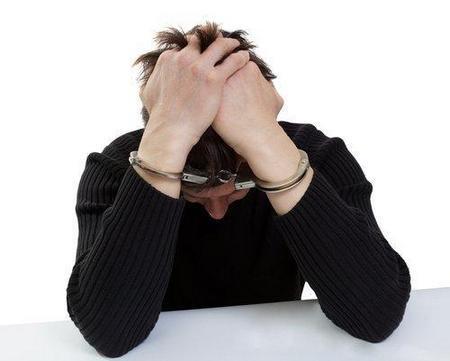 The television news show 60 Minutes called Chicago the false confession capital of the United States just a couple of years ago. This is because there are twice as many documented cases of false confessions in the Chicago area as there are in there are in any other city in the country. A false confession is what happens when an innocent person commits a crime he or she did not commit. It may seem like no one would ever do this, but unfortunately it happens regularly, even in serious felony cases. While adults sometimes confess falsely, false confessions are even more common amongst juveniles.
Study Shows False Confessions More Common Amongst Juveniles
The Innocence Project is the organization that is responsible for using DNA evidence to prove that hundreds of prisoners in the United States were actually innocent. Last year they reported on a new study that shows false confessions are more likely among juveniles. The study was conducted by Florida International University, and was funded by the National institute of Mental Health. A psychologist, Lindsay C. Malloy, examined the interrogations, confessions, and guilty pleas of 193 teenage boys between the ages of 14 and 17 who were convicted of serious crimes. The results of the study showed that these teens were much more likely to falsely confess than their older counterparts.
Congress Says No Funds to go to Medical Marijuana Prosecutions
 After generations of taking a hardline stance on the War on Drugs, Congress finally effectively ended the federal government’s ban on medical marijuana, at least for now. This extraordinary news can provide comfort for those involved in Illinois’ medical marijuana program. Rather than facing potential federal drug charges, nationwide users, growers, and sellers who comply with state laws regulating medical marijuana will finally be able to relax when it comes to the fear of federal prosecution.
Congress Cuts Funding for Medical Marijuana Prosecutions
While Congress did not actually “legalize” medical marijuana on a federal level, it did the next best thing. The Los Angeles Times reports that Congress included language in its massive spending bill that cut funding for prosecuting these crimes. So while operating a medical marijuana dispensary is still technically a violation of federal law, federal agents and prosecutors will not be able to prosecute these crimes because they will not have the money to do so, so long as the so-called criminal is complying with state laws regarding medical marijuana. Congress’ action comes on the coattails of the Obama administration’s efforts to follow a similar policy over the last year, but Congress’ action is the first time that the federal government has actually codified any type of decriminalization of marijuana since criminalizing it in the first place.
Illinois Passes Another Troubling Eavesdropping Law
 In the past the Illinois legislature passed a law that, among other things, made it illegal for law abiding citizens to record on-duty police officers doing their job. Fortunately, the Illinois Supreme Court struck down this terrible law, which was obviously unconstitutional. Illinois legislature has now passed another eavesdropping law, and while it does not have the exact same problems as the first law, it is still deeply troubling to anyone who cares about civil liberties or the rights of criminal defendants.
The New Eavesdropping Law
NBC Chicago reported on the new law, which passed the state Senate by a margin of 46 to four and is now awaiting the governor’s signature. It is supposed to focus on protecting “private” conversations. The prior law in Illinois made it illegal to record any conversation without having the consent of all of the parties involved. That is how prosecutors used it to prosecute citizens who recorded cops behaving badly. This new law will keep the ban on recording a conversation without every party’s consent, but will supposedly only apply to private conversations. However, that is not all the law does. It also dangerously expands the power of police to record citizens without seeking a warrant.
Chicago Police May Soon Be Wearing Body Cameras
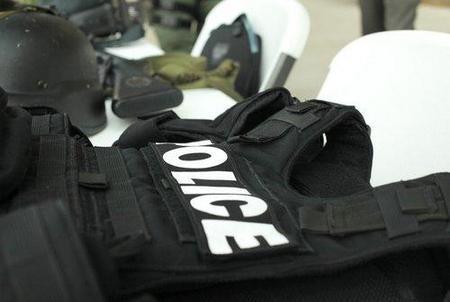 In the wake of public outrage over the police killings of Eric Garner in New York and Michael Brown in Missouri, some, including President Obama, have called for the use of body cameras by police. The hope is that requiring officers to use these cameras may prevent or provide proof of the behavior of bad officers while protecting those who do their jobs correctly. These cameras may also be extremely useful in criminal defense cases as they could provide an actual record of what happened or was said rather than jurors being forced to guess at which witness is more credible. It appears that Chicago police officers may be amongst the first to use these cameras, perhaps within the next couple of months.
Chicago Police Could Wear Body Cameras Within Two Months
Chicago’s ABC7 reports that Chicago police could be wearing body cameras within two months, according to Chicago Police Superintendent Garry McCarthy. This comes after some police in Elgin have been testing the cameras for a year. The details of the Chicago program are not yet finalized. However, McCarthy told reporters that a number of officers have volunteered to use the cameras and that some sort of program should be up and running within 60 days.
Avoiding A DUI During The Holidays
The holidays are rapidly approaching, and with it come plenty of opportunities to celebrate with good cheer. However, this is the time of year when most DUI’s will occur. In efforts to help you avoid a DUI during the holidays, be sure to follow your common sense, and keep these things in mind:
- Do not drink and drive. It’s as simple as this. However, if you do feel the need to have a drink, be sure to be smart about your consumption and use common sense. If you have too much to drink, call a cab, stay the night, or have a designated driver take you home.
- Do not rely on alcohol detection devices. Technology such as portable breath testing devices (PBT) and evidential breath testers (EBT) are not a reliable way to determine you intoxication level since they are all flawed in some way.
- Do not go by the "one drink an hour" rule. Not everyone can tolerate alcohol the same way. One’s alcohol metabolism depends on variables such as body weight, food content, hydration level, and gender, which is different for everyone.
Tips For Divorced Parents On How To Handle The Holidays
The holidays are right around the corner, which can be special time of year. However, there are many families that have a difficult time during this special time of year, especially when they are in a new position, as they may be with a divorce or separation.
Here are some tips for parents on how to handle the holidays, making it more enjoyable for you and your children:
- Avoid arguments. Whether it may be about with whom you child is spending the holidays, or an argument for any other reason, it is critical to ensure that you are avoiding these arguments at all costs. This will help to keep your child at ease and decrease any tensions that there may be.
- Be flexible. Things don’t always happen the way we want them to, especially during the holidays. If plans do change, be sure to be open to these changes and be accommodating to your child’s needs.
- Keep your child informed. One of the best ways to communicate with your child is by keeping open line of communication. Keep them involved and informed in your, and their plans.
Grand Juries and Preliminary Hearings for Most Defendants
 Recently, national news coverage has been focused on decisions made by grand juries not to charge police officers with crimes related to the deaths of Michael Brown and Eric Garner. These cases bring up a whole host of important issues facing our society revolving around race relations and police use of force. But they can also act as a teaching tool. Regarding the grand jury proceedings that happened in these cases, they demonstrate what does not happen in the vast majority of criminal cases.
Grand Juries for Most People
In Illinois, like in most states, people can be charged with crimes in two different ways. The first way, under the Illinois Constitution, is by a grand jury indictment. Like in these high profile police cases, the grand jury’s job is to determine whether there is probable cause to believe an offense has been committed, and whether there is probably cause to believe the defendant is the one who committed the offense. That is really where the similarities end. While extremely complex cases can sometimes require extended evidence to be presented to a grand jury, in the overwhelming majority of cases brought before them only one or two witnesses will testify. At least one of those witnesses is often a police officer. The witnesses are usually lead through their testimony by the prosecuting attorney who usually then requests that the grand jury indict on some particular charge. Criminal defendants almost never testify in grand jury proceedings because they are not allowed to have a defense attorney present when they do so. For criminal defendants who are not police officers, and thus are not in any way on the same side as the prosecutor, testifying in a grand jury proceeding could be extremely harmful to their case.
Rhetoric is Wrong: Violent Crime is Actually Down
 Day after day we hear the rhetoric about how bad crime is today and about how much worse crime is now than it used to be. Stories pop up about Chicago being the murder capital of America. Citizens are left to believe that there is some mass criminal class that is much worse than it has ever been before. The problem with all of this is that it simply is not true. In fact, violent crimes rates are the lowest they have been since the 1970s.
Violent Crime is Down
The Chicago Tribune reports that violent crime in the United States fell 4.4 percent in 2013, bringing the violent crime rate to its lowest level since the 1970s. Fewer violent crimes were reported last year than have been reported in any year since 1978. This trend rings true for all types of violent crimes including but not limited to murder, rape, and robbery. The violent crime rate has fallen every year since 1994 and has fallen by roughly 50 percent since 1994. Property crimes were also down last year.
Arrest Rates in U.S.
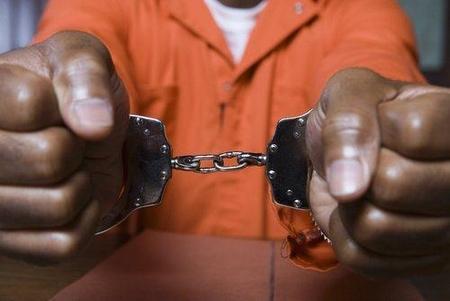 According to a recent article published by a national news source, there is a significant difference in races represented when considering arrest rates in the United States. USA Today reportedly analyzed arrest rates of police departments across the country and found that many law enforcement agencies arrest and charge African Americans with crimes at significantly higher rates than other races. In fact, in many locations, the rates were at least three times higher and up to 10 times for African Americans. These statistics were not isolated to small towns or suburban areas, but included larger, more diverse cities as well, including Chicago.
Why the Disparity?
While the numbers may be relatively easy to measure and report on, the more difficult and more relevant concern is why they are so. Experts say the mere fact the the racial disparities in arrests exist does not address what causes them. The reasons could range from anything to police bias to being a result of the socioeconomic gaps that exist between people in many areas of the country. Regardless of the source, the mere fact that such a significant disparity exists in the high number of black people that are arrested, stopped, searched, and imprisoned compared to individuals of other races suggests a problem that deserves attention, especially in current times.

Schedule Your Free Consultation
Arlington Heights Office 3030 Salt Creek Lane, Suite 120 Arlington Heights, IL 60005 Phone: 847-253-3100


At Cosley Law Office, we represent clients throughout Illinois, including Arlington Heights, Barrington, Buffalo Grove, Des Plaines, Elk Grove Village, Glenview, Hoffman Estates, Inverness, Long Grove, Mount Prospect, Mundelein, Northbrook, Palatine, Prospect Heights, Rolling Meadows, Schaumburg, Schiller Park, Wheeling, and Wood Dale, as well as Cook County, Lake County, DuPage County, and throughout the Chicago, IL metropolitan area.
Results listed are not a guarantee or indication of future case results.

© 2026 Cosley Law Office
3030 Salt Creek Lane, Suite 120, Arlington Heights, IL 60005
847-253-3100