

Recent Blog Posts
Illinois Gun Crime Laws: Parts of the Aggravated Unlawful Use of a Weapon Statute May Be Unconstitutional
 Thousands of people have been prosecuted in Illinois for having guns. Up until the last couple of years, Illinois was the lone holdout state that did not even allow for concealed carry permits. Our gun crime laws are harsh. However, in addition to being harsh, as it turns out, some of them are also unconstitutional. When a criminal law is held unconstitutional, then prosecutors are no longer allowed to prosecute people under that law.
What Gun Law is Unconstitutional?
Illinois law includes a crime called “aggravated unlawful use of a weapon.” This statute makes it illegal to possess a firearm under various different sets of circumstances. Some of this law is still enforceable. But other portions of it are unconstitutional because they violate the Second Amendment’s right to bear arms. For example, the portion of the law that makes it always a crime to carry an uncased, loaded, immediately accessible firearm on your person or in a vehicle goes too far. It acts as a comprehensive ban on the use of firearms for self-defense outside the home, thus rendering it unconstitutional. Similarly, the part of the law that prohibits all carrying of such guns on public ways is unconstitutional for the same reason.
The Crime of Solicitation in Illinois
 We have all heard the expression “don’t do the crime if you don’t want to do the time.” But in Illinois, as in most states, there are ways you can wind up doing the time even if you yourself were not the one to do the crime. These are known as inchoate offenses, and they include offenses such as attempt and solicitation. One of the interesting things about Illinois law is that not only do we have laws against attempt and solicitation, but here it is also illegal to attempt to solicit.
What are Attempt and Solicitation?
Both attempt and solicitation are defined by Illinois statutes. One is guilty of solicitation when he or she, with the intent that a criminal offense be committed, commands, encourages, or requests that another person commit the criminal offense. A person commits “attempt” when he or she, with the intent to commit a specific crime, takes a substantial step toward committing that crime. Thus if you ask or pay someone else to commit a crime for you, that is solicitation. If instead you take a substantial step toward committing the crime yourself, then attempt is what you are guilty of doing.
Violent Video Games: Selling a Game Can Be a Crime
 Typically when people think of criminal cases, they think of things like theft or murder or drug dealing. However, each state also criminalizes some relatively inoffensive conduct. For example, Illinois has made it a criminal offense to sell or rent certain violent video games to minors.
What Illinois Considers to be a Violent Video Game
The Illinois legislature took it upon itself to define what constitutes a “violent” video game. It crafted a law that defines a violent video game as any video game that depicts human-on-human violence where a player kills or otherwise causes serious physical harm to another human. This serious physical harm includes things like death, dismemberment, decapitation, mutilation of body parts, amputation, or disfigurement. It also includes rape. What this means is that games where the player’s character is human and the player kills another human character, would be covered. Meanwhile, games where the player kills other characters, but those characters are aliens, would not be covered.
What You Need to Know About Vehicular Hijacking in Illinois
 To many people, hijacking sounds like something that happens on an airplane in an action movie from the late twentieth century. While it is that, hijacking is also a type of crime that happens right in in Illinois. Specifically, Illinois law prohibits what it calls “vehicular hijacking.” If you find yourself charged with this crime, you will need the help of a felony criminal defense attorney.
What is Vehicular Hijacking?
Illinois statute defines vehicular hijacking as a person knowingly taking a motor vehicle from another person by either using force or by threatening the imminent use of force. It is basically the same as robbery, except instead of taking some other type of property, the hijacker takes the victim’s car. It is important to note that the car has to be taken directly from the person or from the person’s presence. Thus, stealing a car from an empty garage would not count as vehicular hijacking. Vehicular hijacking is a slightly more serious offense than robbery, in that even in its most benign forms it is a Class 1 felony.
Everything You Need to Know about Robbery in Illinois
 “I got robbed.” This is a statement that is used very often in our contemporary society. While sometimes it is applied metaphorically, such as when complaining about a call in a sporting event, we usually mean it to imply that someone stole something from us. However, like many areas of criminal law, the common understanding of this term and the legal definition are not the exact same. Not all victims of theft are robbery victims and not all thieves are robbers. Instead, robbery is a very specific type of theft.
What is Robbery in Illinois?
In Illinois, the offense of robbery is defined by statute. As one would assume, robbery requires one person to take property from another person. This can be any property except for certain motor vehicles, which are covered by a separate law. What differentiates robbery from mere theft is that in order for a taking of property to be a robbery, the robber must either:
Unlawful Transfer of a Telecommunications Device to a Minor
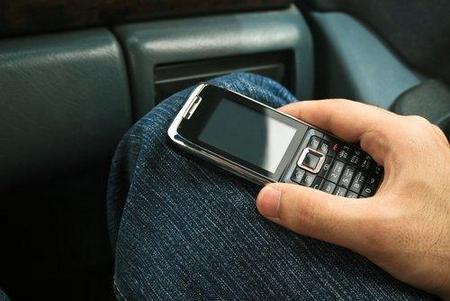 Most crimes are standalone crimes. However, there are some crimes that act as add-ons of a sort or as ways for the prosecution to try to punish someone not just for committing a crime, but also for the way in which he or she committed the crime. These additional offenses can increase the severity of the possible punishment for a crime, which makes it extremely important that you have the assistance of an experienced criminal defense attorney. One example of this sort of additional offense is a crime many have never heard of: unlawful transfer of a telecommunications device.
What is Unlawful Transfer of a Telecommunications Device?
From the name of this crime, it sounds like it might have something to do with defrauding a cell phone company or giving a kid a cell phone without his or her parents’ permission. While either of those activities can land you in hot water, they are not quite what this law is about. Under Illinois statute you are guilty of this crime if you transfer a telecommunications device (like a cell phone) to someone under the age of 18 with the intent that the device be used to commit a crime under the Illinois criminal code, the Cannabis Control Act, the Illinois Controlled Substances Act, or the Methamphetamine Control and Community Protection Act. This crime is a Class A misdemeanor, which means you could be sentenced to a term in jail not to exceed one year. Property forfeiture is also a possibility. Thus, if one were to participate in a criminal enterprise of some sort with a minor and that person were to give the minor a cell phone or similar device in order to facilitate that criminal offense, the person could be charged both with that underlying crime and with this additional crime.
Tips For Child Support Modifications
There may be circumstances in which you may need to seek modifications you’re your child support. While a modification may not be easy to get approved, there are circumstances that may be substantial enough to get approved:
- The paying parent lost their job or received a decrease in income
- The receiving parent has received a significant increase in their income
- In the event that either parent gets married
- If a child has reached the age of 18
- In the event that a child develops special needs or required medical care
In order to better handle a child support modification, here are a few tips to keep in mind:
Act in a timely manner. In the event that you lose your job or cannot afford to pay your current required child support, it is critical to immediately take the necessary steps for a child support modification, especially since you will continue to owe your current amount until your modification has been approved.
Retail Theft Carries Real Consequences
 Many people think of shoplifting or retail theft as a relatively minor crime. In Illinois that is absolutely not the case. Shoplifting in Illinois will lead you in serious need of an experienced criminal defense attorney. In order to avoid finding yourself in that position, you should understand exactly what retail theft is and how it is punished in our state.
What is Retail Theft?
Generally speaking, what most of us call shoplifting is a type of retail theft. Illinois statute defines retail theft as one of the following actions:
- Takes merchandise with the intent of keeping it or depriving the merchant of it permanently without paying for the merchandise;
- Alters or removes a price tag or similar marking in an attempt to pay less for a piece of merchandise;
Should I Hire An Attorney For My DUI?
While there are circumstances in which a DUI defense attorney may not be necessary, there are several occasions in which they will play a crucial role.
When To Hire A DUI Attorney:
- If you have had more than one DUI.
- If your Blood Alcohol Content level (BAC) is double the limit.
- If your DUI arrest was due to an accident.
- If any injuries or deaths resulted of your DUI.
- If you rely on your driver’s license for employment.
- If you do not understand your state’s DUI laws.
- If you are worried about the outcome or the consequences you may face.
- If you are concerned about a misdemeanor conviction.
- If you are concerned with a DUI being on your record.
What Will An Attorney Do?
First and foremost, a DUI attorney will determine how to get your DUI to minimally impact you and your life. They will assess your particular case, and help you to understand the consequences that may be involved, such as probation, minor penalties, big fines, or jail time. A DUI attorney can also help in handling any required forms that need to be completed, making any necessary phone calls, or representing you when needed. An experienced DUI attorney also knows specific laws, as well as the ins and outs of the court process, which can help to determine which argument will help you and your particular case. In the event that you are facing a sentence, an attorney can help in making a plea or sentence bargain.
Attempt to Commit a Crime is a Crime
 The old saying goes that close only counts in horseshoes and hand grenades. Well, close can also count in criminal law. While committing a criminal offense can land you in hot water, you may not realize that mere attempts to commit a criminal offense can also land you in jail for almost as long – an attempt to commit a crime is a crime.
What Counts as an Attempt?
In common language an “attempt” occurs whenever you try to do something. Fortunately, the legal definition of “attempt” is a little bit stricter than that. Illinois defines attempt in its statutes. According to Illinois law a person is guilty of attempting to commit an offense when he or she (1) does any act that is a “substantial step” toward the commission of the offense while (2) having the intent to commit that specific offense. Now, that does not mean that one has to sit down and think to him or herself, “I would like to go out today and commit a burglary.” The intent requirement does not mean that you have to know what the offense you intend to commit is called-it only means that you have to intend to commit it. That clears up the intent, but the question remains: what is a substantial step?

Schedule Your Free Consultation
Arlington Heights Office 3030 Salt Creek Lane, Suite 120 Arlington Heights, IL 60005 Phone: 847-253-3100


At Cosley Law Office, we represent clients throughout Illinois, including Arlington Heights, Barrington, Buffalo Grove, Des Plaines, Elk Grove Village, Glenview, Hoffman Estates, Inverness, Long Grove, Mount Prospect, Mundelein, Northbrook, Palatine, Prospect Heights, Rolling Meadows, Schaumburg, Schiller Park, Wheeling, and Wood Dale, as well as Cook County, Lake County, DuPage County, and throughout the Chicago, IL metropolitan area.
Results listed are not a guarantee or indication of future case results.

© 2026 Cosley Law Office
3030 Salt Creek Lane, Suite 120, Arlington Heights, IL 60005
847-253-3100