

Recent Blog Posts
2014 Marks Decrease in Federal Prison Population
White collar crime is often not considered as serious as other types of criminal conduct, but it is often punished just as harshly. Depending on the type of crime and the severity of the offense, the defendant could be looking at a substantial amount in prison. In many cases, white collar crimes may be prosecuted at the federal level in federal court. Such cases involve slightly different laws and procedure, plus the imposition of a federal prison term.
There has been discussion in Illinois and across the country recently about sentencing reform, decriminalization of certain criminal acts, and shorter prison terms. All of this is likely in an effort to achieve both fair and practical effects by both reforming the criminal justice system and decreasing prison populations. According to recent report, there has been an important shift in the federal prison population toward those ends.
First Drop in Decades
The federal prison population has decreased by about 4,800 inmates in the last year. The Justice Department reports that this marks the first time the number has gone down in several decades. In addition, the Justice Department reportedly projects that the prison population will be about 215,000 inmates at the end of the current budget year, which would reflect a total decrease of about 5,000 from the same count taken just one year ago. If that happens, it would mark the first time since 1980 that the federal prison population has actually declined over the course of a year.
Discussions on Decriminalization of Marijuana Ongoing in Illinois
According to a recent report, Chicago Mayor Rahm Emanuel has proposed the decriminalization marijuana in certain circumstances. While similar suggestions have been voiced in the past, it seems that not everyone in the state of Illinois is on the same page regarding the proposal. In fact, some very opposite opinions have been raised about reforming drug charges from officials in the state.
The Mayor’s Position
Mayor Emanuel is reportedly arguing that some drug possession charges should be reduced in severity. Specifically, he is allegedly advocating for the decriminalization of marijuana possession in small amounts across the state of Illinois and for the reduction of the criminal grading of possessing less than one gram of any controlled substance from a felony to a misdemeanor. He said that doing so would make the criminal justice system more available to address more serious challenges to public safety and further the progress that has already been made.
Legal Issues Surrounding DUI Checkpoints
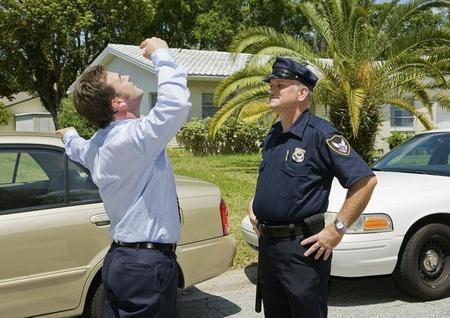 Driving under the influence (DUI) cases are some of the more common cases in criminal court. While many cases may be relatively straightforward, there are certain issues that can pop up concerning police procedure in bringing these charges. Of course, each criminal case involving a DUI or other criminal charges should be evaluated in light of the particular facts surrounding the case in order to determine any issues present, as well as options the specific defendant has in addressing the charges.
One such issue that may become relevant in a DUI case is the context in which the defendant was pulled over. Some of those charged with DUI may be observed to be driving in a reckless manner by law enforcement; others may have committed a traffic infraction giving the officer pretext for the stop. Still others may have been charged with a DUI as the result of passing through a DUI checkpoint. A recent report looks at DUI checkpoints and the potential legal issues that result from them in some states, including Illinois.
National Prescription Drug Addiction Epidemic Out of Control
 Some drug cases involve not only legal issues, but deeper issues that some may even argue are more serious than the resulting criminal charges. Many defendants who have been charged with a drug crime are suffering from a prescription drug addiction that is out of control. While they may have their fair share of legal problems to deal with, treating the underlying addiction should also top their priority list. A recent report examined the problem of drug overdoses specifically related to prescription drugs and what obstacles are in the way of trying to stop them.
Doctor Shopping
Abuse of prescription drugs seems to be on the rise, and efforts to stop it are falling short. While many drugs are considered by law to be illegal, prescription drug abuse involves using otherwise legal drugs in an illegal way. Sometimes this may involve taking more than the prescribed dose of a drug, while other times it involves “doctor shopping” to obtain a prescription for a certain type of drug. This practice by drug addicts is known to lead directly to drug overdoses, particularly by those addicted to opioids. According to the Centers for Disease Control and Prevention (CDC), there were approximately 17,000 fatal overdoses from pain medications in the year 2011. This was more than the amount of overdoses that resulted from heroin and cocaine combined. This is the latest year for which such numbers are available.
Commercial Driver’s License: Understanding Traffic Violations
When it comes to Commercial Driver’s License (CDL), the laws are stricter and hold drivers at a higher standard than other types of drivers. With a larger vehicle comes a larger responsibility to ensuring the safety and well being of pedestrians and drivers. For this reason, this is why commercial drivers have greater repercussions when a traffic violation occurs.
By understanding traffic violations and the repercussions for violating them, you will prevent receiving a ticket, being fined, possible jail time, as well as ensure that you will keep your CDL.
Serious Traffic Violations:
- Speeding (15 mph or above the posted speed limit)
- Wreckless driving
- Improper lane use or changes
- Driving without a current CDL
- Driving without the proper endorsements
Major Traffic Violations For CDL Drivers:
Illinois Officials to Focus on Criminal Justice System
It seems officials in the state of Illinois are taking steps to revamp the criminal justice system in a number of ways. Media outlets have reported on the reform, revaluation, and modification of different parts of the criminal justice system, from police procedure to sentencing guidelines to reintroducing criminal defendants back into society after their release from prison. According to a recent reports, efforts to ultimately improve the state’s criminal justice system are continuing with a focus on procedures used by the police and prosecutors in criminal cases.
The Committee
For the first time in Illinois, a committee is being established to recommend the best practices for police departments and prosecutors to use while investigating and collecting evidence in criminal cases in the state of Illinois. The General Assembly enacted legislation to allow the formation of the committee, which will operate out of the Illinois State’s Attorney’s Appellate Prosecutor’s Office. Joe McMahon, Kane County’s State’s Attorney, is said to be tasked with leading the committee.
Measuring Recidivism Rate in Juvenile Cases
In many ways, juvenile cases are treated differently than criminal cases in adult court. As a general rule, the court’s focus in juvenile cases should be on providing treatment to minor offenders and focusing on their rehabilitation in an attempt to steer them away from becoming lifetime criminal offenders. Sometimes, this works. Other times, it does not. One way officials have attempted to determine how successfully a juvenile has been rehabilitated is to study recidivism rates, or whether they have repeated criminal conduct. As one study points out, states measure recidivism differently, which could lead to inaccurate information.
Differences in Measuring Recidivism
Whether or not a juvenile has successfully rehabilitated after having a run-in with the law is often determined according to whether or not they have re-offended. The problem with this method is that different agencies in different states use different factors to determine rates of recidivism, which often leads to unreliable data, according to the study. For example, some may or may not use an adult arrest as a variable to calculate the rate of recidivism while others may or may not use a juvenile arrest. In addition, the study found that other varying factors include taking a type of juvenile facility into account, as opposed to the length of a juvenile’s stay in that facility. These differences make comparisons among states and agencies virtually useless.
Understanding The Difference Between Traffic Misdemeanors And Felonies
Traffic offenses, or infractions, are typically issued due to non-dangerous moving violations, and other mechanical violations. These violations are less offensive and carry lesser penalties, however, there are other traffic-related violations that can carry more offensive violations: traffic misdemeanors and traffic felonies.
Here is the difference between these two more serious traffic offenses:
Traffic Misdemeanors- This violation often involves an injury to an individual, destruction to property, or poses a threat to either an individual or property. Even though these violations are less serious crimes than felonies, the typical punishment consists of a hefty fine, or even incarceration. These violations vary by state, but usually include the following:
- Driving while under the influence of drugs or alcohol
- Failure to stop at the scene of an accident
How Social Media Effects Divorce
Those who are regular Internet users or have social media accounts including Facebook Instagram and Twitter should take caution if they are in the middle of a divorce or child custody battle. Any networking websites that you are a part of should be avoided at all costs and living in today’s society, it can be easier said than done. The reason why the lawyers at Cosley Law Office strongly encourage this to their clients is because any social media activity can hurt your case if used improperly.
If you do decide to continue the use of social media during a divorce, it is important to remember not to post or update your account as often as you normally would and to always keep your personal information private. If these social media sites are used incorrectly and inappropriate words are posted and the opposing party finds it online, it is hard evidence that they could use against you in court. As said before, this is easier said than done. We sometimes post things or update our profiles without even thinking through the consequences it could bring.
New Law Takes Aim at Domestic Violence Offenders
Domestic violence cases often are troubling situations that bring up serious issues. These charges are not limited to one group or a specific type of offender; anyone from any socioeconomic, racial, or ethnic background can be involved in such a scenario. This is further evidenced by a news story that has become popular as of late. Since the official start of the 2014-2015 National Football League (NFL) season, news and other media outlets have been consistently reporting on a notorious domestic violence incident that became public knowledge in February of 2014, but has garnered new and deserving attention since more details of the incident surfaced recently.
Illinois Domestic Violence Law Signed
Even before this news story concerning the professional football player garnered renewed attention, officials in the state of Illinois had their attention turned to the topic of domestic violence. At the end of August, Governor Pat Quinn signed legislation known as “Diane’s Law” into effect. The law is meant to provide protection to survivors of domestic violence by allowing courts to order risk assessment evaluations as a condition of bails and to require electronic surveillance via GPS monitoring of those charged with the crime in order to enforce restraining orders. Charges covered by the new law will include domestic battery, kidnapping, stalking, harassment, and attempted murder.

Schedule Your Free Consultation
Arlington Heights Office 3030 Salt Creek Lane, Suite 120 Arlington Heights, IL 60005 Phone: 847-253-3100


At Cosley Law Office, we represent clients throughout Illinois, including Arlington Heights, Barrington, Buffalo Grove, Des Plaines, Elk Grove Village, Glenview, Hoffman Estates, Inverness, Long Grove, Mount Prospect, Mundelein, Northbrook, Palatine, Prospect Heights, Rolling Meadows, Schaumburg, Schiller Park, Wheeling, and Wood Dale, as well as Cook County, Lake County, DuPage County, and throughout the Chicago, IL metropolitan area.
Results listed are not a guarantee or indication of future case results.

© 2026 Cosley Law Office
3030 Salt Creek Lane, Suite 120, Arlington Heights, IL 60005
847-253-3100