

Recent Blog Posts
New Crime Free Housing Ordinance in Pekin
 A new housing ordinance was recently passed in the city of Pekin in an effort to help landlords address issues with problem tenants, as well as to deal with irresponsible landlords who ignore illegal activities that occur on their property. According to the new ordinance, renters in Pekin who commit crimes risk being kicked out of their rentals if they continue to engage in criminal behavior. Pekin is just one of several other communities in Illinois with similar ordinances.
Requirements
The new Crime Free Housing Ordinance requires a payment from landlords of $10, which will be used to help fund the program. The fee will reportedly help pay for educational classes and other costs associated with the program. It is not meant to generate a new funding source for the city. The fee will be a single fee per landlord, regardless of how many properties he or she owns. Other communities with similar ordinances charge landlords per housing unit.
Concealed Carry Applications being Rejected by Illinois Police
 We previously discussed Illinois’ new law on concealed carry permits in a past blog post. Since the law went into effect at the beginning of 2014, there has been a significant amount of controversy surrounding it. As a recent news article reported, there are now questions being raised and lawsuits being filed over the denial of applications for concealed carry permits.
Denying Applications
Some Illinois citizens who have applied for concealed carry permits and were subsequently denied are filing lawsuits against local law enforcement agencies. The reasons the applications were denied were allegedly not clear, but rather came in the form of objections from police that were reportedly kept relatively secret. As a result, the Illinois State Police announced that it plans to task a state review board with producing more information about why applications were rejected. Part of the board’s job will be to notify an applicant if it is likely their applications will be rejected so they have an opportunity to argue against the objection. Specifically, they will be notified of a credible objection and the basis of it, and will be notified of the agency that brought it. Their response is required within 10 days. These new rules have already taken effect in Illinois.
Influx of Mentally Ill Being Imprisoned
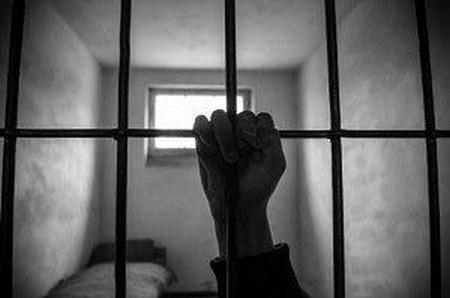 Some may be aware of the problem that links mental illness with crime in this country, but many likely do not realize the significance of the problem. The seemingly constant rise in the number of mentally ill individuals who are arrested for non-violent crimes poses a multitude of problems. On the societal level, jails are becoming more overcrowded as taxes are spent to house countless inmates, some of whom arguably are improperly imprisoned. On the individual level, mentally ill people are being punished for committing acts that they may not have otherwise committed if they were well. They often are not getting proper treatment for their condition in prison. A recent news article examined this problem further as it exists in Cook County.
Status of Anti-Violence Program Questioned
 The state of Illinois has frequently been in the news as of late regarding numerous programs and efforts regarding criminal justice that are in various stages of development and implementation. In fact, our law firm’s blog has featured many articles related to these efforts, including expungement seminars and attempts at sentencing revision. Now, a recent news article is highlighting an anti-violence program, in light of information that was discovered about it, as the result of a new study that was performed by researchers.
CeaseFire
CeaseFire is a program that furthers anti-violence efforts among the criminal population. Now, the program itself is under scrutiny as a new study is now underway regarding its effectiveness. Northwestern University previously conducted a study, which found that CeaseFire acts to reduce crime as participants, called “interrupters,” hit the streets in the most dangerous neighborhoods and attempt to settle conflicts before guns are used in shooting wars. Those who participate as interrupters are often ex-felons themselves. The new study being conducted by the University of Chicago and the University of Illinois at Chicago is being performed in an effort to reveal some additional information about the true impact of the program CeaseFire, and many are saying that the questions being studied are ones that need answers.
Law to Require Videotaped Interrogations a Plus for Police
 A proposal to legally require videotaped interrogations of offenders who aresuspected of certain crimeshas been passed. A recent news articlereports that even though the proposal was originally intended to focus, at least in part, on suspects’ rights, police are seeing it as a positive change for them, as well.
Momentous Change
Cook County has seen about 100 wrongfully convicted criminal offenders be exculpated in the previous approximately 25 years. The most recent examples of this came fairly recently when the convictions of two men for a double murder in 1992 were thrown out and a $40 million settlement was revealed to the public in the case of five men who were wrongfully convicted of a 1991 rape and murder. Both of these cases were tried before a 2003 law made it mandatory to videotape police interrogations of homicide suspects. This and other reforms since have acted to reduce the risk of false confessions by criminal suspects. Other factors, such as a cultural shift in police behavior and improved technology, are also credited with ensuring the correct person is prosecuted for a particular crime.
Navigating a Traffic Stop
 Police can use any number of possible violations as a reason to pull over a vehicle, from an expired registration or broken tail light to erratic driving or speeding. Sometimes, these actions alone constitute violations of an applicable traffic safety law. Other times, law enforcement may use these violations as a pretext to stop a vehicle and determine if another crime has been or is being committed. It is important for citizens to be aware of their rights when being pulled over by a police officer. Read on for advice on what to do if you are pulled over by law enforcement.
Conducting Yourself
If you see an officer attempting to pull you over, drive your car to the nearest safe spot on the side of the road. It is likely in your best interest to be as polite and courteous to the officer as possible at this point. Show you are willing to cooperate by rolling down your window and placing your hands on your steering wheel. Cooperate with any requests to see your driver’s license and registration.
Potential Revised Criminal Sentences in Illinois
 According to arecent news article, lawmakers in Illinois may soon be considering a reduced criminal sentencing structure. While lawmakers are reconsidering the criminal sentences imposed on certain offenders who are convicted of crimes of a lower level in favor of shorter sentences, they maintain the state is not easing up on crime. Rather, the state legislator who is behind the idea to form a committee tasked with reconsidering the sentencing guidelines says it is more about acting more effectively, and less about letting criminal offenders get off scot-free for their offense.
Joint Criminal Justice Reform Committee
The Use of Stingrays: Lines between Public and Private Life Unclear
 Technology is expanding and being developed at a more rapid pace than ever. In light of this, it is perhaps not surprising that numerous instances involving police searching practices are presenting issues about the violation of citizens’ rights. More specifically, the argument centers around whether the police tactics are an invasion of privacy or whether the information would otherwise be available to the public. Arecent article discussed this issue within the context of law enforcement use of a specific type of surveillance technique.
The Use of Stingrays
Illinois State Police allegedly began using devices called Stingrays around 2008. This is only one of the law enforcement agencies in the majority of states across the country that have decided to employ the use of such devices. Stingrays are mobile devices that obtain and record information from cell phones when the phones connect to mobile towers. The practice is considered by many to be less than ethical in conducting surveillance. Even more troubling is that this information was supposedly previously unknown until it was discovered through a Freedom of Information Act Request.
Proposed Law Regarding Accessibility of DNA Testing
 The Chicago Tribune recently published an article that discussed a proposed law in the state of Illinois that would allow inmates who have previously pled guilty to have access to DNA testing that would prove their innocence.
The Legislation
The proposed law, which many are speculating that Governor Pat Quinn will sign into effect, represents a small but substantial change in the current law regarding DNA testing. The proposal would give inmates new access to DNA testing in order to prove their innocence after they have previously pled guilty to criminal charges. On the national level, exonerations are overall on the decline as inmates’ appeals based on DNA evidence are moving through the court system. Illinois would follow in the footsteps of 44 other states that have allowed inmates who pled guilty to seek DNA testing.
Illinois’ Marijuana DUI Law Not Changed by Legislators
According to an article recently published, state legislators in Illinois will likely not address issues brought up by the inclusion of marijuana in the state’s DUI law until next year. Currently, the law allows law enforcement to charge drivers with a DUI who were driving under the drug’s influence, even when no evidence of impairment exists. Many are joining in an effort to change this portion of the DUI law in Illinois.
A Bill to Change the Law
A bill was drafted to address the issue and was sponsored by a Senator from Chicago. Although it was recently returned to the Senate committee, likely for the rest of the General Assembly’s current session, supporters are adamant that it will not be forgotten. The plan is to reintroduce the bill next session. Many supporters of the bill are saying the reason for the delay is due to the perception that the bill may be moving backwards in DUI enforcement. Because of this perception, it may take some time for the proposal to gain support.

Schedule Your Free Consultation
Arlington Heights Office 3030 Salt Creek Lane, Suite 120 Arlington Heights, IL 60005 Phone: 847-253-3100


At Cosley Law Office, we represent clients throughout Illinois, including Arlington Heights, Barrington, Buffalo Grove, Des Plaines, Elk Grove Village, Glenview, Hoffman Estates, Inverness, Long Grove, Mount Prospect, Mundelein, Northbrook, Palatine, Prospect Heights, Rolling Meadows, Schaumburg, Schiller Park, Wheeling, and Wood Dale, as well as Cook County, Lake County, DuPage County, and throughout the Chicago, IL metropolitan area.
Results listed are not a guarantee or indication of future case results.

© 2026 Cosley Law Office
3030 Salt Creek Lane, Suite 120, Arlington Heights, IL 60005
847-253-3100