

Recent Blog Posts
U.S. Supreme Court Review of Case Regarding Hearsay and Sixth Amendment
 The United States Supreme Court has decided to review a criminal case that contains issues of hearsay and related Sixth Amendment considerations. In the case, the defendant was charged and convicted of physically abusing two minor children. The trial court allowed testimony from one of the child’s teachers who repeated the victim’s out of court statement to them, even though the older child was deemed incompetent to testify. The statements related to the identification of the defendant. The case was appealed to the appropriate state appellate court, which reversed the conviction, and then to the State Supreme Court, which affirmed the appellate court’s decision.
Defendant’s Argument
Defendant’s argument on appeal was that the introduction of the above mentioned witness’s testimony violated his Sixth Amendment right to confront his accuser. At trial, the jury was exposed to testimony and the defendant was not given the chance to properly cross examine the individual who actually made the statements. Now that the case has reached the Supreme Court, they are expected to address issues about the statements that include whether the teachers were effectively acting as law enforcement officers conducting an interrogation since they are mandatory reporters of child abuse, and whether the child’s statements to the teachers can be considered testimonial.
The Benefits Of Contesting Your Traffic Ticket
Traffic tickets can be an expensive, and occasionally, serious issues. Whether you were speeding, performed illegal lane usage, forgetting to use your turn signal, texting while driving, or speeding in a construction zone, it is important to consider the benefits of fighting your traffic citation.
The benefits of contesting your traffic ticket:
- The potential for the charges to be dropped, which will prevent you from having to pay hefty fines, instead allowing you the ability to keep your driving record clean.
- In the event that you reach a plea bargain agreement, the likeliness of reduced charges increases.
- The possibility of maintaining your driving privileges. In repeat offender cases, by contesting your charges, you are more likely to keep your driver’s license.
Continued Call for Treatment of Mentally Ill in the Criminal Justice System
 The continued imprisonment coupled with lack of treatment of some criminal defendants who suffer from a mental illness continues to be a problem in the state of Illinois and across the country. The issue of the mentally in in the criminal justice system has been getting media attention recently, and with good reason. In fact, this firm has featured several blog posts concerning this topic in the recent past. Now, there is a renewed call for additional treatment of inmates with serious mental illnesses. According to a recent report, new research is bolstering the argument for treatment even further.
More than Mental Health Services
Expanding Crime Victim Rights up to Voters
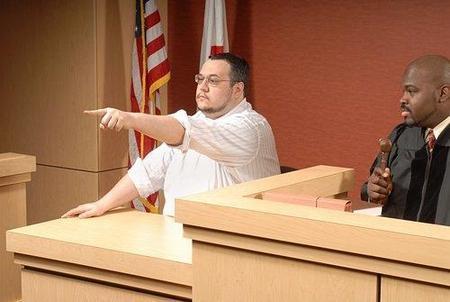 There has been much focus in the recent past on criminal justice reform and addressing issues within the system that may unduly prejudice criminal defendants. However, another key player in the criminal justice system is the victim of a particular crime, who is also granted certain rights according to the system. However, not every privilege afforded to victims within the context of the prosecution of a criminal case is always enforceable.
For example, at a defendant’s sentencing, the victim is usually granted the opportunity to speak through a victim impact statement that is presented to the court. Nevertheless, some courts have decided not to take such a statement and proceed to sentencing without hearing from the victim. As a recent report points out, victim advocates are calling for a change in the rules of criminal procedure in this area, making it a right to deliver a victim impact statement. The change will be left in the hands of Illinois voters on today’s ballot.
How Hiring A DUI Attorney Can Help You
Since driving under the influence (DUI) charges are very serious, it is critical that you take it them seriously as well. Even with first time offenders, hiring a DUI attorney can play a critical role in your case. Not only are DUI attorneys knowledgeable in the process, but they will defend your rights as well.
What Is A DUI?
A DUI is defined by the operation of a vehicle after consuming alcoholic beverages, consuming more than the legal limit, which is .08% blood alcohol content (BAC) in the state of Illinois. While it is not required, many first time offenders may not require the assistance of a DUI attorney in their case.
However, often times, DUI’s may also include other offenses such as a repeat offender, reckless driving, DUI while driving with a minor in the vehicle, or DUI with a high blood alcohol content of .12% or greater. These offenses are much more serious, and should always be brought to a DUI attorney immediately.
Federal Action Renews Privacy Questions
 An recent report discussed federal action in a drug case involving the use of a fake social media account seemingly belonging to a criminal defendant who had been charged with numerous drug crimes. Allegedly, a Drug Enforcement Administration (DEA) agent set up a false account using photos and other personal information taken from a criminal defendant’s cell phone in order to get others to reveal incriminating information. Although the Justice Department is purportedly reviewing the case, a federal lawsuit ensued and the case was set to be heard in a New York Court in mid-October, but may now be mediated.
Privacy Considerations
This case is just one example of the privacy concerns that have been raised in different states across the country – including Illinois – specifically regarding the protection of privacy in light of developing technology. The law is clearly struggling to keep up with the changing world of social media, cell phones, and other technological developments. While the use of some of these technologies may be acceptable and legal within the context of a criminal investigation, it seems the line can easily be crossed into raising important privacy issues that both courts and law enforcement may find difficult to address.
High Juvenile Arrest Rates in Local Illinois Counties
Juvenile cases, like all other criminal cases, vary in severity depending on the charges and the circumstances surrounding the offense. Most of the time, juvenile cases differ from adult criminal cases mainly in the focus on rehabilitation over punishment in sentencing. There is an intense aim to intervene with juvenile offenders at a young age in order to give the minor his or her best chance at avoiding a life of crime.
Counties with High Arrest Rates
According to a recent report, some local Illinois counties are addressing the problem of juvenile arrests much more often than others. The Illinois Criminal justice Information Authority looked at data gathered from 2012 regarding juvenile arrests in the state of Illinois. In that year, approximately 30,000 minors between ages 10 and 16 were arrested in the state.
Despite the fact that the data also revealed an overall decrease in juvenile arrests across the state since 2005, there were 18 Illinois counties named that were considered to have high arrest rates in 2012. Cook County was among them and had the highest juvenile arrest rate across the state. Interestingly, another 11 counties in the state did not report a single juvenile arrest in that same year.
Understanding The Different Types Of Child Custody
Contrary to what many people believe, there are many different types of child custodies. While a judge awards all custody determinations, not every situation is the same.
The following information will help you to understand the different types of child custody, as well as help you to determine which may be the best for your specific situation:
Physical Custody
With this type of child custody, a parent has the right for his or her child to live primarily with them. When a sole parent, or custodial parent, has physical custody, the other parent, or noncustodial parent, will typically have visitation rights or parenting time awarded to them.
Legal Custody
With this type of child custody, the parent with legal custody has the right to make all the decisions in regards to the child’s upbringing, such as with the child’s schooling, religious beliefs, and medical care.
Criminal Justice Reform: New Law Regarding Trial Procedure in Illinois
 Among many other responsibilities, it is the duty of attorneys to stay up to date in any change in law or procedural rules that affect their area of practice. This is necessary not only to maintain up to date knowledge on the area of law that they practice, but also to provide competent representation to every one of their clients when bringing a case in court. Especially in criminal matters, staying abreast of any change in the relevant law, rules of criminal procedure, or any other criminal justice reforms is of the utmost importance, as even the slightest change can affect the outcome of a case.
New Law in Criminal Trials
There has been much talk about reforming the criminal justice system in Illinois recently, something this blog has discussed many times in the recent past. This interest in criminal justice reform is not isolated to the state of Illinois, but rather, is an issue being addressed in many states across the country, and even on the federal level. With all of this in mind, it is perhaps not surprising that a new law is going into effect that reportedly reflects a landmark in criminal justice reform. The new law requires that forensic psychiatric reviews of defendants must be disclosed in order for judges to evaluate the facts behind an opinion regarding a defendant’s mental fitness to stand trial.
Preparing For Your Divorce
When making the decision to file for a divorce, there are certain factors that need to be considered before taking that first step, especially since divorce is an emotional and trying time.
Whether you are filing for divorce, or your spouse has made the decision to file, these tips will help you to ensure the smoothest transition possible while preparing for your divorce:
Seek the assistance of a divorce attorney. Hiring a divorce attorney is ideal for both parties. An attorney can ensure that you fully understand the laws and your rights, as well as prepare you for the possible outcome. Be sure that you seek representation from an attorney who listens to you, your concerns, will answer all of your questions, and is reliable.
Secure your finances. Not only is this important in order to determine your assets, but this is also critical in ensuring that both parties will be able to financially support themselves, as well as the costs related to the divorce itself. It is not necessary for marital funds to be dissipated, but it may be a good idea to equally divide your accounts.

Schedule Your Free Consultation
Arlington Heights Office 3030 Salt Creek Lane, Suite 120 Arlington Heights, IL 60005 Phone: 847-253-3100


At Cosley Law Office, we represent clients throughout Illinois, including Arlington Heights, Barrington, Buffalo Grove, Des Plaines, Elk Grove Village, Glenview, Hoffman Estates, Inverness, Long Grove, Mount Prospect, Mundelein, Northbrook, Palatine, Prospect Heights, Rolling Meadows, Schaumburg, Schiller Park, Wheeling, and Wood Dale, as well as Cook County, Lake County, DuPage County, and throughout the Chicago, IL metropolitan area.
Results listed are not a guarantee or indication of future case results.

© 2026 Cosley Law Office
3030 Salt Creek Lane, Suite 120, Arlington Heights, IL 60005
847-253-3100