

Recent Blog Posts
Life After Divorce: Study Shows Men Gain More Weight Than Women
 While the feelings of anger, sadness, guilt, and depression often felt after a divorce are far from gender-biased, a new study suggests that men may be more prone to the resulting behaviors and symptoms. They may be more prone to excessive weight gain in the weeks, months, and even years following a divorce. However, the study did find that women were also at risk for weight gain and poor self-care. Understand these risks, its potential impact on your health, and how you may be able to protect yourself against them.
Weight Gain After Divorce in Both Men and Women
Published in Social Science and Medicine, the study tracked the dietary habits and weight gain of 11,577 participants between the ages of 40 and 80. At the beginning of that study, 89 percent of the men and 78 percent of the women were married, and by the second analysis that took place 3.5 years later, 2.4 percent of men and 4.5 percent of the women had been divorced, widowed, or separated.
Methamphetamine Drug Charges in Illinois
 Methamphetamine is one of the most popular illegal drugs in Illinois. There are severalreasons why people prefer to use methamphetamine as their illegal drug of choice and why it is so popular. Reasons include the following:
- Methamphetamine gives the same high sensation as cocaine, but the high lasts longer with methamphetamines;
- Methamphetamine is easy to make;
- Methamphetamine is easy to take, being consumable through ingestion, inhalation and injection; and
- Methamphetamine is less expensive than cocaine.
Methamphetamine is a Serious Illegal Drug
Methamphetamine is a highly addictive and dangerousdrug, and users cansuffer injury or even death.Moreover,methamphetamine is an illegal substance, and you can therefore be charged with serious drug charges if you are caught in possession, manufacturing, or selling methamphetamine. The State of Illinois takes methamphetamine drug charges so seriously that methamphetamine has its own set of criminal laws: The Methamphetamine Control and Community Protection Act under 720 ILCS 646.
What is a Plea Agreement in an Illinois Criminal Case?
 Criminal defendants have a choice when facing criminal charges: they can either fight the charges in court, or they can enter into a plea agreement. In many cases, it is in a criminal defendant’s best interest to fight the charges that they are facing. By fighting the charges, it is possible to have the charges reduced or dropped entirely.
However, there may be a situation where it is in the best interest of the criminal defendant to enter into a plea bargain with the prosecution, with the help of a skilled and seasoned criminal defense lawyer, to reach an agreement that results in lesser charges or lesser sentencing for the criminal defendant.
Nearly all criminal charges can be settled with a plea deal. In fact, a majority of criminal cases are resolved through a plea agreement. Plea bargaining is an effective means for resolving a case, which saves on time, court costs, and attorney fees. A plea agreement can provide certainty in the situation, and can be a great tool for reducing sentencing or avoiding jail time, especially when the criminal defendant was undeniably guilty of the crime.
Domestic Battery Convictions Are Tough to Expunge From Your Illinois Criminal Record
 There are certaincriminal convictions that just stick with you, and a conviction for an act of domestic violence is one of the crimes that cannot be easily expunged from a convicted individual’s record. Your criminal record is viewable by police officers, potential employers (in certain circumstances), the military, and potential landlords. If you have a criminal record, you may also be required to disclose it if you want to apply for professional school and to certain jobs. A conviction for domestic battery can also negatively impact your child custody or child visitation situation, if you have one.
With such an extensive list of long-term consequences riding on your domestic battery conviction, it is important that you work closely with a skilled and diligent criminal defense lawyer to fight the charges that are pending against you.
Illinois Juvenile Drug Possession Charges
 Teens get into all kinds of trouble with the law, largely as a result of not exercising the best judgement when making decisions. Many teens get into trouble for having drugs or controlled substances in their possession illegally. A teen might snatch a couple pills out of his or her dad’s oxycontin prescription, or a teen might hold a joint for a friend. Whatever the case might be, when juveniles get caught with drugs or other controlled substances, they can be charged with juvenile drug possession. Juvenile drug possession is a serious crime, and a conviction can have have long-lasting consequences on the teen’s life down the road.
Knowledge and Control
In order for a juvenile to be convicted of juvenile drug possession, the teen must know that he or shehad the drug in his or herpossession, and must have had control over the drug. The knowledge requirement is established when the teen knew that he or shehad the drugs, and knew that they were drugs. If a teen had the substance in his or herpossession, but reasonably believed that it was something other than a drug, then there cannot be a conviction for juvenile drug possession.
Illinois Traffic Stops Must be Based on a Reasonable and Articulable Belief of a Traffic Violation
 A police officer simply cannot stop you in Illinois on the grounds of drunk driving. Rather, law enforcement is not permitted to make a traffic stop without a reasonable and articulable belief that the driver has violated a traffic law, i.e., a reasonable suspicion that a law was broken. Stopping a driver for anything short of a reasonable and articulable belief that the driver has violated a traffic law would be an illegal seizure of the driver, which is a violation of the driver’s Fourth Amendment rights. Many people who are facing a DUI may be facing charges that are based on no actual violation of a traffic law. When there is no evidence of a reasonable and articulable belief that the driver broke the law, it means that the traffic stop was illegal.
How Do DUI Charges Come About?
Once a legal traffic stop has been made, a police officer can then witness evidence or facts that could lead the officer to believe that the driver was recently drinking alcohol, at which point a police officer can make allegations that the driver is driving while under the influence. Police can make a DUI arrest when they have a probable cause to believe that the driver broke the law. However,that is not to say that a driver may have engaged in activity while behind the wheel that made police suspicious as to whether the driver was under the influence of alcohol. There is a line between violating a traffic law and conducting oneself in a legal fashion, and sometimes police make mistakes about where that line is drawn.
Police Performing Community Caretaking Function Can Arrest for DUI
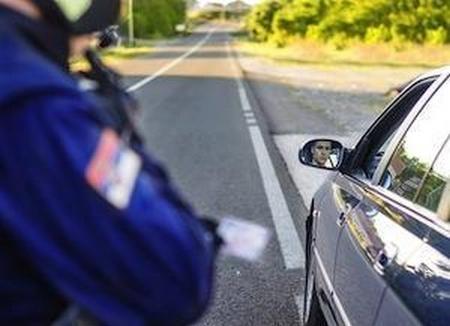 Generally speaking, police need to have a good reason-probable cause-to make a traffic stop. Otherwise the traffic stop is an illegal seizure under the Fourth Amendment. However, there are limited exceptions to the prohibition against illegal seizures, and one of those exceptions arises when police are acting in their community caretaking function.
Police Officers As Community Caretakers
The community caretaking function of a police officer occurswhen an officer engagesin an activity, other than the investigation of a crime, that helps those in the community. A few examples include helping lost children find their parents, responding to non-criminal calls such as helping people, assistingwith missing person cases, or helpingdrunk citizensreturn to theirhomes (presuming that the drunk individuals are not violating the law).
Illinois Law Enforcement Receive Federal Grant to Identify Drugged Drivers
 Driving under the influence of drugs is illegal under Illinois law. A person is considered to be under the influence of drugs if his or her ability to drive safely is impacted by the drug use. Under Illinois’ zero tolerance policy when it comes to drugged driving, even a trace amount of drugs found in a driver’s blood, breath or urine, is sufficient to prompt criminal DUI charges. These laws apply to all drugs that are identified in:
- Illinois Cannabis Control Act under 720 ILCS 550;
- Illinois Controlled Substances Act under 720 ILCS 570;
- Use of Intoxicating Compounds Act 720 ILCS 690; and
- Methamphetamine Control and Community Protection Act under 720 ILCS 646.
The list of drugs covered by the above statutes include all kinds of drugs and controlled substances, such as marijuana, heroin, cocaine, methamphetamines, MDMA, and other popular drugs.
Illinois House of Representatives to Consider Decriminalizing Marijuana Possession
 The Illinois legislature is taking another shot at decriminalizing the possession of small quantities of marijuana. In recent years, the legislature has unsuccessfully attempted to accomplish decriminalization, with bills often being derailed during the approval process. A similar bill was proposed last year, but was vetoed by Governor Bruce Rauner. However, Governor Rauner offered guidance to legislators on how to modify the bill so that it would have better success at being approved-the governor was concerned that the old version of the bill allowed people to carry too much marijuana and did not require the payment of a large enough fine. The new bill, SB 2228 incorporates the governor’s guidance.
With so many other states legalizing the use, purchase and possession of marijuana, it seems thatstates like Illinois are slowly catching on that possession of small quantities of marijuana might not be such a horrible crime that warrants serious consequences, such as arrest, jail time, and a criminal record. There are more than 100 local communities in Illinois that have already passed local measures that remove criminal penalties from marijuana possession, when the quantity in question is small.
New Illinois Bill Could Give Juveniles Quicker Detention Hearings
 Juveniles are just children or teenagers; they make poor choices from time to time, and they make mistakes. When young people are involved in minor crime, and arrested for it, their detention by police can place a terrible burden on the juvenile and his or her family. For the juvenile’s family, there is a sense of uncertainty and worry until a judge reviews the juvenile’s case. For the juvenile, detention can mean being locked up for a long period of time away from people he or she knows and loves.
Children and teens need love and support when they are in trouble, and isolating them away to wait for the review of their case can be stressful. Moreover, detaining teens for extended periods of time can be detrimental to their well-being. It can cause them to panic, worry, and fret incessantly. Detention can trigger severe emotional and psychological reactions, especially if the juvenile is generally a good kid who made a silly mistake, or foolishly listened to the bad advice or goading of his or her friends, which landed him or her in juvenile detention. It is unfair and unjust to unnecessarily force juveniles to be detained any longer than is absolutely necessary. Juveniles should be rejoined with their families and loved ones as quickly as possible.

Schedule Your Free Consultation
Arlington Heights Office 3030 Salt Creek Lane, Suite 120 Arlington Heights, IL 60005 Phone: 847-253-3100


At Cosley Law Office, we represent clients throughout Illinois, including Arlington Heights, Barrington, Buffalo Grove, Des Plaines, Elk Grove Village, Glenview, Hoffman Estates, Inverness, Long Grove, Mount Prospect, Mundelein, Northbrook, Palatine, Prospect Heights, Rolling Meadows, Schaumburg, Schiller Park, Wheeling, and Wood Dale, as well as Cook County, Lake County, DuPage County, and throughout the Chicago, IL metropolitan area.
Results listed are not a guarantee or indication of future case results.

© 2026 Cosley Law Office
3030 Salt Creek Lane, Suite 120, Arlington Heights, IL 60005
847-253-3100