

Recent Blog Posts
The Difference Between Trespassing, Home Invasion, and Burglary in Illinois
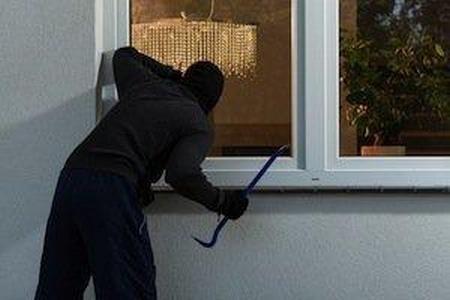
 Illinois law takes a firm stance on protecting a person’s home and property from the unwanted intrusion of others. Indeed, Illinois has a number of laws intended to protect people from others. Specifically, Illinois law provides for criminal charges for trespassing, home invasion, and residential burglary. The consequences associated with each of the above crimes are serious, and criminal defendants who are facing these charges need to have a thorough understanding of what the differences are between these crimes.
Trespassing
Trespassing occurs when a person knowingly enters the property of another without permission. When someone enters or remains in another’s home, it is considered criminal trespassing to a residence, under 720 ILCS 5/19-4. Trespassing can occur by entering another’s yard or property, and residential trespassing could occur if someone entered the home of another or overstayed his or herwelcome as a guest.
What Are Possible Defenses to Criminal Trespassing Charges?
 There are a number of reasons why an individual might find him or herself facing criminal trespassing charges under 720 ILCS 5/21-3. The defendant might have overstayed a invitation to be on the property, the defendant might have knowingly been trespassing on the property of another, or the defendant might have been forced into committing the trespass. Whatever the case may be, criminal trespassing charges are serious, and if you are facing criminal trespassing charges in Rolling Meadows, it is important that you consult with an experienced criminal defense attorney immediately.
Your criminal defense lawyer will be able to analyze your case and identify any potential defenses that you might have to the charges that you are up against. The three main defenses to criminal trespassing charges in Illinois include:
- You had consent to be on the property. Your alleged trespassing might not be trespassing at all if you had consent to be on the property of another, or if you had permission to use a piece of property, such as a car. If you have permission, then you cannot legally be trespassing. Consent can take many forms, including spoken words, writing, actions or gestures. In some cases, silence or inaction on the part of the property owner can qualify as consent as well, depending on the facts of the situation. Consent must be legal, meaning that the person who gives consent must legally be able to give it. Children, intoxicated persons, and incompetent individuals are incapable of giving consent. Additionally, consent must be rightfully obtained-consent cannot be obtained through fraud or deception, trickery or lies.
Making Drug Charges Worse: Aggravating Factors
 If you are facing drug charges, you are in a difficult spot. However, if your alleged crimes were committed in the wrong place or involved the wrong person, you could be in even worse shape.
Illinois law provides for aggravating factors when it comes to drug crimes, which can make criminal drug charges considerably more serious. When aggravating factors are present in a drug case, penalties become increasingly severe, and sentences can become substantially hefty.
What Are the Worst Aggravating Factors in Illinois?
The aggravating factors for drug charges in Illinois can be broken down into three main groups: to whom you sold drugs, where the drugs were sold, and repeat offenses. Illinois law is very specific regarding what constitutes an aggravating factor in a drug crime.
Who is Involved: Selling drugs to minors is the most common aggravating factor in drug crimes. Selling drugs to a person who is under the age of 18 can lead to double the maximum sentence under 720 ILCS 570/407. Similarly, having minors sell drugs for you is another aggravating factor under 720 ILCS 570/407.01 and can lead to triple the maximum sentence. Also, knowingly selling drugs to pregnant women is an aggravating factor in drug cases, under 720 ILCS 570/407.02, which can lead to double the maximum sentence.
Getting Caught With Drug Paraphernalia in Illinois
 It is all too common for criminal defendants to be arrested because they are in possession of drug paraphernalia. Even if you have absolutely no drugs on you at the time the arrest is made, law enforcement can still bust you for having the tools necessary to use drugs under 720 ILCS 600, also referred to as the Illinois Drug Paraphernalia Act. When a person knowingly has the drug paraphernalia in their possession, it is difficult to refute the charges.
Drug Paraphernalia That Can Get You Arrested in Illinois
There are severaltypes of drug paraphernalia that can get you into trouble with law enforcement. A few common examples include:
- Marijuana bongs and pipes;
- Crack pipes;
- Syringes, when the person in possession of the syringes lacks a medical condition that would justify him or her having syringes;
- Cocaine spoons or cocaine vials;
Five Rights You Have When You Get a Traffic Ticket
 While you may think you have a pretty good handle on the rules of the road, do you know what your rights are when you are pulled over and given a traffic citation?
Not many people actually know what their rights are when they are pulled over. Therefore, it is important that you understand the rights you have when law enforcement pulls you over to issue you a citation for a traffic violation.
- You Can Wait to Stop at a Safe Location. Where you are being pulled over might not be a terribly safe place to stop. It might be dark, there might be no lighting, or there may be no shoulder for you to pull over into. You can continue to travel a reasonable distance before stopping at a safe place, but you should indicate to the officer who is pulling you over of your intention. This could be done by slowing down, turning on your blinker to indicate that you are pulling over, and then informing the officer of why you did notpull over sooner once you do finally stop and the officer approaches the vehicle.
Selling Fake Drugs is a Crime in Illinois
 Surprising as it may seem, if you are busted for selling fake drugs, you can be charged with a felony. While the substance that you are peddling may not in fact be the illegal substance you are advertising it to be, if it looks like the drug you allege it to be, and you are trying to sell it as the real stuff, that is a crime. Illinois law enforcement is just as serious about look-alike drugs as they are about real drugs. Police will arrest you, and you will be charged, just like you would if you had committed a crime with real drugs.
What is a Look-Alike Drug?
Just as the name implies, a look-alike drug is a substance that looks like the real thing. The alleged drug could be marijuana, crack, heroin, pills, etc. that is designed to look legitimate. The substance could have the correct coloring, appearance, smell, consistency, size, branding, packaging, and flavor as the real stuff and yet be counterfeit. If the fake drug could deceive a reasonable person into thinking the fake is the real drug, it is a look-alike drug.
Illinois One-Act One-Crime Doctrine
 When formally charged, acriminal defendant may be surprised to learn just how many different charges are filed against him or herfor a single alleged crime. Someone who is arrested for driving under the influence might face DUI charges and reckless driving charges. Someone who gets into a physical altercation with law enforcement might be charged with aggravated battery of a peace officer and obstructing a peace officer.
Illinois employs what is referred to as the one-act, one-crime doctrine. Under this doctrine, for any one physical act or crime committed by a criminal defendant, he or she can only be convicted of one crime. However,that does not mean that the criminal defendant will notface anumber of charges. Criminal defense lawyers work to either get charges dropped completely, or reduced to lesser crimes, which carry less severe consequences.
Theft Committed by an Employee is Shoplifting
 There are so many employees who have taken things from their place of business, and think nothing of it. According to Fortune, retail workers in particular have a tendency to take things from their place of employment without permission. Similarly, thousands of office workers have taken office supplies home on an occasion or two-maybe some ink pens, printer paper, or ink cartridges. These are all forms of employee theft, and an employer could choose to press theft charges against the employee who stole items from work.
Why Do Employees Take Steal From Work?
There are a number of different reasons why workers steal from their job. Some workers feel mistreated by their bosses or management. They might feel like they deserved a promotion or raise and did not receive one when they should have. They might feel undercompensated for the work that they do, and thus feel entitled to a little something extra. They might take office supplies home for personal use, damaged merchandise that should be considered a loss, or products that could otherwise be sold to paying customers. Employees could also steal from the cash register-but this is a more blatant form of theft and the employee is more likely to get caught than if the employee steals other items that are less easily accounted. Shrinkage, or the mysterious disappearance of merchandise due to theft and damage, happens in every business, making it easier for workers to hide their theft.
Overstaying Your Welcome Could Become Criminal Trespass
 Sometimes party guests find themselves facing criminal trespass charges when things get out of hand at the party. Maybe a guest becomes intoxicated and becomes belligerent, upsetting other guests, or even the host or hostess. The police are likely to be called.
Once aguest is asked to leave, if he or she remains on the property, he or she could be charged with criminal trespass. While the guest was initially invited to the property, as a guest, if he or sheis later asked to leave and refuses to do so, it can constitute criminal trespass according to 720 ILCS 5/21-3.
Permission/Consent to be on the Property
The crime of trespassing largely revolves around whether the person who is committing the trespass has permission to be on the property in question. In the case of a guest who has outstayed his or her welcome, the guest may have started the party with the property owner’s (i.e., host or hostess) permission to be on the property, but that authorization was revoked during the guest’s stay on the property.
How a Parent’s Criminal Record Impacts a Child
 Many people who are facing criminal charges are focused on how their charges could affect their life. A criminal conviction could mean going to jail, paying a large fine, rehabilitation, losing a job, creating a criminal record, etc. However,when the criminal defendant is a parent, the outcome of theircase could have a significant impact on their child in addition to themselves. Not only are there short-term consequences, such as being unable to be there and provide for the child due to incarceration, but there are also unforeseen long-term consequences as well.
A Criminal Record is Not Just Hard On You
When you have kids, they rely on you for more than meets the eye. Not only do children financially depend on their parents, but they also rely on their parents as a source of love, affection, attention, guidance and support. When even just one parent is not around, for instance because the parent is in jail, it can be exceptionally hard on a child.

Schedule Your Free Consultation
Arlington Heights Office 3030 Salt Creek Lane, Suite 120 Arlington Heights, IL 60005 Phone: 847-253-3100


At Cosley Law Office, we represent clients throughout Illinois, including Arlington Heights, Barrington, Buffalo Grove, Des Plaines, Elk Grove Village, Glenview, Hoffman Estates, Inverness, Long Grove, Mount Prospect, Mundelein, Northbrook, Palatine, Prospect Heights, Rolling Meadows, Schaumburg, Schiller Park, Wheeling, and Wood Dale, as well as Cook County, Lake County, DuPage County, and throughout the Chicago, IL metropolitan area.
Results listed are not a guarantee or indication of future case results.

© 2026 Cosley Law Office
3030 Salt Creek Lane, Suite 120, Arlington Heights, IL 60005
847-253-3100