

Recent Blog Posts
Illinois May Have a Good Samaritan Law for Reporting Overdoses, Yet You Could Still be Charged with Drug Crimes
 In an effort to help combat the heroin epidemic that has been plaguing the United States in the past few years, in 2012 the Illinois Controlled Substances Act and the Methamphetamine Control and Community Protection Act was amended to include a provision that provides limited immunity from prosecution for those who witness an overdose and call for help. In other words, those who report an overdose can avoid at least some drug charges. The provision is codified in 720 ILCS 570/414, and is sometimes referred to as the Illinois Good Samaritan Overdose Law.
Good Samaritan Overdose Law Limited to Possession of Drugs That Can Cause Overdoses
The overdose law offers protection to those who report an overdose. However,the protection offered by the law is strictly limited to possession and is limited to small quantities of drugs that are capable of causing an overdose. Those who seek medical attention for someone who is overdosing will not be charged with a Class 4 felony for possession of a controlled, counterfeit, or look-alike substance or a controlled substance analog if evidence for a Class 4 charge was acquired as a result of seeking help for the person who is overdosing.
Illinois Drivers Get Some of the Most Expensive Tickets in the Country
 When Illinoisans receive a ticket for a traffic violation, they often considerit as an inconvenience. It means a ticket that they might have to dispute, and a fine. However,few people who get a ticket really understand the long-term impact that a ticket can have on their wallet.
There are hidden costs associated with getting a ticket in Illinois that cannot be overlooked and need to be considered when deciding whether to just pay the fine or to fight theticket.
Illinois Tickets Are Some of the Most Costly in the Country
KMOV.com recently reported on a national study whichrevealed that traffic tickets have one of the biggest impacts on Illinoisdrivers, due to the long-term costs associated with getting a speeding ticket. While the initial cost of the traffic ticket might not be too high, after several years of auto insurance hikes, a ticket can be quite costly. There are a handful of Illinois communities-a majority of which are located in Cook County, including Harvey, Cicero and Park Ridge-where getting a ticket can cost individuals $1,000 more over a five-year period than a ticket would cost other Americans.
Defense Strategies in an Illinois Domestic Violence Case
 There are a number of individuals who face domestic violence charges in Illinois and do not know what to do about the charges that are pending against them. Criminal charges can be scary and serious, as a conviction can have a long-term impact on a person’s life.
A domestic violence conviction can impact a person’s ability to go near the alleged victim, stay in their own home, or could impact their child custody or visitation rights. An experienced domestic violence criminal defense lawyer can help with domestic assault and battery charges and any other domestic violence-related legal assistance you might need, such as dealing with charges concerning a violation of a protection order or charges of domestic battery. Criminal defense can be technical and confusing, but those who stand accused should have an understanding of their legal options.
Strategies for Fighting Domestic Violence Charges
Interfering with the Reporting of Instances of Illinois Domestic Violence
 Sometimes domestic situations get out of hand. One person in arelationship or family situation, often a male, might lose his temper or act out angrily at his partner, ex, or family member. The other party, often a woman, is the alleged victim, and she might feel threatened, fearful, or vindictive and could over-react to the situation. She might want to call the police and report the incident as an instance of domestic violence.
Calling the police for a domestic violence situation is a serious matter, since the cops are most likely leaving the scene with someone in custody, usually the alleged abuser. Many people know this and do not want to be arrested. Threats made by the alleged victim to call the police can prompt the alleged abuser to interfere with the victim making the call to the authorities. The alleged abuser might:
- Try to physically prevent the victim from placing a call to the police;
Police Conduct Active Searches for Illinois Distracted Drivers
 A significant number ofpeople in Illinois drive while distracted-a action which can leaddrivers tobe issued a traffic citation. Often, a ticket for distracted driving accompanies some other traffic violation, such as following too closely or speeding and causing an accident.
Even if a distracted driver involved in an accident does not admit that he or she was texting while driving when the accident occurred, law enforcement will typically check a driver’s cellphone records around the time of the accident to determine if the driver was interacting with his or her phone at the time of the accident.
Many drivers underestimate how seriously Illinois law enforcement takes the issue of distracted driving. However, do not doubt for one second that police are not looking for signs of distracted driving on the road. Texting while driving is illegal under 625 ILCS 5/12-610.2. If you receive a citation for distracted driving, you should contact an experienced traffic violation lawyer immediately.
Criminal Trespass to a Vehicle in Illinois
 Many criminal defendants are unaware that there is such a thing as criminal trespass to a vehicle until they are facing criminal charges for it. A typical scenario of how these charges arise involves a teenager who “borrows” a car or some other motor vehicle not belonging to him without permission and then takes the vehicle for a joyride. However, when the teen returns with the vehicle, he often finds himself under arrest and facing criminal charges for trespass to a vehicle.
Anyone who is facing criminal trespassing charges needs to seek out the help of an experienced criminal defense lawyer immediately.
What is Criminal Trespass to a Vehicle in Illinois?
Under 720 ILCS 5/21-2, a person who knowingly and without authority or permission enters or operates a vehicle of another can be found to have committed criminal trespass to a vehicle.
Potential Defenses to Illinois Disorderly Conduct Charges
 Disrupting the peace or posing a threat to public safety is often the grounds for a disorderly conduct arrest under 720 ILCS 5/26-1. However,there are plenty of good reasons why you might have acted or behaved the way that you did-actionswhichmay serve as a defense to disorderly conduct charges.
If you are facing disorderly conduct charges, but believe that you have a defense that justifies your actions, you should discuss your particular case with an experienced criminal defense lawyer.
Potential Defenses to Disorderly Conduct Charges in Illinois
There are four main defenses to disorderly conduct criminal charges. These defenses include:
- Exercising Your First Amendment Right to Free Speech. Some people who are very passionate about speaking out on an issue that is important to them have been charged with disorderly conduct, when the truth of the matter is that the defendant was merely exercising his or her First Amendment right to freedom of speech. Not all topics that are discussed openly in public are accepted by everyone. Yet nonetheless, people have the right to talk about controversial topics in public.
Chicagoans’ Due Process Rights Violated by City Regarding Red-Light and Speed-Cam Tickets
 There are more than 300 red-light cameras in Chicago, and in many cases tickets that have been issued from these cameras may be void because the issuance of the tickets violates due process laws. According to a recently issued news report by the Chicago Sun-Times, Circuit Court Judge Kathleen Kennedy issued a ruling, potentially worth millions of dollars, against the city of Chicago to reimburse fines and penalties collected on red-light and speed-cam tickets that were issued without due process.
How Was Due Process Violated?
Due process is your right as an individual to be respected by the state or other governmental entity when it comes to your legal rights. When you are charged with a crime, you are granted certain due process rights, meaning that law enforcement, judges, and prosecutors must treat you in accordance with the law before finding that you are liable for a crime.
Avoiding Illinois Roadblocks
 Most Illinois drivershave encountered a law enforcement imposed roadblock during their time. Law enforcement use roadblocks to conduct DUI checks, while also completinglicense checks and tags and registration checks on the drivers and their vehicles that pass through the roadblock. However, drivers may not understandtheir rights when it comes to roadblocks. In the event you encounter a roadblock, it is important to understand your rights.
Avoiding a Roadblock Before You Get to It
Many people can tell when they are approaching a roadblock. Traffic backs up, flashing lights are seen in the distance, and some vehicles mayturn around to find an alternative route. As a driver, youmay not be interested in waiting in order to proceed through the roadblock. You maybe in a hurry to get home after work, mayknow a shortcut around the roadblock, or maysimply lack the patience required to answer probing questions from law enforcement. Whatever your driving motivation is, you might decide to try and avoid the roadblock.
What is a “Dwelling” When it Comes to Burglary in Illinois?
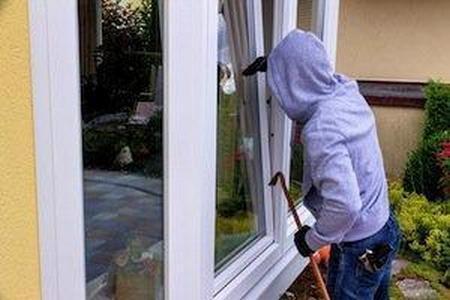 Individuals who find themselves facing burglary charges may encounterserious consequences if convicted. Burglary charges come in two varieties: burglary and residential burglary. Burglary is a lesser included charge of residential burglary-all of the elements of the crime of burglary are included as elements of the crime of residential burglary. However,in either case, burglary charges are serious-both burglary and residential burglary are felony charges.
What Constitutes Burglary in Illinois?
In Illinois, under 720 ILCS 5/19-1(a), a person commits a burglary when he or she knowingly enters or remains without authority and with the intent to commit a felony or theft in a:
- Building;
- Housetrailer;
- Motor vehicle;
- Watercraft;
- Aircraft; or
- Railroad car.
Burglary committed in a school, daycare, or place of worship carries harsher consequences than burglary of any other building. You can also get into trouble if you are caught in possession or for selling burglary tools, such as keys, instruments, or other devices that can be used to break into any of the places identified above.

Schedule Your Free Consultation
Arlington Heights Office 3030 Salt Creek Lane, Suite 120 Arlington Heights, IL 60005 Phone: 847-253-3100


At Cosley Law Office, we represent clients throughout Illinois, including Arlington Heights, Barrington, Buffalo Grove, Des Plaines, Elk Grove Village, Glenview, Hoffman Estates, Inverness, Long Grove, Mount Prospect, Mundelein, Northbrook, Palatine, Prospect Heights, Rolling Meadows, Schaumburg, Schiller Park, Wheeling, and Wood Dale, as well as Cook County, Lake County, DuPage County, and throughout the Chicago, IL metropolitan area.
Results listed are not a guarantee or indication of future case results.

© 2026 Cosley Law Office
3030 Salt Creek Lane, Suite 120, Arlington Heights, IL 60005
847-253-3100