

Recent Blog Posts
Drug Charges Resulting From Police Mistake or Corruption
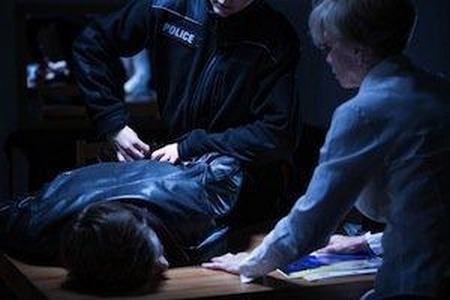 There are instances where drug charges are made against a criminal defendant, yetsome sort of foul play or mistake wasmade by law enforcement during the search, seizure or arrest. At times, it can bea matter of error. For instance, apolice officer may not followprotocol appropriately during a search and seizure or may failto properly perform an arrest. Additionally, an officer mayforget to read a defendant his or her rights upon arrest.
When errorsoccur, it can render certain evidence inadmissible at trial, or the charges could be dropped completely, because the criminal defendant’s rights were violated. Other times, an arrest could be made due to foul play by an officer. It is not often that law enforcement deliberately and intentionally acts in a corrupt or unethical way; however, it can happen.
Being Framed with Drugs
Parental Kidnapping and Parenting Time Interference in Illinois
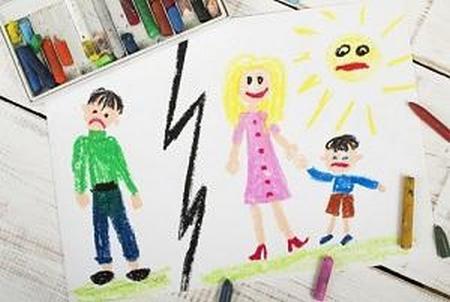 Crimes where children are the victims carry stiff penalties and are among the type priorities of federal, state, and local law enforcement. The crimes of kidnapping and parenting time interference often overlap, but they also have some important differences.
What is Parenting Time Interference?
While most parenting time disputes are handled within the family court system, sometimes actions cross the line from civil issues to criminal issues. The crime of custodial interference is known as Unlawful Visitation or Parenting Time Interference.
You commit this crime when you detain or conceal a child with the intent of depriving someone of his or her rights to parenting time. There is a provision to the law that allows for this type of activity if the parent has a reasonable fear the child will be harmed or put in imminent danger if the other parent exercises their parenting time.
Changes to Illinois Traffic Safety Laws in 2016
 Many new traffic safety laws became effective on January 1, 2016, and Illinois drivers need to be aware of what changes have taken place so that they are not caught off guard by law enforcement if they happen to violate one of the new laws without knowing. Of particular importance to the typical Illinois driver are the changes to some traffic offenses and DUI laws. A synopsis of all of the changes that take effect in 2016 can be found on the Cyber Drive Illinois website.
Changes to Traffic Offenses
- Aggravated speeding can be charged whenever a driver speeds past a school bus or through a construction site going more than 26 miles per hour over the posted speed limit, pursuant to HB 1453 PA 99-0212;
- If a driver is involved in an accident that causes the death of another, the Secretary of State will revoke the driving privileges of the individual responsible for the death. Revocation is effective 90 days after the revocation notification is mailed, pursuant to HB 3670 PA 99-0297;
He Ruined Our Marriage, Does He Owe Me?
 When your spouse has engaged in behavior that is destructive to your relationship, it is not unreasonable to want to extract a measure of recompense. If his infidelity or her continued verbal abuse caused your marriage to break down, you may feel entitled to some type of restitution or other consideration to help alleviate your loss. While such a reaction may be a normal part of the grieving process inherent to divorce, the law in Illinois does not really provide such relief.
No Recognized Fault
For many years, it was possible to obtain a divorce on fault grounds in the state of Illinois. Doing so required proof of a spouse’s wrongdoing, which could often be very difficult, but the judgment actually reflected a specific reason for the divorce. Such grounds included adultery, physical or mental abuse, abandonment, habitual substance abuse, and the commission of an infamous crime. Divorce proceedings involving fault, however, were rarely conducive to amicable settlements, which has become a major focus of divorce laws around the country. In keeping with such trends, Illinois has eliminated fault grounds for divorce beginning in 2016. Now, no matter what may have happened within the marriage, a divorce will only be granted on the no-fault grounds of irreconcilable differences.
Counterfeiting as a Federal Crime and a State Crime
 Counterfeiting is a serious crime that involves the illegal and unauthorized reproduction of legal tender (i.e., money), goods or documents that is made in a way that would likely fool an unsuspecting recipient of the counterfeited item. It is a form of fraud with very serious consequences. Common examples of counterfeiting include:
- Counterfeit U.S. or foreign currency;
- Counterfeit government issued bonds;
- Counterfeit educational degrees;
- Counterfeit legal documents (i.e., passports, birth certificates, immigration papers, Social Security cards, etc.);
- Counterfeit common goods, which includes knock off products;
- Counterfeit of a trademark;
- Counterfeit credit cards or debit cards;
- Counterfeit luxury goods, such as name brand watches, sunglasses or purses; and
- Counterfeit checks.
An Overview of Violent Crimes in Illinois
 News stories and government reports often focus on the numbers and trends related to violent crime. Aside from the obvious social and cultural impact of such actions, the penalties for violent crimes are the among the harshest in the criminal justice system. To provide a level of statewide consistency, many violent crimes carry mandatory minimum sentences.
What Crimes Are Considered Violent?
Violent crimes involve harm or threat of harm to other people. They are considered to be much more serious than property crimes like theft or trespassing. Common examples of these type of offenses in Illinois include:
- Murder;
- Sexual assault;
- Battery;
- Robbery;
- Assault and/or battery;
- Kidnapping;
- Reckless discharge of a weapon; and
- Arson.
Domestic violence crimes are also considered violent crimes. If you are charged with a violent crime, bail is likely to be set higher upon your arraignment, if you are eligible for bail at all.
Powdered Alcohol Now Illegal in Illinois
 The newest rendition of alcohol is a freeze dried form of powdered or crystallized alcohol. The powdered alcohol is considerably lighter than traditional liquid alcohol and can easily be transported. The powdered alcohol is mixed with water or other liquids to form an alcoholic beverage.
Powdered alcohol was approved for use in the United States by the Alcohol and Tobacco Tax and Trade Bureau in 2015. However powdered alcohol is not readily available in the United States. Obtaining the approval of the Alcohol and Tobacco Tax and Trade Bureau was the last regulatory step required before powdered alcohol can be manufactured and sold in the United States. The earliest that powdered alcohol will be available for purchase in the United States is by the upcoming summer. But there are a number of states that have proactively banned powdered alcohol sales and use before the substance is even available on the market.
New Law Limits College Expense Support Considerations
 For a number of years now, Illinois family courts have had the authority to order one or both parents to contribute toward the post-high school education of their children. In fact, the court even has the discretion to order college expense support to be drawn from the estate of a deceased parent. However, until very recently, each case was considered entirely on its own merits with little in the way of standardized guidelines to provide consistency. Beginning this year, the future of non-minor support proceedings may look significantly different.
Subjective Decisions
In years past, a parent looking for help paying for his or her child’s college expenses could ask the court to require the other parent to assist. The court would examine three relatively subjective factors in making its determination, including the financial resources of each parent, those of the child, and the child’s academic performance. Everything else was considered on a case-by-case basis, including the choice of school, the appropriateness of the educational program, and the costs to cover reasonable expenses.
Sealing a Criminal Record in Illinois
 When you are convicted of a crime in Illinois, you may not want everyone to know that you have been convicted. Unfortunately, as a general rule, most criminal records are made available for public inspection. However, certain crimes may be eligible for expungement, which means that all records about that crime can be completely removed from the court records and indexes except for a copy that is provided to you, or sealing. Sealed records are kept confidential, and only a limited set of people may access them.
In some situations where you were charged with a crime, but not convicted, a criminal record will be generated, but it may also be eligible for expungement or sealing. Expungement of a criminal record is the best possible scenario, but sometimes it is not possible to obtain an expungement because the crime is ineligible. The next best option would be to try and have the record sealed.
White-Collar Crimes in Illinois
 White-collar crime is a term that refers to many different offenses. It is not an official legal category of crime. The term is most often used to refer to non-violent property or financial crimes. There is often a component of fraud or fiscal impropriety to white-collar crimes.
Types of White-Collar Crimes
Because the law does not distinguish between white-collar crimes and other types of crimes, it is not possible to provide a comprehensive list of everything that may be considered a white-collar crime. Additionally, there are both Illinois state crimes and federal crimes that are often considered to be white-collar offenses.
Here are a few crimes that are generally considered to be white-collar crimes:
- Embezzlement;
- Bank fraud;
- Securities fraud;
- Identity theft;

Schedule Your Free Consultation
Arlington Heights Office 3030 Salt Creek Lane, Suite 120 Arlington Heights, IL 60005 Phone: 847-253-3100


At Cosley Law Office, we represent clients throughout Illinois, including Arlington Heights, Barrington, Buffalo Grove, Des Plaines, Elk Grove Village, Glenview, Hoffman Estates, Inverness, Long Grove, Mount Prospect, Mundelein, Northbrook, Palatine, Prospect Heights, Rolling Meadows, Schaumburg, Schiller Park, Wheeling, and Wood Dale, as well as Cook County, Lake County, DuPage County, and throughout the Chicago, IL metropolitan area.
Results listed are not a guarantee or indication of future case results.

© 2026 Cosley Law Office
3030 Salt Creek Lane, Suite 120, Arlington Heights, IL 60005
847-253-3100