

Recent Blog Posts
Treatment, Not Jail: A New Approach to Handling Heroin Addiction in Illinois
 Heroin addiction in the United States is running rampant, with some areas of the country so affected by the prevalence of heroin addiction that the media often refers to it as a “heroin epidemic.” Heroin is very addictive and in recent years it has become popular to mix heroin with other high-enhancing drugs, which has led to an unfortunate and sobering number of deaths.
A New Approach: Treatment Programs, Instead of Jail Time
Police in small towns across Illinois are taking steps to try and help heroin addicts beat their addiction by providing assistance rather than punishment when addicts come forward seeking help. By working with addicts who want to get off heroin, police officers are getting these addicted individuals into detox facilities and into rehabilitation programs rather than putting them in jail. Addicts can even bring their drugs and paraphernalia to the police station for disposal, and the police will not press charges for heroin possession or possession of drug paraphernalia.
Some Life Events Can Force a Couple to Consider Divorce
 Have you ever had an experience with another person after which you felt closer than ever? Whether it was a magical vacation, witnessing a historic event, or any other occasion, you may have known immediately that your relationship with that person would never be the same. While many certainly have had such an experience, for many others, certain events may have the exact opposite effect. Somewhat surprisingly, some of the very same experiences that pull some people closer together may, in fact, plant a seed of division that ultimately drives others apart. Between friends and family members, the relationship may simply cool off, but for a married couple, such life events may push the spouses toward divorce.
In Sickness and in Health…
A happy, productive marriage takes a great deal of work from both spouses. When one spouse develops a serious health condition or chronic illness, however, the relationship can change quickly. An illness or disability often means that one partner is expected to shoulder more of the responsibility for maintaining the marriage, which some individuals are just not able to handle. Health concerns can also create significant financial challenges as well. Interestingly, though, the likelihood of divorce due to a spouse’s illness seems to be directly affected by which spouse gets sick, as divorce rates go up when it is the wife who falls ill, but remain about the same when it is the husband.
Yours, Mine, and Ours: Classifying Marital Property
 When you are single, anything and everything you buy belongs solely to you. Any shopping trip or purchase decision impacts only you and the people with whom you choose to share that purchase. When you are married, on the other hand, the property you acquire is, in most cases, no longer just yours. Instead, it is part of what is known as the marital estate, meaning that both spouses claim equitable ownership of the asset, regardless of which spouse bought or earned it. During the marriage, of course, most couples are generally happy to share their property in this way. In divorce, however, the situation may get a little more complicated.
What is Marital Property?
Under the law regarding divorce in Illinois, only marital property is subject to division between divorcing spouses. Therefore, the law also contains provisions defining marital property. Any property acquired by either spouse during the marriage is a marital asset with a couple of very limited exceptions. Acquired property can be physical items, such a car or piece of furniture, real estate, or an amount of money, such as employment-related wages or investments. As far as the law is concerned, it makes no difference which spouse earned or purchased the asset, for what reason, or even whose name is on the loan or title; if it occurred during the marriage, it is part of the marital estate.
DUI While High: How Drugs Are Affecting DUIs
 Many people think a DUI only means drunk driving. But, DUI is more than just driving drunk. It is a crime in Illinois to operate a motor vehicle when impaired because of alcohol or drugs. The drugs can be illegal drugs or prescription drugs. The National Highway Transportation Safety Administration has reported an increase in accidents caused by drugged drivers, even as the number of drunk driving accidents continues to fall.
How Does Law Enforcement Know You Are High?
The police cannot pull your over without reasonable suspicion that you are committing a crime or traffic infraction. This means that if a police officer notices that your car is swerving, going at an unsafe speed, or violating any law, the officer can pull you over. Law enforcement has been trained to observe signs of impairment in drivers.
If the police officer believes you are impaired, you may be asked to get out of the car and take some tests. The officer may even ask you directly if you had anything to drunk or taken any drugs.
Defendants Rights: What Right Do You Have to See the Evidence?
 Criminal defendants have some of the highest constitutional protections in the criminal justice system. The reason for these rights and protections is because the stakes are so high. If someone is convicted of a crime, they may not only lose their freedom, but also a host of other rights. One of the most important constitutional protections is the right to see the evidence against you. But, even this right has its limits.
Right to Exculpatory Evidence
The most basic right in a criminal trial is the right to see any exculpatory evidence. This means you have a right to see anything the prosecution has possession of, or knows about, that may show you are not guilty of the crime for which you are being charged. This right was laid out in the U.S. Supreme Court case called Brady V. Maryland.
Other Evidence Rights
You also have a constitutional right to confront any witnesses. This limits the use of out of court statements by the prosecution during your trial. You have the right to cross-examine witnesses. You also have a right to see what evidence the prosecution plans on presenting against you in most instances.
Illinois Criminal Statutes of Limitations: When Is a Case Too Old to Prosecute?
 Under the criminal justice system there is a limit to when prosecutors can bring criminal charges. The time limit is called the statute of limitations. After a statute of limitations has passed a prosecutor cannot bring criminal charges. However, there have been more than a few cases where someone confessed to a crime, thinking the statute of limitations had expired, but were wrong and ended up getting convicted.
Misdemeanors
Under Illinois law the statute of limitations for misdemeanors is 18 months. Even if new evidence surfaces after 18 months, a prosecution cannot be brought. There are certain factors that can stop the statute from running. If you have been legally charged, but fail to show up for court, the statute of limitations is tolled, or put on pause. When you are eventually found, even if it is years later, the case will continue.
Felonies
Jury: Wrongfully Convicted Man Was Framed by D.C. Police
 A man who spent more than 27 years in prison for crimes he did not commit has agreed to a $16.9 million settlement with the District of Columbia. The settlement was announced a federal jury was preparing to determine damages in the case. Earlier this week, the same jury found that two D.C. homicide detectives fabricated at least part, if not all, of the confession the man allegedly made to a police informant, leading to the man’s conviction in the 1981 rape and murder of a Georgetown University student. The detectives were also found to have withheld evidence in the cause, prompting many to call for an investigation into their handling of other criminal cases.
In 2009, the man’s original conviction had been overturned, when DNA evidence exonerated him of the crimes. The exoneration has already prompted internal reviews by the Justice Department, the Federal Bureau of Investigation and the U.S. attorney’s office. The case marks the first federal civil rights ruling over a wrongful conviction in D.C., but is similar to a 2012 Illinois verdict that held the city of Chicago liable for $25 million in damages as the result of a wrongful murder conviction.
Juvenile Traffic Offenses Can Lead to Loss of License
 One of the most exciting things about becoming a young adult is that teens can obtain driving privileges. Starting as early as age 15, teens can apply for a driver’s permit, and can work their way up through the graduated driver’s license program offered by the Illinois Department of Motor Vehicles. After the permit phase is complete, or when a teen reaches the age of 16, teens aged 16-17 can enter the initial licensing phase, and once a teen turns 18, he or she can enter the full licensing phase. So long as teens comply with the rules set forth concerning the permit phase and/or the initial licensing phase, they can keep happily driving wherever they want to go.
Traffic Violations Impact Teens’ Ability to Drive
However, receiving a citation for a driving offense can impact or endanger a teen’s driving privileges. Juvenile traffic offenses, such as the following, may endanger the privilege of driving:
Knowing What is Best for the Children
 In today’s modern world, divorce has become a simple fact of life. Pundits and religious leaders can debate forever over the perceived cultural and moral changes that have led to the widespread acceptance of divorce, but the reality remains unchanged. Sometimes, marriages fail, and sometimes, before they fail, those marriages produce children. A parent going through a divorce is often faced with a number of difficult decisions, each one driven by the same thought: “Is this the best thing for my child?” While such an approach is certainly understandable, there are some things that any parent should keep in mind when the end of his or her marriage becomes a possibility.
Getting Out May Be Necessary
“Staying together for the kids” is a long-held mantra for many parents who feel trapped in a bad marital relationship. However, the maxim may be starting to lose its strength, as parenting and family experts are beginning to realize that doing so may be counterproductive. The idea of remaining in an unhealthy marriage evolved as the result of parents believing that their children “deserved” a traditional, two-parent household, almost no matter what. Research is now showing that while the two-parent part is important, the single household part is not a requirement. It is often better for a child to have two happy, divorced parents than two miserable, married parents who fight constantly and make the home a much less healthy environment.
New Law Could Let People With Four DUI Convictions Get Restricted Driving Privileges
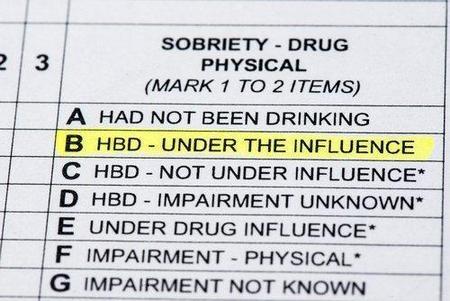 One of the consequences of being convicted for driving under the influence is that your driver’s license will be revoked. Under the current laws of Illinois, it is illegal to drive a motor vehicle while under the influence of drugs, alcohol, or a combination of both. Upon conviction, a person will lose their driver’s license; more specifically, the Secretary of State will revoke their driving privileges.
The revocation period depends on the number of prior offenses:
- For a first offense, license revocation is for a period of one year, and for those under the age of 21, revocation is for two years;
- For a second offense committed in a period of 20 years, license revocation is for a period of and years;
- For a third offense, license revocation is for a period of 10 years; and
- For a fourth any subsequent offenses, license revocation is for life.

Schedule Your Free Consultation
Arlington Heights Office 3030 Salt Creek Lane, Suite 120 Arlington Heights, IL 60005 Phone: 847-253-3100


At Cosley Law Office, we represent clients throughout Illinois, including Arlington Heights, Barrington, Buffalo Grove, Des Plaines, Elk Grove Village, Glenview, Hoffman Estates, Inverness, Long Grove, Mount Prospect, Mundelein, Northbrook, Palatine, Prospect Heights, Rolling Meadows, Schaumburg, Schiller Park, Wheeling, and Wood Dale, as well as Cook County, Lake County, DuPage County, and throughout the Chicago, IL metropolitan area.
Results listed are not a guarantee or indication of future case results.

© 2026 Cosley Law Office
3030 Salt Creek Lane, Suite 120, Arlington Heights, IL 60005
847-253-3100