

Recent Blog Posts
Cocaine Drug Offenses in Illinois
 Cocaine is a very popular drug that acts as a stimulant; people who use this drug experience an energetic high. Cocaine can be consumed in a number of different ways, including injection, inhalation, or by snorting it up the nose. While the drug may have some initial stimulating effects, cocaine has a lot of serious health consequences.
Cocaine is a highly addictive illegal drug that has lead to many individuals facing drug charges. They might have been charged with cocaine possession, cocaine distribution, or trafficking. What all of these drug offenses have in common is that they are all felonies. How serious the offense is depends on a number of factors-a history of cocaine drug offenses, the amount of drugs involved, where the drugs were found (e.g., a drug sale near a school or truck stop) and to whom the drugs were sold (e.g., minors, pregnant women, etc.).
Cocaine Drug Offenses Carry Years of Jail Time
Annulling a Marriage in Illinois
 There are many reasons why couples choose to end their marriages. In the state of Illinois, couples have the choice of ending their marriage either through divorce or annulment. Divorces and annulments are similar in terms of making a determination about a couple’s marital status.
However, they differ because while a divorce legally ends a valid and existing marriage, an annulment is the legal process used to end a marriage that was never valid. In Illinois, this is referred to as a “Declaration of Invalidity of Marriage.” This effectively makes it as if both parties were never married in the first place – as far as the government is concerned.
Grounds for a Declaration of Invalidity of Marriage
Grounds for annulment may vary in different states and legal jurisdictions. However, Illinois recognizes only a few circumstances as grounds for a Declaration of Invalidity of Marriage, including:
Three Reasons Why You Need To Fight Your Domestic Battery Charges
 The Illinois courts and law enforcement do not take kindly to those who are accused of committing domestic battery. Causing bodily harm to a family or household member, or insulting, provoking, or threatening them, is a serious criminal matter in Illinois. When a person is accused of domestic battery, it is critically important that they fight the charges that are lodged against them because even a first-time conviction carries severe and long-lasting consequences. An experienced criminal defense attorney can help.
Below are three reasons why you need to fight your domestic battery charges.
- A domestic battery conviction means you will have a criminal record. Even if your fight with a family or household member was just a minor dispute that got out of hand, the court will look at the altercation as a serious crime. Even a first-time offense for domestic battery is typically a misdemeanor level offense. But a domestic battery charge can be upgraded to a felony-level offense in certain situations, such as when a protection order was violated, when you have a record of prior domestic battery convictions, or when other aggravating factors were involved.
Burglary For Drugs Charges In Illinois
 Illegal drug deals can take many forms, but nearly all drug deals have something in common: they are all transactions. At their core, all drug transactions are the same – they are an exchange where each party gets something that they want. Drug transactions involve a recipient party (i.e., the drug “buyer”) providing something to a drug dealer in exchange for the drugs. A majority of the time, drugs are traded for money.
But in some situations, a drug dealer might accept something other than money as payment for drugs. Sometimes a dealer will want certain services (e.g., the dealer may want the drug “buyer” to commit a crime, or perform some act in exchange for the drugs) in exchange for drugs, or the dealer might want property or valuables instead of cash. Sometimes the dealer may want the drugs to be paid for in stolen goods, like a stolen car or stolen jewelry, watches or electronics. The dealer might even encourage a buyer to commit burglary in order to get the drugs.
Traffic Violations in Illinois
 Many people have received a traffic citation for a mistake made behind the wheel. You might have been driving too fast, may have failed to use your turn signals, or may have placed your vehicle somewhere it should not have been. Furthermore, many people who end up with a traffic citation are unsure what to do about it. In this situation, contacting an experienced traffic offense lawyer could help.
Basics of A Traffic Citation
At its core, a traffic citation is a charge for violating a state or municipal traffic law. The citation is a piece of paper, or ticket, that includes your information, the information about your vehicle, and your alleged offense. The ticket provides you with the statute of the law that you allegedly violated along with the fine you are required to pay, and provides instructions on how to pay the ticket, or details about when you are required to appear in court.
Consequences of Pleading Guilty To A Traffic Citation
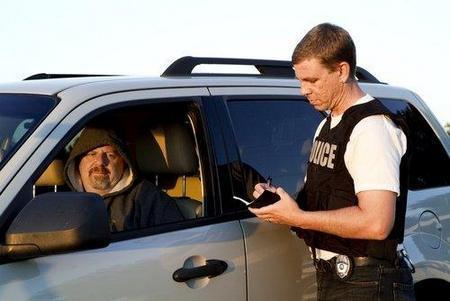 Many drivers in Illinois are stopped by law enforcement and issued traffic citations when they allegedly violate one of Illinois many traffic laws. While a ticket could be embarrassing, or might make you mad, you must take some sort of action regarding your traffic ticket.
Consequences of Pleading Guilty to a Traffic Violation
Most tickets are simple to deal with, and many do not even require the driver to appear in court. There are many types of traffic tickets that can simply be paid over the internet or at the courthouse. Many drivers elect to pay their fine and be done with their ticket. But payment of the ticket fine is effectively the same as pleading guilty to your traffic citation.
Countless Illinois drivers do not realize that this is the case and are surprised to learn that there are consequences for paying the fine and effectively pleading guilty to a traffic offense. For instance, in some cases, it can mean that points will be added to your driver’s license by the Illinois Driver Services Department. If you get too many points on your driver’s license in a certain amount of time, your driver’s license can be suspended. The more points you have on your driver’s license also translates to increased car insurance premium rates.
Prenuptial Agreements and Unconscionability
 Statistics show that Americans are, on average, waiting longer than ever to get married for the first time. While the maturity that normally accompanies age may be a factor in the recent decrease in the divorce rate, waiting to get married also means that each spouse tends to bring more property, assets, and debts to the marriage. As a result, many couples are turning to prenuptial agreements to help them establish which property is whose and how certain assets are to be addressed in the event of a divorce.
Free to Make Your Own Choices
Prenuptial agreements in Illinois are governed by the Uniform Premarital Agreement Act which the state adopted in 1990. The law gives prospective spouses the right to negotiate the terms of a prenuptial agreement in whatever manner suits them. The only topics that a prenuptial agreement is statutorily prohibited from addressing are the rights of a child regarding child support and custodial (parental responsibilities) plans made in advance of such a need.
Law Against Driving While High On Marijuana Changed
 Until recently, it was illegal to drive while under the influence of marijuana, regardless of how much marijuana was in your system. Illinois law used to employ a zero tolerance approach when it came to driving under the influence of marijuana. Specifically, if any amount of marijuana was detected in the suspected drugged driver’s system, the driver could be charged with a marijuana DUI. But the recent passage of Illinois bill SB2228 changes things and puts a measurable limit on when an Illinois driver is too high to drive.
Under the old law, prosecutors were not required to demonstrate that the driver was actually intoxicated by marijuana at the time of their DUI arrest, according to a recent article in the Pekin Daily Times. Instead, the prosecution only had to show that marijuana, even in trace amounts, was detected in the driver’s system. A blood test could be used to analyze a blood sample for any trace of THC, which is the active psychoactive chemical ingredient in marijuana.
Crying Wolf Can Be Grounds For Disorderly Conduct in Illinois
 Everyone has heard the story of the little boy who cried wolf. Repeatedly the little boy made false assertions that a wolf was nearby, alarming everyone else in the town. But in truth, there was no wolf. Finally, others stopped believing the boy, and when the boy saw a wolf that posed a real threat to those in the town, no one would heed his warnings because he had developed a reputation as a liar. The moral of this children’s story is that it is not a good idea to report false threats and place groups of people into a state of alarm unnecessarily. A similar premise underlies Illinois disorderly conduct law.
Falsely alerting groups of people of danger is a serious offense in Illinois. When there is no real threat of danger, there is no need to alert others. Alerting others to a false danger can place these people in a state of panic or distress, and can cause them to act in an alarmed way unnecessarily. In effect, false reports of danger put people on edge, and cause them to do things that they might not normally do because they feel like they are in danger, and these false reports of danger can cause disruptions of the peace. Some examples of offenses that can warrant a disorderly conduct charge include:
Drug Trafficking Is A Serious Offense in Illinois
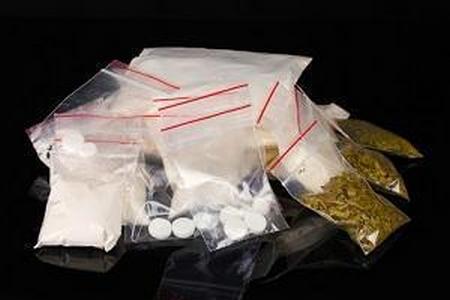 Drug trafficking is one of the more serious drug offenses, as people are often found to be transporting large quantities of drugs into and around the state. The purpose behind trafficking illegal drugs is to import large quantities of drugs into the state in order to distribute and sell those drugs in a smaller quantity to others. That is why law enforcement takes the responsibility of catching a drug trafficker so seriously.
What Is Drug Trafficking?
Drug trafficking charges are based on the type of drug that is being trafficked across state lines. If you are caught with large quantities of illegal drugs in Illinois, you can be charged with trafficking:
- Controlled substances, such as heroin, cocaine, hallucinogens, depressants, stimulants and prescription drugs, under the Illinois Controlled Substances Act;
- Marijuana, under 720 ILCS 550/4(f)-(g), i.e. possession of cannabis in a quantity of more than 2,000 grams; or

Schedule Your Free Consultation
Arlington Heights Office 3030 Salt Creek Lane, Suite 120 Arlington Heights, IL 60005 Phone: 847-253-3100


At Cosley Law Office, we represent clients throughout Illinois, including Arlington Heights, Barrington, Buffalo Grove, Des Plaines, Elk Grove Village, Glenview, Hoffman Estates, Inverness, Long Grove, Mount Prospect, Mundelein, Northbrook, Palatine, Prospect Heights, Rolling Meadows, Schaumburg, Schiller Park, Wheeling, and Wood Dale, as well as Cook County, Lake County, DuPage County, and throughout the Chicago, IL metropolitan area.
Results listed are not a guarantee or indication of future case results.

© 2026 Cosley Law Office
3030 Salt Creek Lane, Suite 120, Arlington Heights, IL 60005
847-253-3100