

Recent Blog Posts
Can the Police Take Your Blood When You are Suspected of DUI?
 When you are suspected of driving while under the influence, law enforcement may request that you submit to blood alcohol concentration testing. While this testing often takes the form of a breathalyzer test, where a breath sample is analyzed for its alcohol content, sometimes blood testing is requested to determine a suspected drunk driver’s blood alcohol concentration. Blood samples are taken in one of two ways, either as part of a DUI kit that is completed at a hospital or as part of an emergency blood draw.
- DUI Kit Blood Samples. When blood is taken as part of a DUI kit, the arresting police officer must request the blood test and the driver must consent to the blood draw. The test must be done at a hospital by a qualified medical professional (i.e., a registered nurse, licensed physician, certified paramedic or trained phlebotomist). Urine samples are often also collected when a driver completes a DUI kit.
Does Where You File for Divorce Matter?
 When you are considering divorce, there is a seemingly unending list of things to think about. Will you keep the family home? Who will be responsible for the children? Will you have to pay child support or alimony? In many cases, the implications of the divorce are given more thought than the process itself. The process includes filing the necessary paperwork, responding to the court when required, and remaining in compliance with deadlines and court orders. For many, the first important decision to be made is in regard to where the petition for divorce should be filed. An experienced divorce attorney can help you make the right choice for your unique situation.
What the Law Says
According to the Illinois Marriage and Dissolution of Marriage Act, the proceedings for a divorce are to take place in the county in which either the petitioner or the respondent resides. If you are the spouse who files, you are the petitioner, and your spouse would be the respondent. This means that the law presumes that you will file for divorce in the county where you live or where your spouse currently lives. The law also provides that your divorce matter may be redirected to any county within the state of Illinois as needed.
Retail Theft: The Difference Between Being Detained By Security and Arrested by Police
 In Illinois, retail theft under 720 ILCS 16-25 is a crime that is taken seriously by businesses, law enforcement, and the courts. It is a crime that is committed so regularly that certain stores hire their own security guards to help combat and prevent retail theft from happening. You could be stopped and detained by store employees or store security if you are suspected of shoplifting. You could also be arrested by police. But what is the difference between being detained by store security and being arrested by law enforcement?
Store Security and Employees Have Limitations
While store employees and security have the legal ability to hold a shoplifting suspect, their ability to do so is limited under the law. You can be detained by a store’s security or employees on for a reasonable length of time and in a reasonable manner. Store security is not required to read you your rights, wait for a parent or guardian, or wait for a lawyer before questioning a suspected shoplifter. However, police are required to do these things when you are placed under arrest.
What Crimes Are Most Commonly Committed In Illinois?
 Crime is a big issue in Illinois, especially in Chicago and the surrounding geographical areas. Hundreds of arrests are made every day, and convictions are made all the time. Across the state, the Illinois Department of Corrections is home to more than 45,000 inmates, who have been convicted of a number of different crimes. According to an article in the Huffington Post, the top 10 crimes that inmates have committed in Illinois include:
- Homicide. The number one crime committed by inmates in the Illinois prison system is homicide. The killing of another person accounts for more than 18 percent of the inmate population in Illinois.
- Offenses involving controlled substances. Possession, manufacturing, distribution, and trafficking of controlled substances and other drug violations of the Illinois Controlled Substances Act account for 17.5 percent of the Illinois state inmate population.
Drug Charges for High Schoolers
 One of the most devastating things a parent can have to deal with is a situation in which their son or daughter is caught with drugs at school. Not only might you as a parent be disillusioned by the whole ordeal, but you are most likely consumed with worry about your son or daughter’s future as well. Whether your child was involved in drug activity at school, was caught selling drugs, or was found in possession of drugs, you need to hire an experienced criminal defense lawyer for your child immediately. This is important because your child could be convicted of juvenile drug charges, or if your child is 18 years of age or older, but is still in high school, your child could be charged as an adult.
Teens Will Find Access To Drugs
It is unfortunate, but most teens will be exposed to some sort of drug activity while they are in high school. They might be offered drugs, they might know or watch a friend take drugs, or they may become involved in drug activity, such as buying and selling drugs. These things happen because teens don’t always make the best decisions, and sometimes they agree to things because they want to seem cool to their peers. Teens are driven by social acceptance, and so they might be pressured into taking, doing or selling drugs at school.
Drugs, Alcohol and Driving: Serious Criminal Consequences
 Driving under the influence is a serious offense in Illinois, and law enforcement does not take it lightly. Illinois law provides for three different types of DUI offenses: driving under the influence of alcohol, driving under the influence of drugs, or driving under the influence of drugs and alcohol, according to 625 ILCS 5/11-501.
Driving Under the Influence of Drugs
When it comes to driving under the influence of drugs, there are two levels of this offense: driving under the influence and driving with drugs in your system. Driving under the influence of drugs involves the arresting officer’s judgment call concerning whether you were operating a vehicle while under the influence of drugs. Only officers who have received training concerning how people behave when they are on drugs are really qualified to make this judgment call. Inexperienced law enforcement officers may lack the skill and training to appropriately and correctly identify suspected drugged drivers. In order to be convicted, there must be proof of the charge that you were under the influence of drugs at the time of the arrest. The smell of drugs (e.g., the smell of marijuana) or the driver’s admission of having taken drugs at some other time in the past is not enough. However, if drug paraphernalia is found in the vehicle, or the driver is unable to perform field sobriety tests, this evidence is more concrete.
When You Are Charged As A Repeat DUI Offender
 Being charged with a first DUI is bad enough, but being charged with a second, third or subsequent DUI can be worse. DUIs are serious matters, and anyone who has been charged with a DUI needs to seek the help of an experienced Illinois DUI lawyer immediately. The differences between facing DUI charges as a first time offender and facing DUI charges as a repeat offender are striking. Illinois law takes repeat DUI offenses very seriously. For instance:
- When you are facing a third or subsequent DUI charge, you are facing a felony charge under 625 ILCS 5/11-501(d)(2)(B);
- A second DUI conviction within 20 years of a first DUI conviction will result in driver’s license revocation for a period of five years; and
- A third DUI conviction will result in driver’s license revocation for a period of 10 years.
When it comes to DUIs, the Illinois courts can look back into your driving history for prior DUI convictions; indeed, they can look back to when you first were granted driving privileges. This means that any prior DUI conviction in Illinois will be taken into consideration when determining your punishment for a second or subsequent DUI conviction.
The New No-Fault Divorce in Illinois
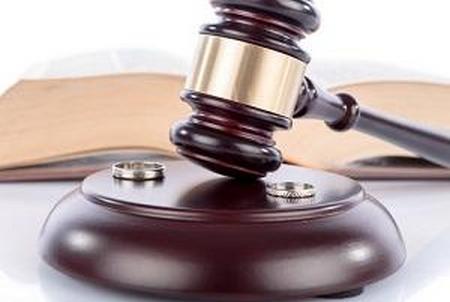 Divorce on the grounds of irreconcilable differences has been available to couples in Illinois for several decades. For most of that time, such a divorce was just one of the options that a couple had, as one spouse could still legally look to the end the marriage based on about a dozen other so-called “fault grounds,” including adultery, abuse, or abandonment. Beginning this year, however, the landscape of divorce in the state has changed such that fault no longer has any recognized place in an Illinois marriage dissolution.
Irreconcilable Differences Only
In the summer of 2015, Illinois lawmakers passed a measure that substantially reformed the Illinois Marriage and Dissolution of Marriage act on several fronts. The changes included an evolution in the state’s approach to child custody-now called the allocation of parental responsibilities-parenting time, and moving with your child to a new city. The new law also addressed the process of dissolving a marriage, eliminating all fault-related grounds from the statute. As a result, every divorce in the state will only be granted on the no-fault grounds of irreconcilable differences. It does not matter, as far as the court is concerned, which spouse did what to the other, at least as it applies to legally ending the marriage.
Understanding the Penalties of an Illinois Drug Possession Charge
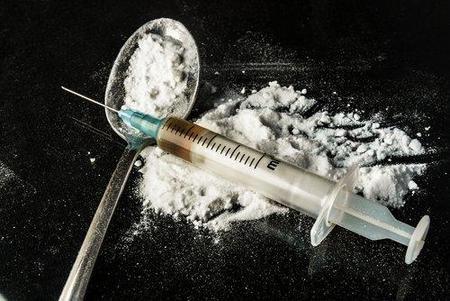 Being arrested on drug charges can have a lasting impact on your life. Besides the cost of the charge itself, your job or livelihood could be placed at risk, and you may even lose government funding if you are attending or planning on going to college. Understand how the state of Illinois processes these charges, and what you can best do to protect yourself from the adverse consequences.
Drug Scheduling in Illinois
In Illinois, the penalties of a drug charge depend on several factors, including the assigned “schedule” of the drug you allegedly had in your possession. Based on the drug’s potential for abuse and whether or not they are considered approved for medical use, this schedule is as follows:
- Schedule I drugs: opiates and opium derivatives that have a high potential for abuse and no accepted medical use (heroin, LSD, ecstasy, etc.);
- Schedule II drugs: some accepted medical use, a high potential for abuse, and the propensity to cause severe psychological or physical dependence (Demerol, OxyContin, Percocet, etc.);
Now You Must Be 21 To Buy Tobacco in Chicago
The City of Chicago is about to make some big changes to its sale of tobacco laws. Joining approximately 170 other local jurisdictions and major cities across the country, on July 1st, young Chicagoans will have to wait until they are 21 years old before they can legally buy tobacco products and accessories within the city. It does not matter the type of tobacco product: the sale of cigarettes, cigars, smokeless tobacco and pipe tobacco to people under the age of 21 is prohibited. Buying tobacco while underage is not just a juvenile offense anymore. If the law change is effective in reducing the number of young people who are smoking, by limiting legal access to tobacco products, state lawmakers have already indicated that they would consider making a similar law change state-wide.
Why Was The City Law Changed?
For many years, legislators have been concerned about the health and safety of young people. The Chicago City Council, in particular, has worried about smoking and tobacco addiction rates amongst young Chicagoans for quite some time. The main concern is that young people do not have fully developed brains before entering their twenties and this can leave young people particularly vulnerable to nicotine addiction.

Schedule Your Free Consultation
Arlington Heights Office 3030 Salt Creek Lane, Suite 120 Arlington Heights, IL 60005 Phone: 847-253-3100


At Cosley Law Office, we represent clients throughout Illinois, including Arlington Heights, Barrington, Buffalo Grove, Des Plaines, Elk Grove Village, Glenview, Hoffman Estates, Inverness, Long Grove, Mount Prospect, Mundelein, Northbrook, Palatine, Prospect Heights, Rolling Meadows, Schaumburg, Schiller Park, Wheeling, and Wood Dale, as well as Cook County, Lake County, DuPage County, and throughout the Chicago, IL metropolitan area.
Results listed are not a guarantee or indication of future case results.

© 2026 Cosley Law Office
3030 Salt Creek Lane, Suite 120, Arlington Heights, IL 60005
847-253-3100