

Recent Blog Posts
Driving Without a License: How Common is it in Illinois?
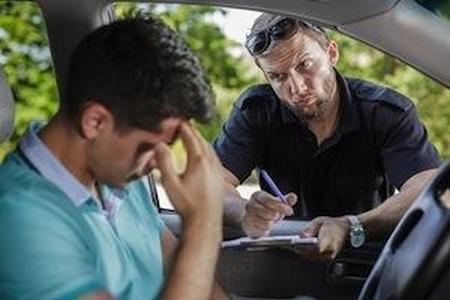 Countless people in Illinois get behind the wheel when they do not have a valid driver’s license. These drivers may have never obtained a driver’s license in the first place, could have a suspended driver’s license, or could have had their driving privileges revoked. According to a recent news article posted by WREX.com, far more Illinois drivers get behind the wheel without a valid driver’s license than onemight think.
What Motivates People to Drive Without a License?
According to the article, across the state of Illinois, state law enforcement have issued citations to more than 100,000 drivers who were behind the wheel while driving on a revoked or suspended driver’s license. Between the years of 2011 and 2015, there were more than 300,000 convictions for driving with a revoked or suspended driver’s license. Why are these numbers so high? Why do people choose to risk it and drive when they do not have a valid driver’s license?
Stay-at-Home Dads and the Allocation of Parental Responsibilities in Illinois
 While fathers have always played an important role in the upbringing and development of children, they have not always been treated as such by the courts. This was often due to the assignment of traditional gender roles. Further, it was originally thought that the mother was more critical in the child’s early years. Yet, as time passed, fathers began to gain some important recognition in the lives of their children. The composition of families also started to change. Now there are fathers who stay home with their children and mothers who work outside of the home. Does this necessarily affect the allocation of parental responsibilities or assignment of parenting time in divorce though? It is possible but not guaranteed.
How Child-Related Matters Are Determined
In Illinois, divorcing parents are permitted to negotiate an agreement regarding the allocation of parental responsibilities and parenting time details of their case. Generally, this offers numerous benefits for families, including the freedom to create a parenting plan that is more tailored to their family’s specific needs. For example, if the couple feels the child and family would benefit most from the father receiving a greater allocation of parental responsibilities and parenting time because he works from home, they could create and agree upon a parenting plan that reflects this decision.
What Are Your Rights at a DUI Checkpoint?
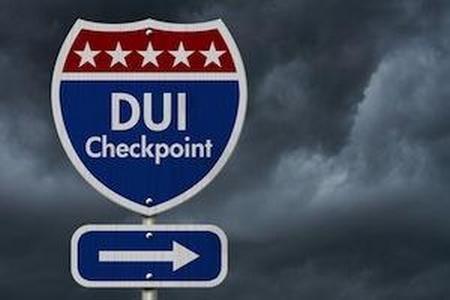 DUI checkpoints are common in Rolling Meadows and the surrounding areas. Law enforcement will setup a checkpoint-a temporary stop-to seeif a driveris intoxicated on drugs or alcohol while driving.However, theproblem with DUI checkpoints is that the police officers who man these stopsmaytake too many liberties when it comes to investigating potentially intoxicated drivers. Therefore, itis important to understand your rightsif you are stopped.
You Do Not Have to Answer Questions
Often,drivers do not realize that they are not required to answer a police officer’s questions when stopped at a DUI checkpoint. When a police officer asks where you wereearlier in the evening, or where you are going, you do not have to answer. Police officersaskthese questions to gather evidence against you, and you do not have to incriminate yourself. If you are not under arrest, then the police have no right to interrogate you. As such, you can politely decline to answer their questions at a DUI checkpoint.
The Offense of Drug Delivery in Illinois
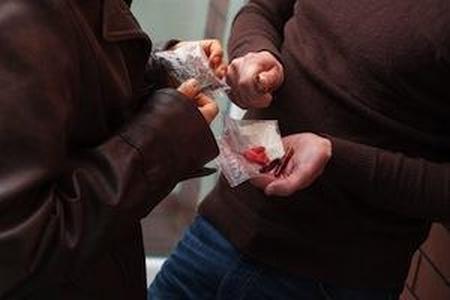 Drug crimes are some of the most frequently committed criminal offenses in Illinois. One common drug offense is drug delivery. The possession of a drug with the intent to deliver is another very similar drug offense. These drug charges are often asserted against alleged drug dealers.
Illinois Drug Delivery Offense
When an illegal drug actually changes hands, the offense is referred to as a drug delivery offense. However, when illegal drugs do not change hands, yet the person who is in possession of the drug was likely to have delivered the drugs to another individualwithout beingintercepted by law enforcement,the offense is referred to as possession with the intent to deliver.
Drug delivery and possession with the intent to deliver are criminal offenses, regardless of the type of drug that iscaught in your possession. For instance, you may be caught with controlled substances such as heroin, cocaine, stimulants, depressants, hallucinogens or prescription drugs-all illegal under the Illinois Controlled Substances Act. You could also be charged with drug delivery or possession with the intent to deliver marijuana, under 720 ILCS 550/4 of the Cannabis Control Act, or methamphetamines, under 720 ILCS 646/55 of the Methamphetamine Control and Community Protection Act.
Possession of Stolen Property in Illinois
 The crime of theft encompasses many different charges under Illinois law. Not only is it a crime to commit theft by being the person who knowingly takes property belonging to another without permission, which is the case in crimes such as vehicle theft or shoplifting, but it can also be a theft crime if you end up in possession of stolen property. Similarly, it is a crime to be involved in a complicated white collar theft or fraud plot, where you might not be the ringleader of the theft, but are still a beneficiary.
In Illinois, you can be charged with a theft crime even if you are not the person who took the property from its rightful owner. To say this another way, you do nothave to be the person who physically commits the theft act; you could be a beneficiary or recipient of stolen property or money and still be just as criminally liable as the actual thief.
Frightening Facts About Juveniles and Crime in Illinois
 Teens and young adults sometimes make poor decisions. As a result, they mayend up being charged with a crime. Teens may even beinvolved in criminal activities on a regular basis when they are caught, or theymay be first-time offenders. If your teen is involved in a crime, speaking with a skilledcriminal defense attorney is essential.
Teens, Crime, and the Statistics
Manycrimes that are committed by juvenilesoccur while they are at school.For instance, according to a 2014 National Report on Juvenile Offenders produced by the U.S. Office of Juvenile Justice and Delinquency Prevention, some frightening statistics about juveniles and crime while in school in Illinois include:
- 3.9 percent of juveniles questioned reported having taken a weapon to school with them within the past 30 days prior to being surveyed;
- 7.6 percent reported having been threatened in school by a weapon possessed by a classmate;
Know Your Parenting Style to Reduce Co-Parenting Conflict
 Differences in values and parenting philosophies can cause conflicts between two people. Not only can these differences cause difficulties with parenting after a divorce, they can be part of the reason why a couple divorced in the first place. But as a divorced parent, working cooperatively with your former spouse for your child's benefit is an important skill to develop
One way to reduce co-parenting conflicts is to understand your parenting style and that of your former partner. Developmental psychologists have identified four distinct parenting styles: authoritative, authoritarian, permissive, and uninvolved. Most parents' individual styles fall somewhere between two or more of these archetypes. By recognizing where your parenting style falls as well as your former partner's parenting style, you can develop a coherent parenting plan that works for all members of your family.
The Impact a Few Traffic Violations Can Have on Your Visa Status
 Foreign nationals who wish to come to the United States, either for work, school, or anotherpurpose, gain entry through a visa. Anumber of different types of visas are awarded based on the reason for the foreign national’s stay in the United States. However,there are also many restrictions on visas. If these restrictions are violated, one’s visa can berevoked by the U.S. government. For instance, a visa can be revoked if the visa holder is convicted of committing a crime in the United States.
Barred From Re-entry Into the U.S.
Being convicted of a criminal offense in the United States is often a violation of the terms of your visa. Therefore,if you leave the country and try and return to the United States, you will most likely be barred from re-entry into the United States by immigration officers at the airport, or via your port of entry. Moreover, youcould be denied entry into the United States for years.
Theft Crimes That Involve Theft of a Vehicle in Illinois
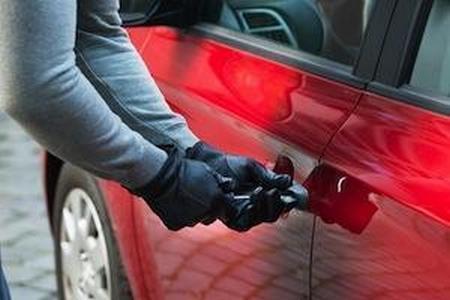 Stealing a motor vehicle is a serious offense in Illinois. There are severaldifferent theft crimes that involve the unauthorized taking of a vehicle, and state prosecutors do not take kindly to criminal defendants who allegedly take things that do not belong to them. Theft crimes involving a vehicle include stealing a car, trespass to a motor vehicle, carjacking, and failure to return a rental vehicle. If you are facing criminal charges that involve the theft of a vehicle, you need to get in touch with an experienced criminal defense attorney as soon as possible.
Stealing a Car
In Illinois there is no specific statute focused directly on the theft of a vehicle. Instead, when a car is stolen state prosecutors pursue the criminal defendant under the traditional Illinois theft statute. Car theft is committed when a person knowingly takes a vehicle belonging to another without permission and with the intent to deprive the vehicle’s owner of the use of the vehicle permanently.
Check Forgery is a Form of Theft
 Delivering a forged check, a check that is not signed by the real owner of the checking account or a check that is fabricated or altered in some way, is considered to be a deception-based criminal offense under 720 ILCS 5/17-1(B). When a person tries to pass off a forged or fake check as if it were a real check, the person is trying to knowingly defraud the check’s recipient in order to financially benefit from the deception. Check forgery is a form of theft.
What is Required to Prove Check Forgery?
Someone who is facing charges for check forgery in Illinois will be mercilessly prosecuted by the state. In order to get a check forgery conviction, the state prosecutor must show:
- That the defendant knowingly made or altered a check;
- The purpose of defrauding another;
- Where the check was made or altered to look like it was issued by another; and

Schedule Your Free Consultation
Arlington Heights Office 3030 Salt Creek Lane, Suite 120 Arlington Heights, IL 60005 Phone: 847-253-3100


At Cosley Law Office, we represent clients throughout Illinois, including Arlington Heights, Barrington, Buffalo Grove, Des Plaines, Elk Grove Village, Glenview, Hoffman Estates, Inverness, Long Grove, Mount Prospect, Mundelein, Northbrook, Palatine, Prospect Heights, Rolling Meadows, Schaumburg, Schiller Park, Wheeling, and Wood Dale, as well as Cook County, Lake County, DuPage County, and throughout the Chicago, IL metropolitan area.
Results listed are not a guarantee or indication of future case results.

© 2026 Cosley Law Office
3030 Salt Creek Lane, Suite 120, Arlington Heights, IL 60005
847-253-3100