

Recent Blog Posts
Burglary: The Elements of the Offense in Illinois
 Burglary is generally defined as the breaking and entering into the house of another for an unlawful purpose. However, it is important to note that burglary is one of those crimes that is defined slightly differently in each state.
In Illinois, breaking in is not a required element of burglary and there are several different listed entities beyond homes and structures that can be burgled.
Illinois Statutes Section 19-1: Burglary
According to section 19-1 of the Illinois Statutes, an individual commits the crime of burglary when, without the authority to do so, he or she knowingly enters or remains within a building, watercraft, house trailer, aircraft, railroad car, motor vehicle, or any part thereof, while intending to commit theft or a felony therein. This statute can be broken down into the following key elements:
- Knowingly Entering or Remaining: Some people mistakenly believe that an offender must physically break something to gain access (for example, a window) in order to commit the crime of burglary. However,in Illinois this is not the case. No physical breaking in is necessary. Instead, the offender must only knowingly enter or remain without the authority to do so. For example, if a teenager intentionally remains in a department store after closing, a court would likely find that he or she knowingly remained in a building without the authority to do so and has therefore fulfilled the knowingly enters or remains requirement of burglary.
DUI Testing in Illinois
 When a police officer pulls you over on suspicion of driving under the influence in Illinois, he or she will likely ask to see your license and registration, ask if you have been drinking, and, if he or shestill suspects that you are intoxicated, administer one or more of the field sobriety tests described below.
Field Sobriety Tests
Field sobriety tests are simple tests that police officers administer on the side of the road after pulling a driver over in order to predict blood alcohol concentrations of 0.08 and above. Approved standardized field sobriety tests in Illinois include:
- The Horizontal Gaze Nystagmus: To administer this test the officer asks the driver to follow the tip of his or her pen or finger with only his or hereyes. During this test the officer is looking to see whether the driver is experiencing nystagmus, an involuntary jerking of the eye that is magnified when a person consumes alcohol or certain other drugs.
Emergency Orders of Protection
 Approximately one in three women and one in four men have been the victims of physical, sexual, or emotional abuse at the hands of their intimate partner. If you or your child have been victims of domestic violence, you may feel alone, frightened, or confused. You want things to be different but you may be unsure as to your next steps. In many cases of domestic violence, the first step is to place a legal barrier between yourself and your abuser. Petitioning the court for an emergency order of protection can help ensure the safety and security of you and your child.
How to Get an Emergency Order
Fortunately, requesting an emergency order of protection is rather simple. You can file your petition with the court of the county you live in or in the county where you are temporarily staying. Your petition can also be filed in the county where your abuser lives. You can file your petition with an available circuit court judge or associate judge if the court is closed for the weekend or a holiday. The process requires you to make a sworn statement regarding your abuse, usually in the form of an affidavit. Based your testimony, the judge can issue an emergency order of protection without the appearance of your abuser.
What Does it Mean to Manufacture a Controlled Substance in Illinois?
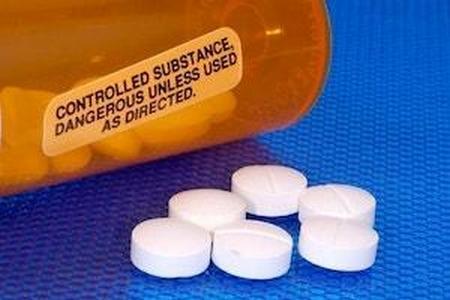 In Illinois, it is illegal under state law to manufacture a controlled substance. But what does this actually mean? In general terms, it means that an individual can be convicted of a crime if he or shemakes illegal drugs or other substances. However, the legal definition is quite a bit more specific.
Key Definitions re the Unlawful Manufacture of a Controlled Substance
Under the Illinois Controlled Substances Act the terms “manufacture” and “controlled substance” are carefully defined as follows below.
Manufacture: The Illinois Controlled Substances Act defines the term “manufacture” as “the production, preparation, propagation, compounding, conversion, or processing… either directly or indirectly by”:
- Extracting substances of natural origin;
FAQs About the Juvenile Justice System
 Roughly 100 years ago a juvenile justice system was established in the United States in order to divert young offenders away from the standard criminal justice system and into an alternative system focused on rehabilitation. Today the juvenile justice system still places great importance on rehabilitation. Yet nowadays the system also focuses on punishment, accountability, and promoting public safety as well.
It is also important to note that today each state has it has own juvenile justice system and that each of these 51 systems embraces slightly different objective and operates slightly differently. Therefore, any case specific questions relating to the juvenile justice system in Illinois should be directed to a local juvenile charges defense lawyer. Still,some frequently asked questions about the juvenile justice system at large have been answered below.
Shared Parenting Time Now Affects Child Support Obligations
 Over the last couple of weeks, we have been talking about the new child support law in Illinois. As you are now probably aware, the state legislature passed a measure last year that took effect July 1, 2017, and changed how child support obligations are calculated in the state. The most impactful change brought about by the new law is the shift from considering just one parent’s income when calculating child support to taking both parents’ income into account. With that change alone, the new law would be more equitable than the previous version, but there are other factors that could also affect the calculations. For example, according to the new child support model, shared parenting time may now be considered when determining a paying parent’s obligation.
Previous Concerns
Under the previous child support law, paying parent’s obligation was based on two main factors-his or her income and the number of children being supported. The payment amount was, in most cases, a percentage of the paying parent’s income, using a table provided in the law. He or she would pay 20 percent of his or her net income for one child, 26 percent for two, on up to 50 percent for six or more children. The support obligation, however, was not affected by the amount of parenting time the paying parent enjoyed. As a result, a parent with 45 percent of the parenting time with his or her child could still be obligated to pay the same as a parent with 5 or 10 percent of the parenting time, presuming the same number of children and similar incomes.
Drug Paraphernalia is Illegal in Illinois
 Did you know that under some circumstances it is illegal to possess drug paraphernaliain Illinois? In fact, you can be arrested and charged with a crime if you possess drug paraphernalia with the intent to use that paraphernalia to ingest an illegal substance, regardless of whether or not you also had drugs on you at the time.
Illinois’ Unlawful Possession of Drug Paraphernalia Statute
Under code section 720 ILCS 600/3.5 of the Illinois Compiled Statutes it is illegal to knowingly possess drug paraphernalia with the intent to use the paraphernalia to take cannabis or a controlled substance (or to prepare cannabis or a controlled substance to be taken).
Unlawful possession of drug paraphernalia is a Class A misdemeanor that is punishable by a minimum fine of $750 and that can be punished by a fine of up to $2,500 and/or up to one year in jail.
Are DUI Checkpoints Constitutional?
 A DUI checkpoint (also commonly referred to a sobriety checkpoint or a DUI roadblock) is a roadblock initiated by the police in order to stop every vehicle (or a subset of vehicles) in order to assess the sobriety of drivers passing through. These checkpoints are often set up at times when drunk driving is most prevalent (namely around the holidays and on weekends) and on streets that see a disproportionate number of drunk drivers.
The Constitutionality of DUI Checkpoints
Generally speaking, police officers in the United States are only allowed to pull a driver over if they have a reasonable suspicion that the driver has broken the law.
However, in the landmark case Michigan v. Sitz, the U.S. Supreme Court held that sobriety checkpoints where drivers are stopped without reasonable suspicion of wrongdoing are in fact constitutional because the government’s interest in preventing drunk driving outweighs the inconvenience to the individuals who are stopped and that, therefore, DUI checkpoints are an exception to the search and seizure provision of the Fourth Amendment.
Minors Caught With Alcohol in Illinois
 The legal drinking age in Illinois, and throughout the United States, is 21. However, it is also illegal for those under 21 to even just possess alcohol in Illinois. Unlawful possession of alcohol by a minor and unlawful consumption of alcohol by a minor are related, yet distinct, crimes in Illinois.
Unlawful Possession of Alcohol by a Minor
Under Illinois’ Liquor Control Act (235 ILCS 5/1 et seq.) it is illegal for an individual who is under 21 years of age to possess alcohol. But what does it mean, in a legal sense, to “possess” something?
In this case, alcohol can be possessed either physically or constructively. Physical possession essentially means holding a container with alcohol in it. Constructive possession, on the other hand, means that you have both the intent as well as the ability to control the alcohol.
Domestic Battery: When Does Disciplining a Child Become Abuse?
 There is great debate these days among parenting “experts” about whether or not children should be physically disciplined when they misbehave. Some think that children should never be physically reprimanded, others believe in spanking, and some feel that more violent forms of punishment (such as hitting a child with a stick or whipping them with a belt) is permissible.
Regardless of how you feel about corporal punishment as a parenting technique, it is critical that every parent in Illinois understands the legal line that our state has drawn between physical discipline and child abuse. It should be noted that this line is not as clear-cut as you might expect; however, this article explores the legal distinction between physical discipline and abuse according to Illinois law.
The Legal Line Between Physical Discipline and Abuse

Schedule Your Free Consultation
Arlington Heights Office 3030 Salt Creek Lane, Suite 120 Arlington Heights, IL 60005 Phone: 847-253-3100


At Cosley Law Office, we represent clients throughout Illinois, including Arlington Heights, Barrington, Buffalo Grove, Des Plaines, Elk Grove Village, Glenview, Hoffman Estates, Inverness, Long Grove, Mount Prospect, Mundelein, Northbrook, Palatine, Prospect Heights, Rolling Meadows, Schaumburg, Schiller Park, Wheeling, and Wood Dale, as well as Cook County, Lake County, DuPage County, and throughout the Chicago, IL metropolitan area.
Results listed are not a guarantee or indication of future case results.

© 2026 Cosley Law Office
3030 Salt Creek Lane, Suite 120, Arlington Heights, IL 60005
847-253-3100