

Recent Blog Posts
Domestic Violence and Protective Orders in Illinois: A General Overview
 Protective orders (also commonly referred to as restraining orders) are civil orders designed to protect alleged domestic violence victims (and sometimes their family members as well) against future abuse. Under the Illinois Domestic Violence Act courts in Illinois are permitted to issue a protective order if any of the following types of domestic violence has likely been perpetrated against the requesting petitioner, or their minor child, by a family or household member:
- Physical abuse,
- Harassment,
- Intimidation of a dependent,
- Interference with personal liberty, or
- Willful deprivation.
Who Qualifies as a “Family or Household Member?”
It is important to note that in Illinois a domestic violence protective order can only be issued if the alleged abuser is a family or household member of the petitioner. Code section 750 ILCS 60/103(6) defines “family or household member” as:
How to Handle Yourself During a Traffic Stop
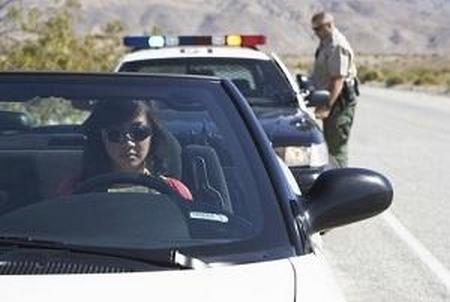 Most of us are familiar with the irrational fear that starts to creep up when you are sitting at a traffic light and police car either pulls up beside or behind you. A million things go through your mind at the same time: How long was the cop following me? Was I speeding before? My registration gets renewed next month, right? Where is my insurance card? In most cases, the officer has probably barely noticed you or your vehicle. When the flashing lights go on behind you, however, the situation changes dramatically.
If you are being pulled over for a traffic violation, be sure to:
- Pull over and stop as soon as it is safe to do so. Put on your turn signal immediately and begin to slow down so the officer knows your intent. It may be a little while before you can safely stop, but the officer will understand and appreciate your caution;
- Roll down your window and keep your hands on the steering wheel. The officer may approach from either side, and keeping your hands visible is a way to show the officer that you intend to cooperate. When you are asked for your license, registration, and proof of insurance, have them ready and ask for permission to move so that you can get them;
How to Defend Against a Shoplifting Charge
 Under Illinois law shoplifting (also commonly referred to as retail theft) occurs when someone knowingly steals goods from a retail establishment. While shoplifting in Illinois can be committed in any of the various ways enumerated under 720 ILCS 5/16-25, shoplifting most commonly occurs when someone:
- Takes merchandise from a retail establishment without paying for it; or
- Exchanges the packaging of one item with the packaging of a lower priced item in order to pay a lower price.
Commonly Asserted Defenses
Although every shoplifting defense must be tailored to suit the facts of the applicable case, many shoplifting cases contain similar facts and, therefore, shoplifting defendants often assert similar defenses. Commonly asserted shoplifting defenses include:
- I did not intent to steal the merchandise: Intent is a key element that must be proven before a defendant can be convicted of shoplifting. In order to secure a shoplifting conviction in Illinois the prosecution must prove that the defendant knowingly stole. Therefore, if a defendant can prove that he or sheaccidentally walked out of the store with merchandise that did not belong to him or her,then his or hercharge will be dismissed. Sometimes a defendant can prove that he or shedid not intentionally take merchandise by producing evidence (usually via the store’s security cameras) showing that he or she wasdistracted by a phone call, text message, his or hercrying child, etc. just before exiting the store.
The Ins and Outs of Claiming Self Defense in Illinois
 In law and order television programs,characters seen under attack are often able to fight their attackers. In these dramatic scenes, the aggressors end up dead. Viewersare led to believe that everything will work out for the victims as they tell the authorities that they reactedin self defense, killing their attackers, and they are then able to simply returnhome.
While it is true that in America self defense is an affirmative defense (i.e. a defense that will negate liability even if the defendant committed the alleged acts) it should be noted that claimingself defense is actually a bit more complicated in reality.
The Components of a Successful Self Defense Claim in Illinois
Illinois’ self defense statute contained in 720 ILCS 5/6-4 (also sometimes referred to as the use of force in defense of person statute), spells out the requirements that must be met in order for a criminal defendant to successfully argue that he or she wasjustified in using force to defend himself or herself.
Can a Sleeping Driver be Arrested for DUI in Illinois?
 We all know that driving under the influence is illegal, but is it illegal to sleep one off in your car? You may be surprised to learn that, in Illinois, the answer is yes, under some circumstances.
Under code section 625 ILCS 5/11-501(a), it is illegal to drive or be in actual physical control of a vehicle in Illinois while under the influence of alcohol or an intoxicating compound to a degree that you are not capable of driving safely. Therefore, if a court of law determines that an individual had actual physical control of the vehicle that they were sleeping in while intoxicated then that person can rightfully be convicted of driving under the influence in Illinois.
What Does it Mean to Have “Actual Physical Control” of a Vehicle?
Having “actual physical control” of a vehicle essentially means having the ability to operate the vehicle. Illinois case law notes that a person does not need to move, or even have the intent to move, a vehicle to have actual physical control.
Orders of Protection and Parenting Time Questions
 Domestic violence is sadly an all too common occurrence in this day and age. It can destroy lives and families. Besides its obvious dangers, it can also cause significant, long-lasting harm to the children of families who go through it. Allegations of domestic violence are taken extremely seriously considering parental responsibility and parenting time questions. If you have been the victim of domestic violence, you may be able to show that your abusive spouse should have no further contact with your children, even in a situation where they would otherwise have co-parenting rights.
Illinois Definition
Illinois defines domestic violence as not only physically injuring a family member (whether they are related by blood, marriage, or adoption), but also “interfering with personal liberty,” in situations such as kidnapping or false imprisonment. When there are children involved, there is even more of a zero tolerance policy than there would be otherwise. The Illinois legislature actually holds, as a matter of policy, that cases of domestic violence involving children are generally to be handled with special consideration.
Hit and Run Accidents in Illinois
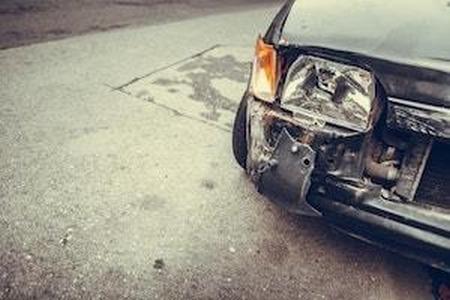 According to the Daily Herald, the Illinois State Police are searching for a semi truck driver who fled after hitting a 48-year-old tollway maintenance worker recently. The victim was picking up trash on the shoulder of the southbound Tri-State Tollway when the trucker allegedly hit him and sideswiped his parked vehicle. The driver did not stop and, sadly, the worker passed away from his injuries.
Fleeing the scene of an accident is illegal in Illinois and if the driver is found by the authorities, then he or she will undoubtedly find himself or herself in a world of legal trouble.
Fleeing the Scene of an Accident
Under code section 625 ILCS 5/11-401 of the Illinois Compiled Statutes, any driver who is involved in a motor vehicle accident involving personal injuries or death is legally obligated to immediately stop his or hervehicle.
Embezzlement in Illinois: The Need to Know Basics
 Embezzlement is a type of theft that occurs when a person who has been entrusted with another’s property fraudulently keeps that property for his or herown personal gain or illegally transfers it to a third party. Embezzlement most frequently occurs when money is entrusted to the care of someone who then misappropriates that money in some way.
Examples of Embezzlement
While embezzlement can occur in countless ways, common examples of embezzlement include the following:
- A waitress who pockets cash from a patron’s bill and enters a lesser amount into the cash register so that the till still balances at the end of her shift;
- A payroll department manager of a large company who adds his family members who do not work for the company to the payroll in order to collect checks that they have not earned; or
Challenging an Order of Protection Based on False Accusations
 There is no doubt that domestic violence continues to be a scourge on families throughout Illinois and across the country. Those who claim otherwise are sadly misguided. While domestic abuse affects millions of individuals and families, it does not necessarily happen in every household. The nature of the problem, however, means that accusations of abuse are often taken very seriously while claims of innocence by the accused tend to fall on deaf ears. Sometimes, such accusations can be formalized in an order of protection, resulting in the restriction of certain rights and freedoms for the accused. If the accused has done nothing wrong, this is not only unfair but also completely unacceptable.
Sadly, it is relatively easy for a person who feels betrayed or angry-including a spouse going through a particularly nasty divorce-to exaggerate or make up stories of abuse at the hands of a former partner. The accuser may be trying to gain an advantage in proceedings for the allocation of parental responsibilities (child custody) or he or she may simply want to make life more difficult for the accused. If you find yourself in such a situation, it is important to know what to do to protect yourself.
The Consequences of Driving Without Insurance in Illinois
 In Illinois, drivers are required by the Illinois State Legislature Vehicle Code to carry at least a minimum amount of auto insurance. Currently, in order to meet our state’s auto insurance requirements, Illinois drivers must carry at least the following amounts of liability insurance:
- $25,000 for bodily injury per person,
- $50,000 for bodily injury coverage per accident,
- $20,000 for property damage,
- $25,000 for uninsured motorist bodily injury coverage per person, and
- $50,000 for uninsured motorist bodily injury coverage per accident.
Some people mistakenly believe that driving without adequate auto insurance in Illinois is not a big deal; however, in reality, drivers who are caught failing to meet our state’s insurance requirements suffer a number of different consequences, the most severe of which are outlined below.

Schedule Your Free Consultation
Arlington Heights Office 3030 Salt Creek Lane, Suite 120 Arlington Heights, IL 60005 Phone: 847-253-3100


At Cosley Law Office, we represent clients throughout Illinois, including Arlington Heights, Barrington, Buffalo Grove, Des Plaines, Elk Grove Village, Glenview, Hoffman Estates, Inverness, Long Grove, Mount Prospect, Mundelein, Northbrook, Palatine, Prospect Heights, Rolling Meadows, Schaumburg, Schiller Park, Wheeling, and Wood Dale, as well as Cook County, Lake County, DuPage County, and throughout the Chicago, IL metropolitan area.
Results listed are not a guarantee or indication of future case results.

© 2026 Cosley Law Office
3030 Salt Creek Lane, Suite 120, Arlington Heights, IL 60005
847-253-3100