

Recent Blog Posts
FAQs About Shoplifting in Illinois
 Shoplifting (also know as retail theft) is the willful theft of goods from a retail establishment while posing as a customer. Shoplifting is a crime that occurs frequently in Illinois and throughout the United States. In fact, the National Association for Shoplifting Prevention (NASP) reports that more than 10 million people have been caught shoplifting in the United States over the last five years.
Despite the prevalence of shoplifting, this crime is not frequently reported on and is often misunderstood. Consider the followingfrequently asked questions about shoplifting and Illinois’ shoplifting laws.
Q: What is the profile of a typical shoplifter?
A: According to the NSAP, there is not really a “typical shoplifter.” Men and women appear to steal from stores at comparable rates. However, approximately 75 percent of shoplifters are adults while only 25 percent are children.
Revoked vs. Suspended Driver’s License: The Difference in Illinois
 Section 6-303 of the Illinois Code makes it illegal to drive a motor vehicle if your driver’s license is revoked or suspended. But what is the difference between a revoked license and a suspended license?
An article from The Balance summarizes the key difference well by noting that “a suspended license is bad and a revoked license is very bad-a suspended license is a temporary hardship, but a revoked license is permanent.” Consider the following additionaldifferences that differentiate a revoked driver’s license from a suspended driver’s license in Illinois.
Key Differences
The main difference between a revoked driver’s license and a suspended license is that suspensions have an end date while revocations mean an indefinite loss of your driving privileges. This is because a suspended driver’s license can be reinstated after you have attended a reinstatement hearing with a Secretary of State hearing officer and have complied with all post-hearing requirements.
Petty Traffic Offenses & Misdemeanors
 It is not uncommon for people to treat moving violations as inconsequential or somehow beneath notice, therefore paying the requested fine quickly and proceeding on their merry way. However, many will then receive a rude awakening as their driving privileges are affected, especially if they have a history of multiple speeding tickets or other moving violations. Therefore, it is important for Illinois drivers to be aware of the potentially punitive consequences that may result if too many tickets or citations are incurred.
Classification Differences
The significant majority of traffic offenses are characterized as either petty or as misdemeanors under Illinois law. Petty offenses are punishable with merely a fine, usually no more than $1,000, though there are always exceptions depending on the egregious nature of the conduct. Examples include driving without auto insurance and failing to wear a seat belt while driving or riding in an automobile. While a petty offense is still something to take seriously, it is the lightest type of offense that can appear on one’s record, and is the classification for which it is most likely to receive supervision or probation as a sentence instead of a particularly heavy fine.
Casual Relationship Contracts
 If you are planning to get married in the near future, you may have given some thought to a prenuptial agreement. For those with complicated finances or business interests, a prenuptial agreement can be used to help avoid problems down the road. But what about your relationship itself? Is there anything you can do to designate who will have what responsibilities during your marriage? As it turns out, there just might be a type of non-binding contract worth your consideration.
A New Type of Marriage Contract
The New York Times recently ran an article entitled “To Stay in Love, Sign on the Dotted Line” which has created a great deal of interest in various circles. The author explains that she and her boyfriend use a relationship contract to keep track of their mutual goals and aspirations as well as to spell out rules for their relationship. The two live together so the contract specifies everything from who will do what chores and when to a dog-walking schedule to financial guidelines. For example, the contract provides that when the couple goes out to dinner the bill will be split but leaves exceptions for special events or if one person wants to treat the other. The author admits that this idea may seem businesslike, but that is it deeply important to her and her partner. “Writing a relationship contract may sound calculating or unromantic,” she writes, “but every relationship is contractual; we’re just making the terms more explicit. It reminds us that love isn’t something that happens to us - it’s something we’re making together.”
City Admits Wrongdoing When Trying to Fix Previous Error on Red Light Tickets
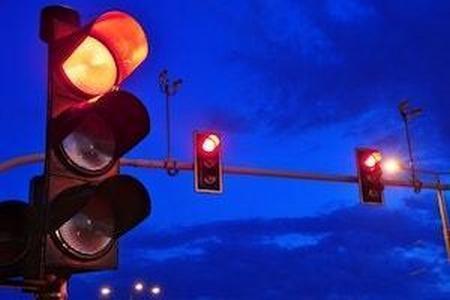 The city of Chicago had inaccuracies on 1.9 million red light and speed-camera tickets. In an attempt to correct this mistake, it appears that Mayor Rahm Emanuel may have exacerbated the issue.
City Hall sent mail to recipients of the red light and speed camera tickets. The letters received attempted to offer another chance to appeal the tickets in court. The measure is widely identified as an effortto ward off a class-action lawsuit, pleading that the city failed to provide ticket holders enough time or notice to challenge their tickets.
One Cook County resident received five red light camera tickets for which she could only make out two of the videos. She was quoted as saying, “It’s alarming that they would do something like this.”
An official spokesman, Michael Claffey, indicated that the process to correct the faultin the system denying people adequate notice to contest their tickets would take considerable time to rectify.
Criminal Cases: Who Needs Science for Scientific Evidence?
 Attorney General Jeff Sessions recently announced that the National Commission on Forensic Science is to be dissolved. The National Commission on Forensic Science is a non-political commission whose mandate is to oversee and advance the reliability and preciseness of scientific evidence used in criminal cases.
The commission is made up of a mixed group of people who are trained to monitor and audit the uses of scientific evidence. Various agencies including federal, state, and local forensic service providerswork together to strengthen the reliability of forensic science as a whole and particularly how it is used in criminal cases.
Forensic evidence explains a type of evidence that can come in many forms. Forensic evidence can be:
- Dental records;
- Fingerprints;
- Genetic material;
- Trace chemicals;
My Teen Has Been Arrested. Now What?
 Raising children can be one of the most rewarding yetchallenging parts of adult life. Our children goout into the world as extensions of ourselves, and as parents we constantly worryabout their safety and how we can keep them out of trouble. Weeven attempt to plan ahead for any potential issues that may arise-we teach ourchildren the difference between right and wrong and instill moral values. Still, bad decisions are made.
Decisions can Become Criminal in a Split Second
It only takes a moment for an otherwise thoughtful and law abiding teen to make a decision that can change the rest of his or her life. According to federal records in 2010, 1.6 million juveniles were arrested. Recent governmental research suggests that nearly 30.2 percent of American citizens will be arrested by the time they are 23 years of age.
Illinois Mayor Opposes Consent Decree
 When recently asked about an independent federal monitor, Chicago Mayor Rahm Emanuel explained that “it is exactly the right way,” in regards to proposed oversight for the Chicago Police Department.
Negotiations between the Mayor and the Justice Department are focused on a memorandum of agreement. This would incorporate the structure for approving reforms that federal authorities have advocated for in the wake of several controversies whichhave rocked the Chicago Police Department in recent years.
Justice Department approval would still be required for the oversight measures to go into effect. The measures would include explicit oversight by an appointed independent monitor to oversee the proposed reforms. The Mayor’s administration believes that this is an important step further. However, some reform advocates are not satisfied.
The Difference Between an Assault Charge and a Battery Charge
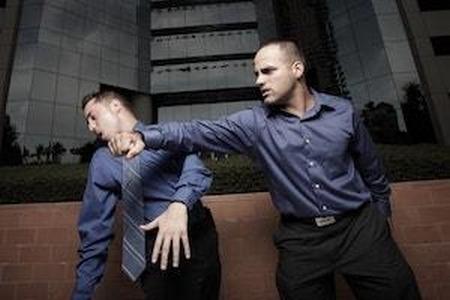 Assault and battery is a common criminal charge. We often see the charges linked together as if they are the same offense. However, in the state of Illinois, these are two distinct charges that many times go hand in hand with each other but do not have to.
Criminal assault in Illinoisis defined as an act or conduct that places another individual in reasonable apprehension of bodily harm. Whereas, a battery is the actual unwanted, unsolicited physical conduct which usually immediately follows an assault. Still, there can be a battery without the accompanying assault charge-the same way one can be charged with assault without being charged with a battery.
Why Does the Difference Matter?
The difference between the two matters because the available defenses differ based on the crime or crimes with which you are being charged. For example, self-defense is a common defense to a battery allegation; however, self-defense is not a traditional defense to a pure assault charge.General defenses to assault and battery charges include:
How Stalkers Can Use Your Own Phone Against You
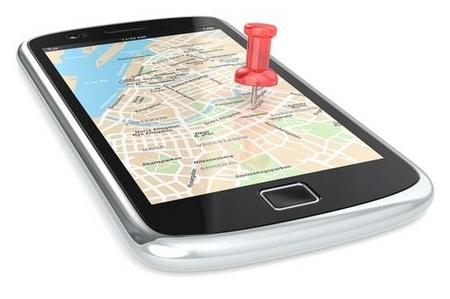 Cyberstalking is becoming an increasingly common component of domestic abuse. Most cell phones have GPS and location features which could be providing an abuser with a victim’s exact location, and it happens more than you might think.
To determine the extent of the problem, NPR interviewed 70 domestic violence shelters across the United States, and the results are staggering. Nearly 85 percent of shelters reported that they work with victims whose abusers used GPS to stalk and harass them. Even more disturbing, three-quarters of shelters have found hidden apps on victims’ mobile devices used to eavesdrop on conversations. Most domestic abuse shelters encourage victims to turn off the location services on their cell phones and to disconnect from social media apps like Facebook to help prevent this.
The Main Goal of Stalking Is to Gain Control
Cell phones are not the only risk related to being cyberstalked. A woman in Jamaica Plain, Massachusetts, discovered a GPS tracking device in her shoes, which was feeding location information to her abuser. Many abusers will use the information gathered from these types of malware to harass their victims and gain power over them. For example, an abuser may constantly question the victims’ whereabouts and forbid them from going to certain homes or locations.

Schedule Your Free Consultation
Arlington Heights Office 3030 Salt Creek Lane, Suite 120 Arlington Heights, IL 60005 Phone: 847-253-3100


At Cosley Law Office, we represent clients throughout Illinois, including Arlington Heights, Barrington, Buffalo Grove, Des Plaines, Elk Grove Village, Glenview, Hoffman Estates, Inverness, Long Grove, Mount Prospect, Mundelein, Northbrook, Palatine, Prospect Heights, Rolling Meadows, Schaumburg, Schiller Park, Wheeling, and Wood Dale, as well as Cook County, Lake County, DuPage County, and throughout the Chicago, IL metropolitan area.
Results listed are not a guarantee or indication of future case results.

© 2026 Cosley Law Office
3030 Salt Creek Lane, Suite 120, Arlington Heights, IL 60005
847-253-3100