

Recent Blog Posts
Consequences of Driving with a Suspended or Revoked License
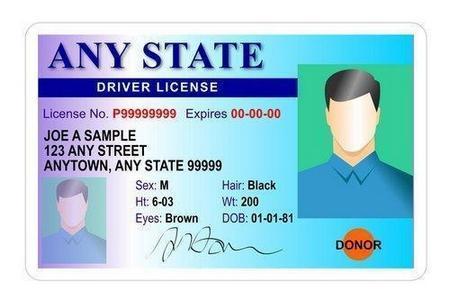 When your driver’s license has been suspended or revoked, it can become a significant inconvenience for you. You cannot drive yourself places and may have to rely on others for help.
Some people think that they can drive on a suspended or revoked license, just so long as they do not get caught. However, doing so could, in fact, lead to significant penalties and lasting repercussions on the driver’s life.
Being Caught Driving with a Suspended or Revoked License
Illinois law 625 ILCS 5/6-303 prohibits an Illinois driver from operating a motor vehicle while his or her driver’s license is suspended or revoked. As such, drivers face a number of consequences when they are caught driving on a suspended or revoked license, and penalties for doing so vary based on why the driver’s license was suspended or revoked in the first place, and whether this is a first, second, third or subsequent offense.
New Guidelines Regarding Relocation with Your Child
 As the primary residential parent, you have taken on a great deal of responsibility for the well-being of your child. In an ideal world, the other parent would remain cooperative in your joint efforts in raising the child, or, at the very least, stay current on child support and exercise visitation rights. Reality, however, is not always ideal, and, in some cases, the best option for you and your child may lie in pursuing opportunities out of town or, sometimes, out of state. If you are already considering such a move, it is important to be aware of changes to parental relocation laws that are set to take effect in January, as the new provisions could greatly impact your necessary steps.
Current Laws Affect Out-Of-State Moves
Existing provisions in Illinois law require you to seek the other parent’s consent if you wish move with your child to a new home outside of the state. Once you have obtained permission, you will need to notify the court overseeing your custody order. If the other parent will not allow the move, you may seek the court’s override, but you will be required to prove that the move is in the best interest of the child and that you are acting in good faith.
Criminal Sentencing: How Much Time Does One Serve?
 When a person is facing criminal charges one of the primary concerns he or she has is how much prison time is possible. Every crime has a set punishment or range of possible punishments, but in our society that really does not tell us much. Each state is different and has its own complicated systems. Some states have parole; some states do not have parole. Some decrease sentences for good behavior, while others may not. Some have conditional release while others do not. This makes it extremely unlikely that someone who has not gone through the criminal process in a particular state will understand exactly how much time he or she is facing.
Illinois Does Not Have Parole
As a general rule, Illinois does not have a system of parole. Parole is a system where an inmate serves part of his or her sentence and then goes before a board who decides whether he or she should stay in prison or be granted an early release. A person granted parole faces restrictions similar to those on probation until his or her entire sentence is served either in prison or on parole. Illinois used to have a parole system; however, in the 1970s the legislature did away with it. What this means is that there are a few people who were convicted of crimes decades ago that still have a right to parole hearings and who may possibly be granted parole. And, if you commit a crime in Illinois now and you are convicted, you will not be eligible for parole. In addition, crimes in Illinois do often come with a term of supervised release. This is similar to parole, in that it is a period of supervision that comes after incarceration, but it is for a set term of years and does not result in early release.
Governor Expresses Support for Marijuana Decriminalization, Vetoes Bill
 The latest chapter in the ongoing story to reduce the population of overcrowded Illinois prisons unfolded in a rather anticlimactic fashion last week, as a bipartisan measure to decriminalize minor possession of marijuana was vetoed by Governor Bruce Rauner. Despite his ongoing efforts to help the prison system become effective, Rauner believed that the bill, in its current form, is a little too lenient and that the amount of marijuana to be considered decriminalized needs to be lowered. The governor did indicate, however, that he supports the legislation’s intended goals, but that such changes "must be made carefully and incrementally."
Goals of the Bipartisan Legistlation
As passed by the House and Senate earlier this year, the proposed law would make possession of up to 15 grams of marijuana a civil offense, similar to a traffic ticket. Rather than facing criminal prosecution, an offender would be required to pay a fine ranging from $55 to $125. The bill also sought to relax the state’s current zero-tolerance law regarding marijuana and driving under the influence. Under current statutes, a driver can be charged with DUI for showing any trace of cannabis in his or her system regardless of impairment or how long ago it was ingested. Lawmakers looked to establish an impairment standard, similar to a blood alcohol content limit, of 15 nanograms of THC per milliliter of blood.
What is Conditional Discharge?
 Nearly everyone has heard of imprisonment as a possible sentence for a crime, and most people have heard of probation. But there is one unique resolution to criminal charges in Illinois that is unfamiliar to many throughout the state: “conditional discharge.” In addition to this, Illinois allows for another type of punishment, as well, known as “court supervision.”
What is Conditional Discharge?
Conditional discharge is a sentence that a judge can impose if they believe that neither a sentence of imprisonment nor one of periodic imprisonment or probation supervision is appropriate. Conditional discharge is similar to probation in that there are certain conditions you must comply with in order to keep your freedom, but it is different in that you do not have to report to or be supervised by a probation officer. The monitoring is done by the court instead of by a probation officer. Conditional discharge results in a conviction on your record. If you violate the terms of your conditional discharge and you get caught then the prosecutor can file a motion to revoke your conditional discharge. They do not have to prove you violated your conditional discharge beyond a reasonable doubt in the way they would have to prove a criminal charge. Instead, they must only prove it by a preponderance of the evidence. If the prosecution is successful, you could wind up with additional terms being added to your conditional discharge, or you could wind up in jail.
Transmuted Property: Changing the Disposition of an Asset
 As a marriage comes to an end and the spouses begin to consider divorce, they must start to identify the property and assets that constitute the marital estate. This is an important part of the process, as a recent post on this blog discussed, because any and all owned property must be classified as a marital or non-marital asset for the purposes of property division. What may be surprising, however, is that property that was once non-marital can become marital property through a process called transmutation, effectively allowing it to be divided in divorce.
What is Non-Marital Property?
The Illinois property division laws provide a pretty clear description of assets that are considered to be non-marital. As you might expect, property that was acquired before the marriage-and not obtained "in anticipation" of marriage-is not a marital asset. In addition, non-marital property also included assets acquired after the marriage by means of:
Perjury in Illinois
 When a person is facing criminal charges, the temptation and incentive to lie can be overwhelming. Very few people want to go to prison or want to be on probation, so many people try their hardest to talk their way out of trouble. Sometimes that talking involves lying. That lying, depending on the circumstances, can result in serious criminal charges, including perjury charges.
What Is Perjury?
If you have been involved in a trial or ever seen a court show on television, you have seen the process of swearing in, during which the witness is asked, “Do you swear to tell the truth, the whole truth, and nothing but the truth?” The witness always responds with “I do,” or “yes,” or some other affirmative answer. With the possible exception of some witnesses who are asserting their Fifth Amendment right to remain silent, witnesses rarely respond “No.” Yet, some witnesses lie. When a witness swears to tell the truth and then fails to do so, the question becomes whether he or she has committed the very serious offense of perjury.
Interference with a Penal Institution
 When a person is convicted of a crime it can be hard for his or her entire family. While one family member is in jail or prison, the other members of the family have to make their way over many hurdles to spend time with the incarcerated person. Sometimes the incarcerated person may put pressure on his or her family members to break some of the rules, and even sneak in some forbidden items. Doing this and getting caught can result in severe consequences for everyone involved.
Bringing Contraband into a Penal Institution
It is a crime to bring contraband into a penal institution. What constitutes contraband? Contraband includes items such as alcohol, drugs, syringes or needles, weapons, firearms, ammunition, explosives, tools to defeat security mechanisms, cutting tools, and electronic contraband like cell phones and recording devices. Penal institutions include prisons, jails, halfway houses, and other similar institutions. A person can be found guilty of bringing contraband into a penal institution if the prosecutor can prove that a person:
Understanding Equitable Distribution in Divorce
 Despite becoming a colloquial cliché, your ex-spouse will not necessarily get half of everything after divorce-not in Illinois, anyway. Instead, property division laws in Illinois are based on the principle of equitable distribution, a concept much more complex than adding up assets, subtracting debts, and splitting the result down the middle. Equitable distribution requires a couple-and the court, if necessary-to divide the marital estate in a manner that is fair, just, and accounts for each partner’s contribution to the marriage.
What is the Marital Estate?
The first consideration in the division of property process for a divorcing couple is to determine the assets and debts that are to be allocated. According to Illinois law, the marital estate includes any property acquired by either spouse during the course of the marriage, with very few exceptions. Gifts and inheritances to a particular spouse are not considered to be marital property, nor are property and proceeds generated by the use or sale of such gift or property. Likewise, property owned previous to the marriage and proceeds generated by it are not marital assets either.
What Is a White Collar Crime?
 Some types of crimes are motivated purely by financial gain, and these types of crimes are called “white collar” crimes, referring to the non-violent and money-centric nature of these crimes. White collar crimes often involve fraud in some form, dishonest behavior, or the inappropriate handling of funds or money that belongs to someone else. White collar crimes are often characterized by a highly complicated scheme devised to improperly make or steal money without anyone either noticing that money is missing or being able to easily identify the source of the theft. When white collar crimes happen, many people are affected and victimized.
Most Common White Collar Crimes
There are a number of white collar crimes that result in criminal charges. Fraud is the most common white collar offense, and it takes many forms. Wire, mail and internet fraud; business, business investment, and business opportunity fraud; bank, insurance and mortgage fraud; medicare-medicaid fraud; and securities fraud are some of the most highly popularized and widely reported white collar crimes in the media. For example, failed Ponzi schemes and insider trading are two white collar crimes that many people have heard about in the news due to the high profile individuals that have been involved in these crimes.

Schedule Your Free Consultation
Arlington Heights Office 3030 Salt Creek Lane, Suite 120 Arlington Heights, IL 60005 Phone: 847-253-3100


At Cosley Law Office, we represent clients throughout Illinois, including Arlington Heights, Barrington, Buffalo Grove, Des Plaines, Elk Grove Village, Glenview, Hoffman Estates, Inverness, Long Grove, Mount Prospect, Mundelein, Northbrook, Palatine, Prospect Heights, Rolling Meadows, Schaumburg, Schiller Park, Wheeling, and Wood Dale, as well as Cook County, Lake County, DuPage County, and throughout the Chicago, IL metropolitan area.
Results listed are not a guarantee or indication of future case results.

© 2026 Cosley Law Office
3030 Salt Creek Lane, Suite 120, Arlington Heights, IL 60005
847-253-3100