

Recent Blog Posts
The Second Amendment and Criminal Law
 Guns are a part of American culture. Unlike many other western nations, our country, for better or worse, has a strong connection to firearms. Aside from our having what is likely the best armed military in the world, we also have a heavily armed population and a constitutional provision that will keep our society that way. The Second Amendment guarantees us the right to “bear arms.” Despite this constitutional right, men and women across our state and our nation find themselves charged with crimes for possessing guns. How is that possible?
What Does the Second Amendment Say?
The Second Amendment is one of the shorter amendments to our constitution. In its entirety it says, “A well regulated Militia, being necessary to the security of a free State, the right of the people to keep and bear Arms, shall not be infringed.” Although it is short, it has led to significant confusion over the years. Some people read this language on its face to mean that individual citizens have a right to gun ownership, while others read it to mean that individual states need to have the ability to arm their militias.
Can I Be Arrested Simply for Running from Police?
 While the death of a young Baltimore man in police custody a few weeks ago caused extreme levels of civil unrest around the city, one of the frequently overlooked aspects of the case was that the man’s initial arrest was preceded by his running from an interaction with the police. Obviously, the police department’s handling of the man’s arrest and his subsequent death are more significant concerns, and the officers involved have been indicted. However, the circumstances leading up to his arrest pose the question: Is running from the police prior to being stopped against the law?
An individual cannot be arrested on the grounds of running from the police. The Fourth Amendment to the U.S. Constitution protects citizens from unlawful search and seizure of property, and allows a person to go about his business or remain silent during an investigatory police stop. While running from police is not against the law, however, there are situations in which running may lead to additional problems for a person who makes that choice.
Understanding the Concept of Equitable Adoption
 Under the auspices of criminal law, intent often plays a significant role in the commission and prosecution of a crime. The same may be said about certain areas of family law, as well, as intent and good faith efforts are typically recognized by the court in a variety of applications. There is one area of family law, however, where intent may not be enough, as the Illinois Supreme Court has closed the door on equitable adoption as it relates to child custody situations and the parent-child relationship.
Equitable Adoption and DeHart v. DeHart
While most people are familiar with the concept of adoption, which grants legal parental rights to a non-biological parent, equitable adoption refers to situations in which legal adoption was never completed but the substance of the adoptive parent-child relationship is recognized by the court. The issue of equitable adoption was the centerpiece of a 2013 Illinois Supreme Court decision in DeHart v. DeHart.
New Program Treats Prostitutes as Victims Instead of Criminals
 Prostitution is a crime that has been handled and mishandled many ways by society over the years. During some eras it has been ignored, in other eras it has been harshly prosecuted, and in some parts of the country it has even been legalized. It is still against the law in Illinois and the people engaging in prostitution often find themselves in need of the assistance of a criminal defense attorney. Now, however, Cook County has created a new program that will treat the people engaged in prostitution, who are all too often not prostitutes of their own volition, as the victims they are, rather than treating them as criminals.
A New Cook County Program
The Chicago Tribune reports that a new court will change the way prostitution charges are handled in Cook County. This program was in part made possible by a 2013 change in the state prostitution law that required that all prostitution cases be charged as misdemeanors rather than felonies. The court will be called the “Chicago Prostitution and Trafficking Intervention Court.” Its goals are to give people working in prostitution the tools they need to leave that life while at the same time reducing the overcrowding of local jails.
Illinois Legislature Passes Police Body Camera Law
 In the wake of the killings of Michael Brown, Eric Garner, Tamir Rice, and countless other unarmed African-American men, women, and children by police officers, the public has finally started to demand that something be done about our nation’s police problem. One of the possible solutions that has been offered is requiring police officers to wear body cameras to record their conduct and misconduct. The footage created by these cameras could exonerate innocent officers, and, conversely, could be used to prosecute guilty officers. They may deter police misconduct. And, the footage could be used by criminal defense attorneys to prove when police officers violate defendants’ rights. Illinois may be the first state to enact legislation requiring police to use these cameras.
Bill Passes through Illinois Legislature and Awaits the Governor’s Signature
The State Journal-Register reports that the Illinois legislature passed a body camera bill and that it is waiting for the governor’s signature. This bill is the first of its nature to pass since President Obama convened the Task Force on 21st Century Policing. If the governor signs the bill, Illinois will be the first state to pass such a law. This one would include requirements regarding body cameras, would create new training for police officers, and would create a database where officers who commit crimes can be tracked so it is less difficult for problem officers to jump from department to department.
Social Media and Cell Phones Increasingly Yield Evidence in Divorce Cases
 A generation or two ago, the phrase “digital footprint” would have sounded like made-up nonsense. Today, however, an individual’s digital footprint actually exists as an electronic trail left from the use of online and digital services. Many have likely recognized some of the ways in which marketers utilize such information; for example, dynamic advertisements on certain websites will be presented based on a user’s prior search and browsing history. Beyond advertisers, though, more and more data is being pulled from social media and cell phones to be used as evidence in divorce cases.
Cell Phone Society
It is estimated that more than 90 percent of American adults own and use cellular phones. Two-thirds or more own smart phones, allowing them to access the internet and run apps directly from the device. These numbers have continued to grow in the last several years, as mobile device use has become nearly ubiquitous in American culture. What many fail to consider, however, is the treasure trove of information such devices can be when another person may be looking for something to use against them.
Cruel and Unusual Punishment
 Some criminal cases result in dismissals or acquittals. Others result in plea bargains where a defendant admits his or her guilt of a crime in exchange for a more lenient sentence. In other cases a defendant is convicted at trial or pleads guilty without a plea agreement in place. In that lasts group of cases it is extremely important for a defendant to have an attorney who is experienced in handling sentencing hearings in order for the defendant to obtain the best possible outcome under the circumstances. Many individuals who are facing the possibility of very long sentences in these cases have questions about “cruel and unusual punishment.” Here we explain what the United States Constitution has to say about cruel and unusual punishment.
The Eighth Amendment
U.S. citizens’ right to be free from cruel and unusual punishment is found in the Eighth Amendment to the United States Constitution. This amendment says:
Jury Trials and Bench Trials in Illinois
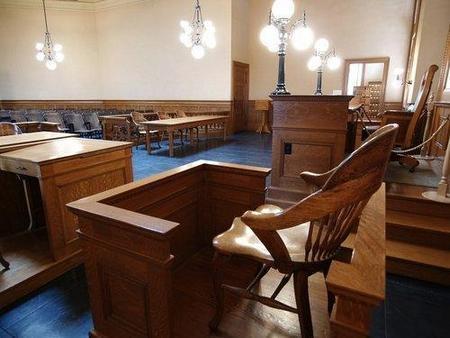 Most people know that if you are facing criminal charges, and your case goes to trial, you have the right to a jury trial. Here in Illinois the right to a jury trial is in our state constitution. What many people do not realize, however, is that many criminal cases that result in trials do not result in jury trials. Instead, many people who are charged with a crime choose to have what is called a ¨bench trial.” In a bench trial, instead of having a jury decide whether you are guilty or innocent, the judge in your case makes the decision.
What Do Jury Trials Involve in Illinois?
People usually think of juries as being just like they are on television — made up of 12 people who are locked away from the public throughout the entire trial and who must all agree on any decision the jury makes. In reality, juries are different in each state, just like laws are different across state lines as well. In Illinois, criminal defendants have the right to a public trial by an impartial jury of the county in which the offense is alleged to have been committed. The jury will typically be made up of 12 members, and there may alternate jurors. Alternates are jurors who are there in case one of the original 12 get sick or injured or otherwise cannot continue to serve, thus requiring a substitution. Typically jurors are not sequestered, that is, not locked up in a hotel away from their families at night, even in serious cases. There has to be an extreme reason for a judge to sequester a jury in a regular criminal case. In Illinois all 12 jurors do have to agree in order for a defendant to be convicted or found not guilty. If they cannot agree the judge may declare a mistrial, which may result in the case being tried all over again. Jury trials generally take longer than bench trials because the jury selection process is a lengthy one, and jury trials also require specific steps, such as instructing the jurors on the law.
Illinois Medical Marijuana Pilot Program Still Not Fully Underway
 Despite being legal since January 1, 2014, not a single Illinois resident has been able to obtain marijuana for approved medical purposes yet. After more than a year of administrative delays, the state government has indicated that the program should be up and running by the end of the summer. Lawmakers and citizens alike are understandably skeptical, and a measure recently passed both the state House and Senate that would extend the program back to its intended length.
The Medical Marijuana Program
In August of 2013, then-Governor Pat Quinn signed into law the Compassionate Use of Medical Cannabis Pilot Program Act, set to take effect at the beginning of the following year. The Act was aimed at determining the effectiveness of marijuana in helping patients with specified medical conditions while monitoring the impact of the drug’s medical use throughout the state. Included in the law was a sunset provision, intended to automatically end the pilot program on January 1, 2018, limiting its lifespan to four years.
Keeping the Marital Home in Divorce
 When a couple decides to end their marriage, there are a number of difficult decisions they must ultimately make. Some of them involve the care and well-being of their children, while some are more financial in nature, such as dividing joint savings accounts. Others, however, seem to straddle the line between financial and familial considerations, and a common point of contention between spouses is determining if one spouse will stay in the marital home and which spouse that will be.
Is Keeping the Home Possible?
The first decision that must be made regarding the home is whether or not it is even possible for one spouse to keep it. A detailed review of the couple’s marital property often shows that their home is, by far, their most valuable asset. In an Illinois divorce, allocation of any asset to either spouse must be done under the state’s equitable distribution guidelines. This means that all marital property is to be divided fairly, not necessarily equally, based upon consideration of factors present in the marriage and divorce.

Schedule Your Free Consultation
Arlington Heights Office 3030 Salt Creek Lane, Suite 120 Arlington Heights, IL 60005 Phone: 847-253-3100


At Cosley Law Office, we represent clients throughout Illinois, including Arlington Heights, Barrington, Buffalo Grove, Des Plaines, Elk Grove Village, Glenview, Hoffman Estates, Inverness, Long Grove, Mount Prospect, Mundelein, Northbrook, Palatine, Prospect Heights, Rolling Meadows, Schaumburg, Schiller Park, Wheeling, and Wood Dale, as well as Cook County, Lake County, DuPage County, and throughout the Chicago, IL metropolitan area.
Results listed are not a guarantee or indication of future case results.

© 2026 Cosley Law Office
3030 Salt Creek Lane, Suite 120, Arlington Heights, IL 60005
847-253-3100