

Recent Blog Posts
Illinois Zero Tolerance Policy for Underage Drunk Driving
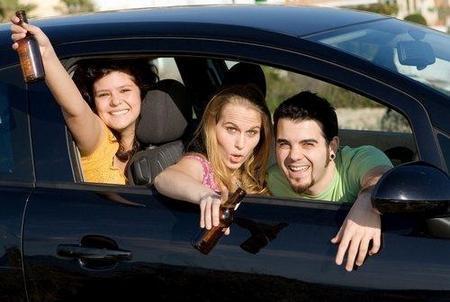 Illinois has very strict laws when it comes to underage individuals driving under the influence of alcohol. Illinois is a zero tolerance state, meaning that if an underage driver is asked by law enforcement to submit to a chemical test and it is discovered that the underage driver has a blood alcohol concentration (BAC) of anything other than zero, the underagedriver will be subject to penalties.
Under Illinois’ zero tolerance law, when a law enforcement officer makes a traffic stop and the driver is under the age of 21 and the officer has reason to suspect that the driver may be operating the vehicle under the influence of drugs or alcohol, the officer can require that the underage driver submit to a chemical test. Any concentration of alcohol in the test results will result in the underage driver being arrested and processed for driving under the influence (DUI).
Modifying Your Child Support Order
 It is the legally-recognized right of a child in Illinois to expect financial support from both parents, regardless of the relationship between them. It is impossible, of course, to legally mandate a healthy relationship between a child and both parents, but the state does have the ability to enforce orders of child support. If you are like most parents, you are more than willing to help provide for your child and make every effort to remain current on your ordered payments. What happens, though, when life changes make it difficult to meet your support obligations?
Creating the Original Order
In the vast majority of situations, the obligation to pay child support falls upon the parent who is not granted primary physical custody of the child. Illinois law provides a basic formula for calculating child support payments, based primarily on the payor’s net income and the number of children to be supported. Other circumstantial factors can be taken into account, including the resources and income of the custodial parent, as well as the physical, medical, and educational needs of the child.
Traffic Offenses: Tickets for Failing to Slow Down
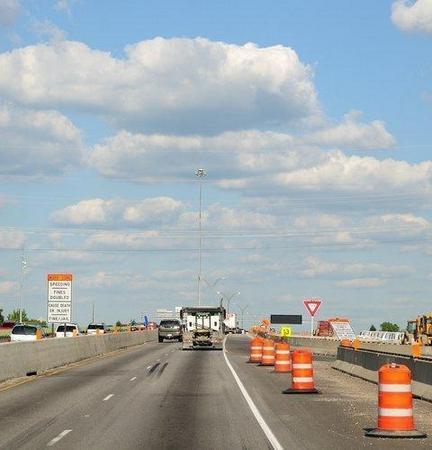 A driver can receive a citation for a number of different traffic violations that involve failing to reduce their speed when a situation on the road warrants slowing down. A few commonly cited traffic offenses that require drivers to reduce their rate of speed include the failure to slow down or reduce speed for emergency vehicles, a failure to slow in a construction zone, and a failure to slow in order to avoid an accident.
Ticket for Failing to Slow Down for Emergency Vehicles
Scott’s Law, 625 ILCS 5/11-907, in memory of Chicago Fire Department Lieutenant Scott Gillen who was killed by a passing motorist while attending to a roadside emergency situation, requires that drivers reduce their speed and attempt to change lanes to give emergency vehicles the space they need to safely tend to emergencies. This includes giving emergency vehicles the right of way when they are driving on the road as well as when they are parked on the side of the road so that emergency responders can safely and effectively respond to an accident or emergency situation.
Teen Sexting: Girl Charged With Sex Crimes Against Herself
 "Victimless crime" is a common phrase used to rationalize certain illegal behaviors, such as public intoxication and recreational drug use. It implies that no other party was injured or damaged by the activity and, in the minds of certain groups, should be therefore punished less harshly or not at all. While there may be some merit to such an argument, could it possible to commit a crime against yourself? Based on recent case in North Carolina in which a teen girl was charged with sex crimes against herself, the answer seems to be "maybe."
Teen Sexting
According to a number of recent studies, as many as one in four teens engage in sexting, or sending sexually explicit images electronically to another person. As such, it hardly seemed all that unusual for a 16-year-old Fayetteville, NC, girl to send a nude photo of herself to her boyfriend, also age 16. She was arrested on two counts of sexual exploitation, one for possessing the photo and one for sending it. The warrant for her arrest, reports indicate, listed her as both the suspected adult perpetrator and the minor victim. The boyfriend faced similar charges for possessing the picture she sent, along with several explicit photos of himself. While certain concessions are often made for consent and similarity in age, the local sheriff’s department said, such charges are not often dismissed completely. The case, and others like it around the country raise some very interesting questions about the correlation of technology, social morality, and law enforcement.
The True Cost of a DUI
 A driving while under the influence of drugs or alcohol charge in Illinois is serious business. Not only does a DUI conviction carry serious penalties, it also carries hefty financial consequences. The consequences for a DUI conviction are laid out in 625 ILCS 5/11-501(c)(1)-(5), which include jail time, fines and mandatory community service. There is also the unfortunate chance that getting a DUI conviction will result in the development of a poor reputation amongst peers and colleagues.
The total true cost for a DUI depends on a lot of factors, such as whether the DUI is a first-time offense, whether there was any property damage as a result of the DUI (as would be the case of a drunk driving collision), whether anyone was hurt as a result of the DUI, and how intoxicated the driver is at the time of the DUI.
Money Considerations
A DUI is an immensely expensive and the costs add up quickly. For instance, you will have to pay:
Major Changes to Illinois Divorce Laws Coming in January
 Thanks to legislation passed by the State House and Senate earlier this year and signed by Governor Bruce Rauner in July, divorce laws in Illinois are being rewritten for the first time in nearly 40 years. The legislation took the form of a single bill, introduced as Senate Bill 57 in January, 2015, but its effects will be widespread, impacting a significant number of family law provisions, including those regarding divorce, child custody, and, as discussed on this blog previously, parental relocation. Future posts will address some of the other areas of change, but the amendments to the divorce laws are likely to begin affecting Illinois residents very quickly.
Only No-Fault Divorce
While every state in America currently provides couples the ability to divorce on the “no-fault” grounds of irreconcilable differences, a little less than half still allow divorce on fault grounds as well. Currently, that is the case in Illinois, as an individual may seek a divorce based on the actions or behavior of his or her spouse, including ongoing substance abuse, mental or physical cruelty, abandonment, or adultery. Beginning January 1, 2016, however, fault grounds will no longer be an option. Instead, all divorces will be officially granted on the basis of irreconcilable differences.
The Crime of Reckless Driving
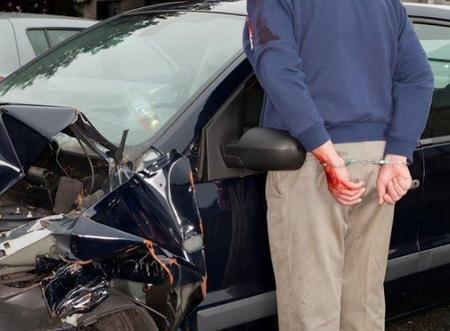 One of the most common traffic violations is reckless driving since so many of a driver’s actions while behind the wheel could be construed as reckless driving. Illinois law enforcement and the courts are strict when it comes to reckless driving charges because the driver’s actions may have:
- Put others on the roadway at risk;
- Resulted in property damage to another; or
- Caused an accident where another person was injured or killed.
What is Reckless Driving?
According to Section 625 ILCS 5/11-503, reckless driving occurs when a person drives a vehicle with a willful or wanton disregard for the safety of others, or it a person knowingly drives a vehicle so quickly up an inclined roadway, such as a hill or railroad crossing, as to cause the vehicle to become airborne.
The language of Illinois’ reckless driving statute is often broadly construed by law enforcement, and many drivers are ticketed, or even arrested on the spot, after driving at a high rate of speed, swerving between lanes or around other vehicles, tailgating, not using turn signals properly, or aggressively weaving in and out of traffic – all under the pretenses that the driver was operating the vehicle in a way that willfully or wantonly disregards the safety of others on the roadway.
Juvenile Crime: Even Minor Offenses Can Have Huge Impact on Your Child’s Future
 All too often, good kids get involved with a bad crowd and end up getting into trouble with the law. The crimes are usually the result of a moment of poor judgement (sometimes very poor judgement), but are not overly serious offenses. When teens get arrested for acts of vandalism, such as defacing property or damaging property, it can upset the whole family and can affect the teen’s life in unforeseen ways in the future.
Defacement of Property
One of the most common crimes committed by teens involves acts of vandalism or the defacement of property through graffiti art, marking or painting someone else’s property. Teens can face serious consequences, under 720 ILCS 5/21-1.3, if they are caught by police. For instance:
- A first offense that causes less than $300 worth of damage is a Class B misdemeanor, and is punishable by a fine of up to $1,500 and up to six months of jail time;
Flaws in the System: Wrongful Convictions
 In many high-profile criminal cases, the court of public opinion will decide on a defendant’s guilt long before a trial ever begins. In fact, you can probably think of several examples in which you “knew” a famous suspect was guilty or not guilty of a violent crime simply based your impressions. American society, however, places a great deal of faith in the criminal justice system and, for the most part, if a defendant is convicted in court, the general public tends to believe he or she committed the crime. But what if he or she did not and was convicted anyway? Sadly, wrongful convictions sometimes ruin the lives of innocent people, and some of the reasons behind flawed verdicts may surprise you.
Factors of Wrongful Convictions
A recent study funded by the National Institute of Justice and conducted by a team from American University in Washington, D.C., looked at more than 450 cases to identify the factors that could contribute to a defendant being wrongfully convicted. In each case, the defendant, whether convicted or not, was later found to be factually innocent of the crime of which he or she was accused. The researchers, led by Dr. Jon B. Gould, J.D., director of the Washington Institute for Public and International Affairs Research at American University, compared the cases of wrongful convictions with those in which an innocent suspect was found not guilty or had the charges dismissed.
Drive Sober: DUI and Seatbelt Campaigns Get Final Summer Push
 As summer draws to a close in northern Illinois, law enforcement officials in a number of area municipalities are ramping up safe driving enforcement activities. This comes as part of a nationwide effort to crack down on drunk driving, along with a continued focus on ensuring drivers are using seatbelts. The highly-publicized campaign got underway last weekend and will continue through the Labor Day holiday on September 7.
National DUI Awareness
The National Highway Transportation Safety Administration has invested more than $13 million in advertising and public awareness to spread the word about this focused operation. It comes as part of the NHTSA’s “Drive Sober or Get Pulled Over” campaign, aimed at reducing accidents and injuries related to driving under the influence (DUI) of alcohol or drugs. More than 10,000 local police departments throughout the country are expected to participate in the effort, including many in the Chicagoland region. There is expected to be zero tolerance for driving with blood alcohol content (BAC) above the legal limit of .08 percent. The NHSTA wants you to know that if you drive drunk, you will be arrested.

Schedule Your Free Consultation
Arlington Heights Office 3030 Salt Creek Lane, Suite 120 Arlington Heights, IL 60005 Phone: 847-253-3100


At Cosley Law Office, we represent clients throughout Illinois, including Arlington Heights, Barrington, Buffalo Grove, Des Plaines, Elk Grove Village, Glenview, Hoffman Estates, Inverness, Long Grove, Mount Prospect, Mundelein, Northbrook, Palatine, Prospect Heights, Rolling Meadows, Schaumburg, Schiller Park, Wheeling, and Wood Dale, as well as Cook County, Lake County, DuPage County, and throughout the Chicago, IL metropolitan area.
Results listed are not a guarantee or indication of future case results.

© 2026 Cosley Law Office
3030 Salt Creek Lane, Suite 120, Arlington Heights, IL 60005
847-253-3100