

Recent Blog Posts
Illinois Cracks Down on Underage Drinking
 The legal drinking age in Illinois is 21. That being said, this does not stop individuals under the age of 21 from consuming alcoholic drinks at an alarming rate.Underage drinking is dangerous and can have serious consequences. And, to be sure, there are various crimes a juvenile can be charged with in relation to alcohol- underage drinking, drinking and driving, and the use of a fake ID are just a few of the crimes. Each of these crimes can result in punishment that can greatly affect a young person’s life in the years to come.
Crimes Related to Underage Drinking in Illinois
If you or a loved one has been charged with any of the following crimes in Illinois, it is imperative that you reach out to our legal team immediately:
- Underage Drinking: It is illegal for anyone under the age of 21 to drink alcohol. Illinois law states that the “possession, consumption, purchase, or receipt of alcohol by an individual under the age of 21” results in suspension of driving privileges. The first conviction results in a three-month suspension of driving privileges and court supervision for six months. A second conviction can result in suspension for one year and any other subsequent convictions can result in revocation of a driver’s license.
Types of Burglary Charges in Illinois
 When someone thinks about burglary,he or shemay think of a person breaking into a building, or home, to steal something valuable.While that is burglary, there are other instances in which a person can face burglary charges and not even realize it.
If you are facing charges for burglary in Illinois, it is imperative that you contact an attorney immediately. To be sure, a skilled lawyer can help protect your rights throughout each stage of the criminal process.
Types of Burglary in Illinois
The following includes various types of burglary charges in Illinois, all of which require the assistance of a skilled attorney.
Burglary
According to Illinois statute, burglary is committed when a person “knowingly enters or without authority remains within a building, house trailer, watercraft, aircraft, motor vehicle, railroad car, or any part thereof, with intent to commit therein a felony or theft.” Burglary is considered a Class 2 felony in Illinois and carries a potential sentence of three to seven years.
For Many Victims of Domestic Violence, an Emergency Order of Protection is the First Step in Getting Help
 If you are one of the millions of men and women who are victims of domestic violence, you may be lost, scared, and unsure of how to handle the situation. Firstly, you should know that you are not alone. Data shows that about one out of every three women and one out of every four men are abused by an intimate partner at some point in their lives. Domestic abuse can include physical, psychological, and sexual violence as well as threats and intimidating behavior. In the majority of domestic violence cases, the first thing a victim can do to protect themselves is to request an emergency order of protection.
Who Qualifies for an Emergency Order of Protection?
If you or your child have been abused by a family member or significant other, you qualify for an emergency order of protection (EOP)-sometimes referred to in casual conversation as a restraining order. Individuals who are concerned for the safety of a disabled adult may also file a petition for an order of protection on the disabled person’s behalf. You do not have to be physically injured by the alleged abuser in order to qualify for an EOP.
Three Common Misconceptions About Criminal Law in Illinois
 For many people, their knowledge of the criminal justice system comes from television shows or other types of media. As such, they may get ideas in their heads of what should happen in criminal cases. In reality, many events that take place on television are not accurate depictions of actualcriminal defense cases in Illinois.
Real life cases do not follow a script, and they can be unpredictable and shocking. It is important to know which facts are the truth and which are mere misconceptions. In light of this,consider the following three common misconceptions about the criminal justice system.
Any Time I Am Not Read My Miranda Rights, My Case Will Be Dismissed
A defendant must be readhis or her rights anytimehe or she isin custody of the police and is being interrogated. Being ‘in custody’ is a complicated issue. Merely talking to the police does not always mean that you are in custody, and neither does being placed in handcuffs.
What is Possession of a Controlled Substance in Illinois?
 Possession of a controlled substance is a seriousdrug crime in Illinois. The punishment for such a crime depends on the controlled substance in question and the amount of the substance that is found. Generally, the more of a substance a defendant has, the harsher the punishment can potentially be.
Most possession of a controlled substance crimes carry fines, probation, and jail or prison time. Ultimately, if you have been charged with this crime, it is imperative that you reach out to a skilled attorney for help immediately.
Controlled Substance
The first step in understanding possession of a controlled substance isbeing able to identify a controlled substance. Per 720 ILCS 570/102(f), a controlled substance is defined as a “drug, substance, immediate precursor, or synthetic drug.” The drugs included in this definition include heroin, cocaine, marijuana, methamphetamines, LSD, oxycodone, ketamine, ecstasy, and other controlled substances listed in Article II of 720 ILCS 570.
Four Commonly Asked Questions About Illinois DUI Law
 Being faced with a driving under the influence (DUI) charge in Illinois can be scary. You don’t know what to expect or what is going to happen. Ultimately, the best way to prepare is by understanding more about your charges.
What is a DUI?
Pursuant to Illinois law, an individual who is operating a motor vehicle with a blood alcohol concentration (BAC) of 0.08 or more can be charged with a DUI. A DUI is not limited to only driving with alcohol in one’s system. A person can be charged with a DUI ifhe or she isintoxicated by drugs, intoxicating compounds, or methamphetamine is inhis or hersystem.
BAC refers to the ratio of alcohol to the blood in your system. A BAC of .08 makes it illegal in Illinois to operate a motor vehicle. However, this standard only applies to individual over the age of 21, the legal drinking age. A driver under the age of 21 must have a BAC of 0. Any amount over 0 and the individual may face a DUI charge.
Rolling Meadows Man With Multiple DUIs Faces 30 Year Prison Sentence
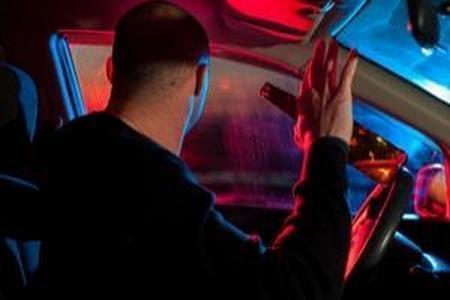 A Rolling Meadows man with 15 driving under the influence (DUI) convictions faces 30 years in prison. The DUI convictions date all the way back to 1982. These convictions take place over 36 years and have occurred in10 Illinois counties.
The man’slatest DUI charge occurred in June 2017 when he struck a party bus while intoxicated and driving. For the 15 convictions, he has served 15 years, five months, and eight days in prison, with sentences ranging from one year to7 years, according to the Daily Herald.
After the man’smost recent DUI charge, the defendant was forbidden to drive. In fact, the state of Illinois took away his license years ago because of the numerous DUI charges. Regardless, the defendant still got behind the wheel of a car and drove while intoxicated. The judge let the defendant out on bail after the 2017 DUI charge.
Chicago Domestic Violence Victim Murdered By Abuser
 A 31-year-old Chicago resident is dead after being shot in the head by an ex-boyfriend. This gruesome murder did not come out of the blue. The woman had allegedly made 10 reports about her former partner’s aggressive and threatening behavior before she was killed. This tragic event has led to many questioning the Chicago Police Department’s ability to protect victims of domestic violence from future abuse.
Victim Sought First Order of Protection in 2013
According to reports, after the now-deceased woman and her boyfriend broke up, he started demonstrating the violent and intimidating behavior. When the victim became afraid for her safety, she sought an emergency protective order (EPO) in 2013. EPOs are available to any individual who feels their safety is in jeopardy and can be obtained at a county courthouse. Someone seeking an EPO, called the petitioner, does not need to have physical evidence of the abuse. The alleged abuser, called the respondent, does not need to be present in order for an EPO to be granted. This temporary measure lasts 14 to 21 days.
An Explanation of the Illinois Point System
 The Illinois Department of Motor Vehicles (DMV) created a point system that trackstraffic violations that an individual accumulates onhis or her driving record. Every time you receive a moving violation, a number of points are added to your driving record. After accumulating a large amount of points you risk suspension or revocation of your license. In light of this, if you are facing charges for a serious moving violation in Illinois, it is in your best interest tospeak with an attorney immediately for legal assistance.
How the Points System Works
The number of points added to your driving record after a moving violation dependson the severity of the offense. For example, a charge of reckless driving on your record brings 55 points to your record. Failing to obey a stop sign adds 20 points to a driving record. Further, failing to obey a traffic signal or light carries 20 points. Points for speeding depend on the speed at which a driver is traveling, and is described below:
Reckless Driving in Illinois
 While many believe reckless driving to be a minor offense, in reality it can lead to serious consequences that have lasting effects. As such, if you have been charged with reckless driving in Illinois, we ask you to reach out to us today for professional help.
What is Reckless Driving?
In Illinois, reckless driving is governed by statute 625 ILCS 5/11-305. There are two situations in which a person can be found guilty of reckless driving:
- A person who drives “with willful or wanton disregard for the safety of persons or property” is said to be driving recklessly; and
- A person who knowingly drives “a vehicle and uses an incline in a roadway, such as a railroad crossing, bridge approach, or hill, to cause the vehicle to become airborne” is driving recklessly.
Common examples of reckless driving include a person who is driving at a high rate of speed, someone who is driving erratically, or any other type of driving that might rise to the level of negligent driving. Driving erratically includes drivers who swerve in and out of lanes without notice and without the use of their turn signals.

Schedule Your Free Consultation
Arlington Heights Office 3030 Salt Creek Lane, Suite 120 Arlington Heights, IL 60005 Phone: 847-253-3100


At Cosley Law Office, we represent clients throughout Illinois, including Arlington Heights, Barrington, Buffalo Grove, Des Plaines, Elk Grove Village, Glenview, Hoffman Estates, Inverness, Long Grove, Mount Prospect, Mundelein, Northbrook, Palatine, Prospect Heights, Rolling Meadows, Schaumburg, Schiller Park, Wheeling, and Wood Dale, as well as Cook County, Lake County, DuPage County, and throughout the Chicago, IL metropolitan area.
Results listed are not a guarantee or indication of future case results.

© 2026 Cosley Law Office
3030 Salt Creek Lane, Suite 120, Arlington Heights, IL 60005
847-253-3100