

Recent Blog Posts
When Do Drug Charges Become a Federal Offense?
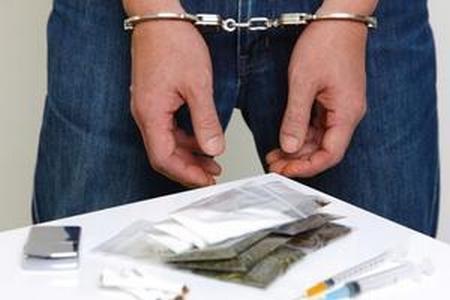 Both federal and state laws and regulations govern the use, possession, distributing, and manufacturing of drugs. Illinois has a set of drug laws, but so does the federal government. There is a big difference between being charged with a statedrug charge and a federal drug charge. Therefore, it is important to know when a drug charge could become a federal charge. Each case is unique and has its own circumstances and issues, but there are different factors at play that could elevate a state drug charge to a federal one.
Factors to Consider
The following describes a number of factors to consider that may affect a drug charge:
- The arresting officer– Oneof the biggest clues involves who is making the arrest. Being arrested by a federal agent is a huge sign that you will be charged with a federal crime. Sometimes local law enforcement, or state police, will ask federal agents to aid in their case. Often, state and federal officers will work together to conduct a sting to catch criminals.
Domestic Violence Hurts Men Too
 Have you ever seen a movie or a television show that depicted the serious struggle of a man trying to get out of an abusive relationship? There is a good chance you never have because such storylines are not very popular in modern entertainment. You probably have, however, seen shows or films in which a woman suffers abuse at the hands of her husband or boyfriend.
While today’s social landscape makes it somewhat easier than before to discuss domestic violence committed against men, the idea is still largely used for comedic effect in movies and on TV. According to Anne P. Mitchell, a retired family law professor, woman-against-man violence is often a “punchline of a larger, depressing narrative.” Male-against-female violence is almost universally condemned by cultural morality, but the same is not always true in the opposite direction.
Telling Numbers
A few years ago, the Centers for Disease Control and Prevention (CDC) analyzed responses provided by over 18,000 adult Americans. The CDC’s survey found that just under 4.8 million women had experienced intimate partner violence in the last 12 months. In the same period, however, the CDC estimated that 5.2 million had experienced such violence as well. Obviously, violence against women is certainly a problem, but so is violence against men, and both must be addressed by a healthy society.
Famous Singer Arrested for Felony Battery
 Many people know the violent history of Chris Brown. With a prior domestic violence issue already on his record, the singer Chris Brown was arrested andcharged with felony battery, according to CBS News. The domestic violence incident previously mentioned resulted in a felony conviction of assault. These are not isolated incidents, however. Several other charges over the years have been brought against Brown for varying degrees of assault and battery.
Ultimately, anyone facing charges for felony battery is encouraged to learn more about this crime. In addition, representation by a skilled attorney can also ensure that their rights are protected throughout each step of the case.
Illinois Battery Law
In Illinois, a person commits a battery whenhe or she “knowingly without legal justification by any means (1) causes bodily harm to an individual or (2) makes physical contact of an insulting or provoking nature with an individual.” Essentially, any physical touching that causes harm to another could be considered a battery.
Three Things to Keep in Mind When Dealing With Traffic Tickets in Cook County
 No one likes receiving atraffic ticket. Seeing the red and blue lights in your rear-view mirror is likely not what you hope for when out on the road. Traffic tickets become a burdento those receiving them as they try to deal with the consequences anddeterminethe next stepsto take. No matterthe inconvenience or the burden that is felt, traffic tickets cannot be ignored.
Traffic Tickets Affect Your Insurance Rates
While it is true that there are traffic offenses that require paying a small fine and nothing more, this is not the case in every instance. The consequences of a traffic ticket can affect a person’s life even after paying the fine. Auto insurance rates are usually calculated by taking into consideration a person’s driving history. Traffic tickets and offenses increase the rates of your auto insurance that is required to drive in Illinois.
Violating Probation Can Land You in Jail
 In criminal cases involving jail or prison time, there is often a high probability that upon release from incarceration, an individual will be placed on probation. Probation requires a person to follow strict rules and guidelines on howhe or she should conducthimself or herself ashe or she transitions back to the real world.
As of this writing, an Illinois man is on his way to jail after violating probation. The man pled guilty to committing a string of burglaries and burning a vehicle. He pled guilty to two counts of burglary and one count of arson, according to the Daily News. As a result of this guilty plea, the man was placed on probation. One of the conditions of his probation was that he was not to get arrested for any additional crimes or offenses. He did not meet this condition. The man was arrested for two charges: possession of a knife and unlawful display of a title with a prior conviction. Both of these charges are considered Class A misdemeanors.
What to Do When You Are Pulled Over for a Traffic Violation
 Almost everyone knows the fear that begins to take over when you are driving along and you see a police car. Even if the car is going the other way, you begin to ask yourself dozens of questions. Was I speeding? Did I change lanes without signaling? My registration isn’t due yet, is it? Could I even find my insurance card right now? Most of the time, the officer in his or her car is paying little or no attention to you, but when you see the flashing lights of a police car directly behind you, things can change quickly.
While you may have your suspicions about why you are being pulled over, make sure that you:
- Pull over as soon as you can. Acknowledge the officer’s presence by putting on your turn signal right away and by decreasing your speed. Obviously, do not slam on your brakes. A turn signal and decreased speed shows the officer that you intend to stop when and where it is safe to do so;
My Child Was in the Car During a DUI Arrest. Now What?
 For most parents, their children’s safety is a top priority in their life. Even with the best of intentions, parents can make mistakes that put their own safety and their children’s at risk. For some Illinois parents, a child might face a greater risk of injury because of an adultdriving under the influence of alcohol or drugs. When this happens, a parent might have more to worry about than a pending driving under the influence (DUI) charge. There can be greater consequences for a DUI charge when there is a minor child present in the vehicle.
DUI Law in Illinois
In Illinois, a driver can be charged with a DUI if they are operating a motor vehicle with a blood alcohol concentration of .08 or more. A DUI charge brings the risk of potential jail time, fines, court costs, probation, or even court-mandated alcohol treatment. When a driver is charged with a DUI when their child is in the car, child endangerment laws also come into consideration. In Illinois, child endangerment results any time that a minor’s welfare is put in harm’s way because of the reckless behavior of a parent or guardian. In the most extreme cases involving child endangerment, a parent or guardian could even havehis or her parental rights terminated because of the endangerment.
Illinois Retail Theft Ring Broken Up
 Aretail theft ring made up of six individuals has been broken up and resulted in charges being filed for all six individuals involved, according to The Times. Thousands of dollars worth of merchandise was stolen by six people throughout Illinois and Northwest Indiana. Both Illinois and Indiana police departments were investigating a string of retail theft instances. The suspects were found after detectives identified the individuals on surveillance tapes.
Additionally, detectives were able to use an informant to gain more information about the six suspects. The theft ring was targeting more high-end items, like electronics and handbags. Two of the suspects are in custody, with warrants out for the other four individuals. The investigation is ongoing as the detectives on the case are looking for additional evidence or thefts committed by the ring.
Driving with a Suspended License Can Land You in Serious Trouble
 Imagine this scenario: You have had your driver’s license suspended. Perhaps a series of unpaid parking tickets or citations for moving violations such as speeding led to the suspension. Whatever the reason for the suspension, you now have no way of getting back and forth to work. One day, you miss the bus and decide that you will drive your car even though you do not have a valid driver’s license anymore. On the way to work, you are pulled over for a broken taillight and the police officer finds out that you have driven on a suspended license. You may be facing steep fines and even jail time. Now what?
Reasons Your License Could Be Suspended
Driver’s license suspensions in Illinois can be the result of:
- Accumulating three or more moving violations in a year;
- Failing to appear in court;
- Driving under the influence of alcohol or drugs (DUI);
Illinois Supreme Court to Hear Case on Juvenile Sentencing
 Juvenile crime should be taken seriously. Society does not want to teach young offenders that they can get away with whatever they want. However, there is a big difference in making sure that a young person knows whathe or she did was wrong and sentencinghim or her to life in prison. The Illinois Supreme Court has agreed to hear a case to determine when the length of a sentence is “too much” for juvenile offenders.
Specifics of the Case
Dimitri Buffer was sentenced to 50 years in prison at the age of 16; 25 years for murder and 25 years for the use of a firearm. Following this sentencing, the United States Supreme Court decided the case Miller v. Alabama. In the case, the Court found that mandatory life sentences for juveniles without the chance for parole amount to the level of cruel and unusual punishment. There is evidence that the human brain develops past the first 20 years of life. This can reduce a juvenile’s culpability and ability to access the dangers and wrongdoing associated with crimes.

Schedule Your Free Consultation
Arlington Heights Office 3030 Salt Creek Lane, Suite 120 Arlington Heights, IL 60005 Phone: 847-253-3100


At Cosley Law Office, we represent clients throughout Illinois, including Arlington Heights, Barrington, Buffalo Grove, Des Plaines, Elk Grove Village, Glenview, Hoffman Estates, Inverness, Long Grove, Mount Prospect, Mundelein, Northbrook, Palatine, Prospect Heights, Rolling Meadows, Schaumburg, Schiller Park, Wheeling, and Wood Dale, as well as Cook County, Lake County, DuPage County, and throughout the Chicago, IL metropolitan area.
Results listed are not a guarantee or indication of future case results.

© 2026 Cosley Law Office
3030 Salt Creek Lane, Suite 120, Arlington Heights, IL 60005
847-253-3100