

Recent Blog Posts
Avoid These Common Mistakes During Your Illinois Divorce
 If you are thinking about ending your marriage, you may be completely unsure of where to start. If you are like most people, you probably never though you would be at this point when you first got married. The complexity and duration of your divorce will depend on the type of life you and your soon-to-be ex-spouse have built together, whether or not you have children, the assets and debt you have accumulated during the marriage, and more.
Because every divorce depends on the couple’s unique circumstances, there is no one-size-fits-all method for managing an efficient and minimally-stressful divorce. However, experts do have some advice for how to avoid common mistakes during the divorce process.
Only Considering the Short-Term Consequences of Your Decisions
Understandably, divorce is a highly emotional time for many people. If you are getting divorced, you may have to consciously remind yourself to make decisions that are best in the long run instead of decisions based on emotions. For example, some individuals are determined to fight their spouse for ownership of the house during a divorce. However, keeping the house may not be the best decision for everyone. Some people end up keeping the house but giving up a retirement plan account or other valuable investment or asset. This can result in them losing future investment-return gains and being cash-poor in the future. Some divorced individuals find that a large house and yard are too expensive to keep on their own anyway. In order to avoid this pitfall, it may be in your best interest to discuss your financial options with a professional.
What Are the Penalties for Heroin Possession in Illinois?
 A Du Quoin man was found in possession of a small amount of heroin in early April. That was a violation of his parole and he was sent back to the Illinois Department of Corrections to serve out the rest of his sentence on previous charges.
Heroin possession is considered one of the most serious drug crimes in Illinois. Those convicted will have a criminal record for the rest of their life and could face several years in prison, as well as extremely high fines. While the penalties for heroin possession are extremely harsh within the state, a criminal defense lawyer can help those charged and give them the best chance of a successful outcome in court.
Illinois Law on Heroin
Heroin is classified as a Schedule 1 drug on the Illinois Controlled Substances Act and is illegal for anyone to possess, manufacture, or distribute. The specific classification of being on Schedule 1 means that heroin is considered a “hard” drug. In the eyes of the law, this is the most serious designation and as such, law enforcement and the prosecution pursue these cases aggressively.
Illinois Considers Reducing Minimum Sentences for Certain Charges
 Illinois lawmakers want to change the laws on mandatory minimum sentences for some crimes. In mid-April, the Illinois House of Representatives voted on legislation that would give judge’s more discretion during sentencing. If recent House Bill 1587 becomes law, judges could consider further reducing minimum mandatory sentences for individuals convicted of drug possession, retail theft, and driving on a revoked license because of unpaid fines, child support, and other financial obligations.
The Court System and the Proposed Law
Currently, when a defendant is convicted of a crime, a judge has a range of sentences to choose from during sentencing. Each crime has a minimum mandatory sentence, as well as a maximum mandatory sentence. Judges are granted some discretion, but they cannot move outside of that range. A judge will consider a defendant’s past criminal history, and the nature surrounding the crime and determine what sentencing within that range is fair.
Managing Cryptocurrency During a Divorce
 Any divorce can be difficult, but certain complex investments or assets can significantly complicate the end of a marriage. If you are planning to divorce, you have probably already considered how certain assets will be divided between you and your soon-to-be ex-spouse. Apportioning bank account balances or figuring out whether or not to sell the family home can be a challenge, but other assets may be even more difficult to value and divide. Among these complex assets are Bitcoin and other types of cryptocurrency. Cryptocurrency is a relatively new form of currency which can be extremely hard to value. If you or your spouse have invested in cryptocurrency, read on to learn about how this investment could affect your Illinois divorce.
Virtual Currency May Be Considered a Separate Asset or Marital Asset Depending on the Circumstances
As cryptocurrency rises in popularity, it has become more and more common for couples getting divorced to have Bitcoin, Litecoin, Ethereum, Zcash, and other types of digital currency as a part of their marital estate. Because regulations and protocols on digital currencies are still being evaluated by governments and financial regulators, there is a good deal of mystery surrounding this type of investment.
What to Expect When Charged with Domestic Violence
 Being accused of domestic violence can be terrifying. It is likely that your accuser is someone you love, and there is a possibility you could end up with a criminal record. Not knowing what is going to come next is one of the most frightening aspects of the entire process.
While each domestic violence case is different, there are a few similarities they all share. They all typically begin with a phone call to the police, reporting the domestic violence. It is important for anyone to understand that once this happens, the decision to lay charges does not rest with the alleged victim. When police respond to a 911 call to report domestic violence, they must make an arrest. After the arrest is made, the accused will face a number of hearings and possibly a trial.
The Bond Hearing
When people are accused of committing a crime, they are often able to post bond or bail. This releases them from the police station until they have their first hearing in front of a judge. According to the Illinois Code of Criminal Procedure, however, bond is not possible for those accused of domestic violence. At least, not right away.
When Does Burglary Become a Serious Felony?
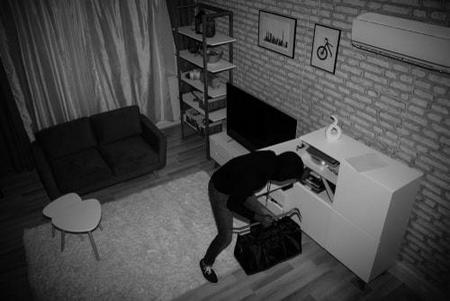 Recently, thieves broke into a Lincoln Park bike shop. It is estimated that approximately $20,000 in merchandise was stolen. It was also the second time in the same month the shop was targeted. Police do not yet have anyone in custody for this latest crime that seems to be part of a rash of burglaries in the same neighborhood.
Some may consider this burglary, while others may consider the value of the goods stolen and think it is a burglary, but one with a more serious charge. The confusion begs the question, when does burglary become a serious felony in Illinois?
The Crime of Burglary in Illinois
Under Illinois law, burglary is defined as the act of entering a structure illegally with the intent to steal property or commit another serious felony. Normally, burglary is charged as a Class 2 felony, regardless of the amount of goods stolen. This means that the crime is always a felony.
How Can I Change My Child Support Obligation?
 Child support is designed to help children with unmarried or divorced parents enjoy the same quality of life as if his or her parents were married. There are many misunderstanding about the child support laws in Illinois. Child support is a separate issue from parenting time (visitation) and parental responsibilities (custody). A parent who does not have any custody of a child may still be required to pay support. Court-ordered child support obligations may be changed, but only if the parent requesting the change meets certain criteria.
Recently Updated Child Support Laws
Illinois child support laws changed significantly in July 2017. Child support amounts are now calculated with an income shares model. Before this change, child support obligations in Illinois were calculated by taking the payor’s net income and applying a certain percentage based on the number of minor children. For example, if you had one minor child, 20 percent of your net income would go to the child’s other parent in support at minimum. Now, child support in Illinois is calculated using an income shares model. Under this model, the Court considers the combined net income of both parents as well as other factors to determine a fair and reasonable support order.
When Is Meth Possession a Felony in Illinois?
 The drug laws in Rolling Meadows and throughout Illinois are often confusing, and the line between a misdemeanor drug charge and a felony charge can become blurred. Most of the time, the charge that is laid depends on the scenario surrounding the alleged crime.
There are instances though, in which a drug crime is automatically a felony. Typically a harsher charge is laid when there are large volumes of a controlled substance involved, or when the crime includes certain substances. LSD, cocaine, and heroin are a few drugs that automatically make a crime a felony. Methamphetamine, or meth, is another.
Methamphetamine Laws in Rolling Meadows
According to 720 ILCS 646/60 of the Illinois statutes, meth crimes are always charged as a felony. This means that even when a person is caught with the smallest amount on them, and they did not intend to distribute the drug, they will face felony charges.
The law imposes such strict charges and penalties on those caught with meth because it is a very dangerous drug. It is incredibly addictive and exposes those that use it to toxic chemicals. Manufacturing the drug is also particularly dangerous, which is why the law also outlines severe penalties for anyone that does.
Advice for Those Divorcing an Abusive Spouse
 The National Domestic Violence Hotline reports that approximately three in 10 women and one in 10 men in the United States have been the victim of rape, physical violence, or stalking by romantic partner. It takes a tremendous amount of courage to leave an abusive relationship. Abusive spouses often convince their partners that they cannot lead a successful life without them. Perpetrators of abuse use put-downs, gaslighting, threats, intimidation, and more to maintain control over their partner and convince them not to leave. If you are considering divorcing an abusive spouse, you may be unsure of where to start. Read on to learn about divorce in Illinois and how you can protect yourself and your children from an abusive spouse.
Illinois is a “No Fault” State
In some states, married couples who wish to divorce must list a reason, or grounds, for why they are seeking the dissolution of marriage. Illinois, however, is a “no fault” state. This means that anyone can seek a divorce for any reason. Those wishing to end their marriage simply list “irreconcilable differences” as the grounds for the divorce. If your spouse has been abusive to you, you will not need to prove this in order to be granted a divorce. However, even though domestic abuse cannot be the grounds for a divorce, you will still have an opportunity to introduce evidence of your spouse’s violent, threatening, or demeaning behavior during the case.
Is There a Lookback Period in Illinois for DUIs?
 Many states have a lookback period for DUI convictions. A lookback period, which is typically five to 10 years, indicates the amount of time a DUI conviction remains on a person’s driving record. This is helpful for those charged with subsequent DUIs because the prosecution and courts can only see DUIs within that timeframe. If a person was convicted of a DUI but the conviction took place longer than the lookback period, that DUI is not considered during sentencing.
So, is there a lookback period in Illinois for DUIs?
Lookback Period in Illinois
Unfortunately, in Illinois, there is no lookback period for DUIs. If a person is convicted of a DUI, it remains on their permanent driving record. This means the prosecution and judge can charge for a subsequent DUI no matter how long ago the first conviction occurred.
However, the courts will still take into consideration the length of time between a first offense and subsequent offenses when revoking a person’s driver’s license. For this reason, it is important anyone charged with a DUI speaks to a Rolling Meadows DUI lawyer that can help them beat the charges and continue to enjoy an unblemished permanent driving record.

Schedule Your Free Consultation
Arlington Heights Office 3030 Salt Creek Lane, Suite 120 Arlington Heights, IL 60005 Phone: 847-253-3100


At Cosley Law Office, we represent clients throughout Illinois, including Arlington Heights, Barrington, Buffalo Grove, Des Plaines, Elk Grove Village, Glenview, Hoffman Estates, Inverness, Long Grove, Mount Prospect, Mundelein, Northbrook, Palatine, Prospect Heights, Rolling Meadows, Schaumburg, Schiller Park, Wheeling, and Wood Dale, as well as Cook County, Lake County, DuPage County, and throughout the Chicago, IL metropolitan area.
Results listed are not a guarantee or indication of future case results.

© 2026 Cosley Law Office
3030 Salt Creek Lane, Suite 120, Arlington Heights, IL 60005
847-253-3100