

Recent Blog Posts
The Drug Trade in Chicago
Many people consider the Chicago area notorious for drugs, and more specifically the abuse of heroin. In fact, citizens in the Chicago area suffer the highest number of heroin overdoses across the country. An interesting article recently published by the Chicago Reader examined the state of Chicago’s "thriving heroin business" and the history of the issue over the last 100 years.
 Over the last century, Chicago’s heroin business has been able to change and thrive despite the measures aimed at curbing the behavior, including legal restrictions, increased law enforcement, and societal changes. Illegal drug markets began developing in the early twentieth century in marked areas of Chicago. Police were forced to strike a balance between cracking down on users and confining the activity to the known areas with known users and known criminal histories.
2014 Brings Change to Concealed Carry Law in Illinois
In the New Year, Illinois residents who legally own a firearm will also legally be allowed to carry the weapons on their person. As reported by Chicago Tonight, the change in the concealed carry law in Illinoiswill translate to changes for business owners, property owners, and police who may come into contact with citizens carrying weapons. When the law becomes effective next month, the state of Illinois expects tens of thousands of applications for a concealed weapon permit to be filed by citizens within the first six months of the change.
 Change in Police Conduct
Prior to the law taking effect, it was illegal for Illinois citizens to carry a firearm on their person. Any time police came into contact with an individual carrying a weapon, in violation of the law, they acted according to their training in handling the situation. Now, they will have to change their mindset when dealing with a member of the public carrying a gun, since they may be doing so legally.
Appeals court severely restricts father's visitation rights
A Will County, Illinois, appeals court recently affirmed the severe restriction of a father's visitation rights to his children.
This case highlights the impact of mental health and substance abuse issues on a marriage and the effect that it can have in subsequent child custody and visitation orders.
The father and mother of the children were married in 2000 and had two children together. The mother filed for divorce in spring of 2009, alleging extreme and repeated mental cruelty and alleging that here was an irretrievable breakdown of the marriage.
As with many divorces, the couple quarreled extensively over child custody and visitation. Both spouses alleged that the other was mentally unstable and acted inappropriately around the children. Emergency orders flew back and forth and the courts had to decide which parent to believe.
In this case, the court eventually ordered the father to undergo a Rule 215 evaluation. The examining doctor said that the father had a mood disorder and character problems such as narcissism or paranoia. Although the doctor did not consider the father to pose a physical threat to the children, she was concerned with his breaks from reality and alcohol consumption.
New Legislation Pending for Driving with Google Glass
 Google Glass is being tested by a select number of people in anticipation of a roll out in 2014. The concept of device is that it is a smartphone display that is worn on your face and looks like a pair of glasses. It allows you to take pictures, view social media, make phone calls and even get directions by the sound of your voice. While it is not for sale to the general public, legislators in Delaware, New Jersey and West Virginia have introduced legislation that seeks to ban driving while wearing Google Glass frames.
Lawmakers in Springfield are also interested in stopping distracted driving on the streets of Illinois. Certain laws are already in place to accomplish this gial. Currently, it is illegal to text while operating a vehicle. Another law which will be effective in 2014 will outlaw the use of any handheld device behind the wheel.
Illinois State Senator Ira Silverstein, a Democratic representative from Chicago, recently filed a new bill that extends the law banning handheld devices. Silverstein said that using these new Google Glass is “another way people will be distracted. People’s attention to the road should not be interrupted.”
Susan McWilliams's drunk driving conviction affirmed by Lake County court
The drunk driving conviction of Susan M. McWilliams was recently affirmed by a Lake County court. McWilliams was arrested in November of 2009 when an officer reportedly saw her weaving within her lane and crossing white traffic lines. The officer also claimed that McWilliams almost caused an accident with the car next to her.
When the arresting officer approached Susan McWilliams' car, the officer had to slap the truck of the car and yell her to park her car because it was rolling backward. The officer said that McWilliams was busy trying to put the parking brake on despite the car being in neutral instead of park.
The arresting officer also said that McWilliams had bloodshot eyes and slurred speech. She also found it incredibly difficult to find and produce her driver's license for the officer.
Despite claiming that she hadn't been drinking, McWilliams allegedly smelled strongly of alcohol and failed multiple field sobriety tests.
Prosecutors can use squad car video in DUI case, court says
A Cook County Appeals Court recently dealt a severe blow the defense in a drunk driving case. The case involves a man named Brandon Bailey who was arrested for drunk driving in 2011. The officer who arrested Bailey claimed that he was driving over 30 miles over the posted speed limit, made improper lane usage, and failed to signal in addition to driving while intoxicated.
During the discovery phase of the trial, Bailey requested the footage from the police car (in-squad video) which supposedly showed his stop and arrests. The state failed to provide the video in a timely manner so the trial court sanctioned the state by barring the video and anything it could have showed from trial.
The trial court also rescinded the summary suspension of Bailey's driver's license.
It appeared that Bailey would walk away from his criminal charges because the state was barred from presenting evidence including his field sobriety test and driving which could have been on the in-squad video. This harsh sentenced compelled the state to produce the video and ask the trial court to reverse the exclusion of the evidence.
Decrease in Speeding Tickets in Cook County
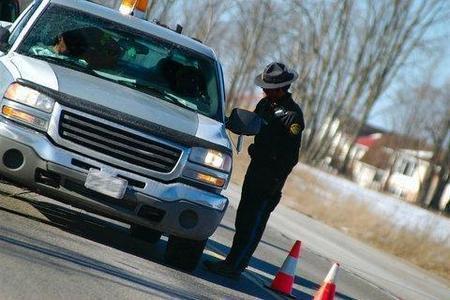 Over the last few years, there has been a decrease in the number of speeding tickets issued in and around Chicago. Based on data from 2010 to 2012, there was a quarter fewer tickets both in the city and in segments of the surrounding counties.
There are a couple of possible reasons for this decrease. An analysis completed by reporters from the Chicago Tribune has shown that the state police department is very lenient on the state’s expressways. Most tickets are written when a motorist is going at least 20 miles over the posted speed limit of 55. Provided that high threshold, it is not likely to find people to give speeding tickets.
Another reason for the decrease in speeding tickets is state-wide budget cuts. There are fewer troopers on the road which means there are fewer people to give out tickets.
The Defense of Entrapment in Illinois
Some criminal defendants find themselves charged with a crime as the result of police “encouragement,” which may involve an undercover officer or confidential informant interacting with the defendant in the commission of the crime. When a defendant in this situation discovers the extent of the circumstances surrounding his or her arrest, there are usually serious concerns and questions that arise almost immediately concerning the legality of the police conduct. Illinois law provides guidance on this issue.
 The law in Illinois provides for the affirmative defense of entrapment, which is meant to provide protection against law enforcement’s use of aggressive or reprehensible tactics in inducing criminal conduct. According to the relevant statute, a person is not guilty of a criminal offense if his or her conduct is incited or induced by the police or their agent for the purpose of obtaining evidence against them. See 720 ILCS 5/7-12. However, this defense is not available if the defendant was predisposed to commit the crime and law enforcement’s actions merely afforded the defendant the opportunity or ability to commit the offense. Typically, the defense of entrapment is relevant in “vice” crimes, such as prostitution or drug deals, since these crimes are committed privately with willing victims who will not otherwise report the crime, which makes normal detection exceedingly difficult.
Miranda Rights: What They Mean to You
Any television program involving crime will undoubtedly include a scene in which, upon apprehension of a suspect, law enforcement will begin to recite the familiar verse, “You have the right to remain silent. Anything you say can and will be held against you in a court of law…” Many viewers can likely repeat the Miranda rights from memory, but may not be aware of their legal significance.
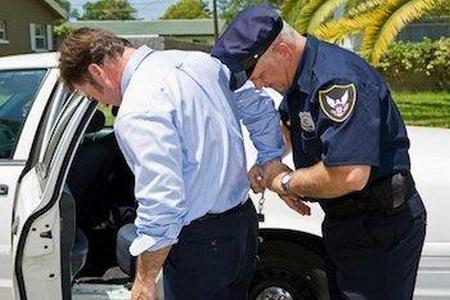 The Fifth Amendment of the U.S. Constitution provides protection against due process violations for defendants charged in a criminal matter. This includes the right to protection against self-incrimination. In Miranda, the U.S. Supreme Court extended the protection against self-incrimination to include statements, including confessions obtained outside the courtroom, provided certain circumstances exist. According to the Court in Miranda, officers need to apprise a suspect of his or her rights before custodial interrogation occurs in order for any statements made by the suspect to be admissible as evidence in a future court proceeding. An officer may not interrogate a suspect until after warnings have been given and the suspect knowingly, intelligently, and voluntarily waives those rights, usually in a signed writing.
Changes in Illinois Law Meant to Curb False Confessions
Stories of wrongful convictions seem to be more popular as we make advancements in technology that was previously unavailable. Oftentimes, DNA or other forensic evidence serves to exonerate a defendant that was previously convicted of a crime, despite the fact that enough evidence was presented to support a guilty verdict. Even more surprising, the individual may have confessed to the act during police interrogation even though they were actually innocent. The Juvenile Justice Information Exchange recently ran a series of articles regarding false confessions and filmed interrogations. The latest addition focuses on Illinois’ new interrogation law, and its intended effect on reducing wrongful convictions.
 The article discusses the case of Juan Rivera, who was wrongfully convicted of a rape and murder he did not commit due to coercive interrogation methods. He was charged with the crimes, even though he had been under electronic monitoring which showed he was at his home more than two miles away when the crime occurred, and there was no physical evidence connecting him to the scene. However, Rivera ended up signing a confession that police prepared and placed in front of him after four days of intense questioning that broke him down to the point of being in tears and speaking incoherently. Because of that confession, he spent 19 years in prison before he was finally freed in January 2012. Many people blame this, and other similar cases, on corrupt police tactics under the supervision of Chicago Police Cmdr. Jon Burge. Rivera’s interrogation was not recorded, despite the availability of the equipment. This meant it came down to Rivera’s word against the word of the police. The new law, which requires police to record interrogations in the investigation of certain violent crimes, is meant to safeguard against such police tactics and avoid tragic outcomes like Juan Rivera’s.

Schedule Your Free Consultation
Arlington Heights Office 3030 Salt Creek Lane, Suite 120 Arlington Heights, IL 60005 Phone: 847-253-3100


At Cosley Law Office, we represent clients throughout Illinois, including Arlington Heights, Barrington, Buffalo Grove, Des Plaines, Elk Grove Village, Glenview, Hoffman Estates, Inverness, Long Grove, Mount Prospect, Mundelein, Northbrook, Palatine, Prospect Heights, Rolling Meadows, Schaumburg, Schiller Park, Wheeling, and Wood Dale, as well as Cook County, Lake County, DuPage County, and throughout the Chicago, IL metropolitan area.
Results listed are not a guarantee or indication of future case results.

© 2026 Cosley Law Office
3030 Salt Creek Lane, Suite 120, Arlington Heights, IL 60005
847-253-3100