

Recent Blog Posts
What’s the difference between assault and battery?
The term “assault and battery” is thrown around a lot: on the news, on TV, etc. Although it may seem that the two words are interchangeable, there are some very important differences between them.
 To begin, assault and battery are two distinct offenses. It is impossible for you to commit “assault and battery”; it’s one or the other.
According to the Illinois Criminal Code, there are two main categories of crime: “offenses directed against property,” and “offenses directed against the person.” The later category includes homicide, kidnapping, sex offenses, and “bodily harm.” Assault and battery are the two main “bodily harm” offenses.
The Illinois Criminal Code states that assault has occurred when somebody “engages in conduct which places another in reasonable apprehension of receiving a battery.” Essentially, assault is a threat, which could be real or simply implied, of a battery.
The Right to an Attorney
Although nowadays we take the right to an attorney in a criminal trial for granted, most people don’t know that this right is only about 50 years old. What’s more, the right might never have come into effect without one man: Clarence Earl Gideon.  Clarence Earl Gideon was a poor drifter who was accused in a Florida court of felony theft. He had stolen a measly amount of money and a few bottles of beer and soda from a beer joint. Gideon could not afford the assistance of a lawyer and the state of Florida would not provide him with one. Gideon had to represent himself at his own trial and he lost the case. He was sentenced to five years in prison. Gideon did not give up, however. He studied the US legal system and decided that his constitutional rights had been violated. The Sixth Amendment states that “In all criminal prosecutions, the accused shall enjoy the right … to have the Assistance of Counsel for his defense.” Gideon wrote a petition to the Supreme Court of the United States which agreed to hear his appeal. Eventually, the Supreme Court decided that “a criminal defendant who cannot afford to hire a lawyer must be provided with a lawyer at no cost.” Gideon was later acquitted in another trial. In 1963, Robert F. Kennedy said that “If an obscure Florida convict named Clarence Earl Gideon had not sat down in prison with a pencil and paper to write a letter to the Supreme Court; and if the Supreme Court had not taken the trouble to look at the merits in that one crude petition among all the bundles of mail it must receive every day, the vast machinery of American law would have gone on functioning undisturbed.” If you are facing criminal charges, remember your rights. Contact a skilled criminal defense attorney in Chicago, Illinois today.
White collar crimes
 White collar crimes are not specifically defined, however, they are most often considered to be a variety of nonviolent crimes that are based around dishonesty and/or cheating. Usually, these crimes are committed by entrepreneurs and other professionals in the business area that are under the cover of a legitimate business activity. White collar crimes also typically have a lesser punishment than other crimes because they are nonviolent. Although these crimes do not have severe punishments, they do usually involve very heavy fines, and can include jail time. There are very specific laws that prohibit white collar crime activities, but many of them are covered in less specific catch-all laws that prohibit dishonest behavior.
Embezzlement
If someone take another’s money or property by ways of an official job position of trust or through abuse, they have committed embezzlement. For example, an accountant with access to all personal financial information may falsify records to gain a profit from his or her client(s). Bank tellers, as well, have easy access to finances and may walk away each day with a small amount of money from a client instead of placing it in the client’s account as he or she should.
Legal Rights During an Arrest
 Depending on the situation, have different requirements to fulfill before an arrest can be made.
Arrest and search
If an officer seizes or detains you in a way that indicates that their intention is to take you into custody under his or her control, then you are being arrested. Legally, when you are arrested, the immediate area in which you are arrested can be searched. If you are arrested at home, police also have the authority to search outside the immediate area of arrest for people.
Arrest warrants
A judge may write an arrest warrant which commands police to arrest the person named in the warrant. If you are arrested after a warrant has been written for you, the arresting officer has to state that he or she is “acting under the authority of the warrant” and allow you to see the warrant at the time of your arrest or soon after. If police officers attempt to arrest you at home, they must state their purpose and title to you, unless they believe that the notification will cause you to escape, harm them or destroy evidence.
Illinois law enforcement hoping preschool funding will be restored
In the 2013 Illinois state budget, funding for children’s programs would be a major win for over 160 police chiefs, state’s attorneys, sheriffs, police officer organization leaders and crime survivors. These people signed a letter addressed to Gov. Pat Quinn in late February urging him to protect this funding.
Cook County Sheriff, Tim Dart, argued that these programs have helped, and will continue to help, reduce children’s chances of being involved in crimes. With less children involved in crime, taxpayers would have less to pay to clean up the crime, “and we would save lives…Cleaning up after crime is extremely expensive,” Dart said.
Letters similar to the one sent to the Governor were also sent to the Speaker of the House, the House Minority Leader, the Senate President and the Senate Minority Leader.
These law enforcement officials are hoping that last year’s cuts to the preschool program will be restored in 2013, along with funding for after-school programs and home visiting programs to prevent child abuse to remain the same as last year. In the last three years, these programs have suffered major cuts, which worries law enforcement.
Criminal Sentencing in Illinois
Different crimes have different punishments. Below are some of the punishments for different types of criminal convictions related to theft.
 Theft
Theft
This includes previous theft, armed robbery, possession of a burglary tool, home invasion, residential burglary, burglary, forgery, and “certain motor vehicle felonies relating to the possession of a stolen or converted motor vehicle or section 8 of Credit Card and Debit Card Act.” This does not include theft from a person and nothing that is above $300. This will result in 1 to 3 years of jail time or up to 18 months of a discharge with conditions or 180 days in jail with probation. A fine may also be charged of up to $25,000.
Tampering with or Theft of Communication Services
This covers if a wired communication service or device has been tampered with or stolen, and the defendant has also been convicted of another theft type of theft as listed above, or of fraud, which includes any violations of the Cable Communications Policy Act of 1984 in any federal or state jurisdiction. This crime will result in 1 to 3 years of jail or 18 months of discharge with conditions or 180 days in jail with probation. It may also include a fine of up to $25,000.
Medical Marijuana Law Approved by Illinois House
 On Wednesday, April 17th the Illinois House of Representatives held a vote about House Bill 0001. It is a controversial attempt to create a regulatory system for medical marijuana. The bill narrowly cleared in a 61-57 decision, but has support from the State Senate, who passed a similar bill in 2009, and from the Governor.
Although 18 other states have already legalized medical marijuana, the new regulations in Illinois will be the strictest in the country. To qualify, the person must have one of 40 listed medical conditions as designated by a physician who has had a long relationship with the patient. After that, the person who is prescribed medidcal marijuana can receive up to 2.5 ounces every two weeks from one of the 60 dispensaries that are regulated by the state. The program is set to be a 4 year pilot which would require background checks for physicians as well as patients.
Craigslist Rape Case May have Many More Victims
According to a recent story by the Chicago Tribune, a Woodstock man contacted women who were offering sex for pay on the popular website, Craigslist. There have been 5 women identified in the case so far.
Charles Oliver arranged meetings with these women, who the court identified as being prostitutes and escorts. When he met with the women, he would eventually take them to his home in Woodstock. He then became violent with the women and forced them to engage in sexual acts with him. He threatened to kill several of the women and even tied them up and confined them to his basement.
When authorities searched his home, they found evidence that there may have been as many as 25 more women who were victimized. He had copies of identification cards and cell phones that he had taken from some of the women. Authorities are now working to locate the women whose personal belongings were found in his basement to determine if he had attacked them as well. Among the incriminating items that were found in his home were also thousands of photos that he had taken of him engaging in sexual acts with these women. Law enforcement authorities report that in some of the photos, the sex appears to be consensual, while in others it was clear that the women were forced.
Parolee Arrested for Neighbor’s Murder
Prosecutors have accused Paul Johnson, 34, of breaking into his Eligin’s neighbor home with a screwdriver in order to steal a DVD player, and then stabbing the woman who lived in the home. The stabbing eventually led to her death. He has been charged with first-degree murder, home invasion and residential burglary in the March 2 death of Lisa Koziol-Ellis, 33. The victim was found by her husband when he returned home from work.
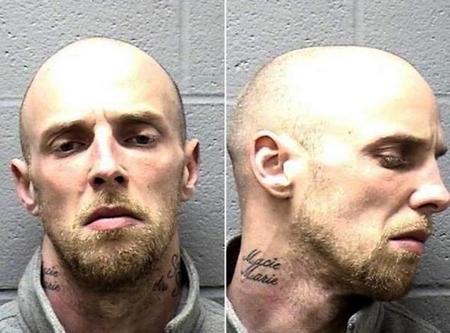 Police told the Chicago-Tribunethat someone contacted them with information that led them to arrest Johnson. According to the report, Johnson told the witness that he broke into the Ellis’ apartment with the intention of robbing them, but was confronted by Koziol-Ellis. Johnson stabbed her multiple times with a screwdriver and a knife. He left the apartment, but then returned later to try to “clean up the scene”.
Limited Cameras Allowed In Courtroom For Murder Trial
Johnny Borizov has been charged with the first-degree murders of a Darien couple and their son. His trial, which is set to start next month at the DuPage County Courthouse, will be allowed to be filmed-with certain restrictions.
 Both prosecution and defense lawyers objected the use of cameras during the trial, but a judge overruled their concerns. However, he ordered that the cameras will have to be turned off during the testimony of the three witnesses who were in the couples’ residence while the murder took place. Additionally, the media wanted to place two video cameras and two still cameras in the courtroom, but the judge is only allowing one of each.
Lawyers are also required to inform their witnesses about the cameras before they testify. If a witness objects to either being on video or to having their photo being taken, the judge will rule on an individual basis whether they must be turned off.
A hearing is set for a week prior to the start of the trial in order to figure out the exact placement for the cameras. Since last fall, when the DuPage County Courthouse first started allowing video cameras in courtrooms, this will be the first criminal trial to actually use them. The Courts Administrator, John Lapinski, said to the Chicago Tribune in this article that “logistically, it’s just more complicated.”

Schedule Your Free Consultation
Arlington Heights Office 3030 Salt Creek Lane, Suite 120 Arlington Heights, IL 60005 Phone: 847-253-3100


At Cosley Law Office, we represent clients throughout Illinois, including Arlington Heights, Barrington, Buffalo Grove, Des Plaines, Elk Grove Village, Glenview, Hoffman Estates, Inverness, Long Grove, Mount Prospect, Mundelein, Northbrook, Palatine, Prospect Heights, Rolling Meadows, Schaumburg, Schiller Park, Wheeling, and Wood Dale, as well as Cook County, Lake County, DuPage County, and throughout the Chicago, IL metropolitan area.
Results listed are not a guarantee or indication of future case results.

© 2026 Cosley Law Office
3030 Salt Creek Lane, Suite 120, Arlington Heights, IL 60005
847-253-3100